

An Introduction to Serverless Computing
The idea of serverless computing is advancing along with cloud computing. One of the many services provided by Microsoft Azure that enables developers to build and scale event-driven, serverless applications is Azure Functions. We'll explore Azure Functions' definition, operation, use cases, and some of their advantages in this article.
What are Azure Functions?
Developers can create and deploy applications using a microservices architecture using the serverless computing platform Azure Functions without worrying about the infrastructure. Developers can create serverless code using the Azure Functions platform, which can be activated by various events like HTTP requests, database updates, or messages from other Azure services. Several languages, including C#, JavaScript, Python, and PowerShell, can be used to write functions.

How do the Azure Functions operate?
The idea of a function as a service (FaaS) is the foundation of Azure Functions. Small, stateless chunks of code known as functions carry out particular tasks. The containerized environment in which the code is run automatically scales up or down in response to the volume of incoming requests. A new instance of the function is created by Azure Functions to handle the request when an event calls for it.
Numerous trigger types are supported by Azure Functions, including HTTP, timer, message queue, and file upload. When a trigger is activated, Azure Functions begins running the trigger-related code. The function's output can either be sent to an external service or stored in an Azure service like Blob storage.
Use Cases for Azure Functions
- A wide range of applications can be created using Azure Functions. Here are some frequent-use scenarios.
- Azure Microservices Functions can create fault-tolerant, highly scalable microservices-based applications. An application's various components are divided into smaller, independent services in a microservices architecture so that they can communicate via APIs. This architecture is ideal for functions because they can be used to create unique services that can be independently deployed and scaled.
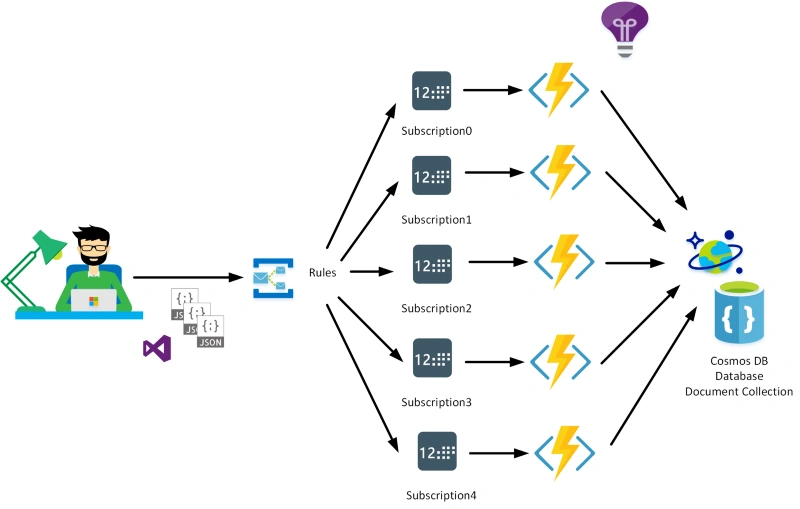
- Cloud- Azure IoT device data can be processed using functions, which can then be used to start actions based on the data. For instance, when a sensor detects a temperature change, a function might be activated, and the thermostat might be automatically adjusted.
- Data processing- Azure Functions can process data from various sources and store the finished product in an Azure service like Cosmos DB or Blob storage. Without intricate ETL procedures, this can be used to construct real-time data pipelines that transform and process data.
- Azure's Chatbots- Chatbots that can communicate with users through messaging services like Slack or Facebook Messenger can be created using functions. The processing of user input, the creation of responses, and the integration of other services are all possible with functions.
- Faster time-to-market- Programmers can write and publish code more quickly thanks to Functions. Without being concerned about the underlying infrastructure, functions can be developed and deployed independently.
- Chatbots- You can create chatbots that communicate with users through messaging services like Slack or Facebook Messenger by using Azure Functions.
- Automation based on specific events- Azure Functions can automate tasks. For instance, a process that automatically creates a new account for a user when they sign up for a service could be activated.
Conclusion
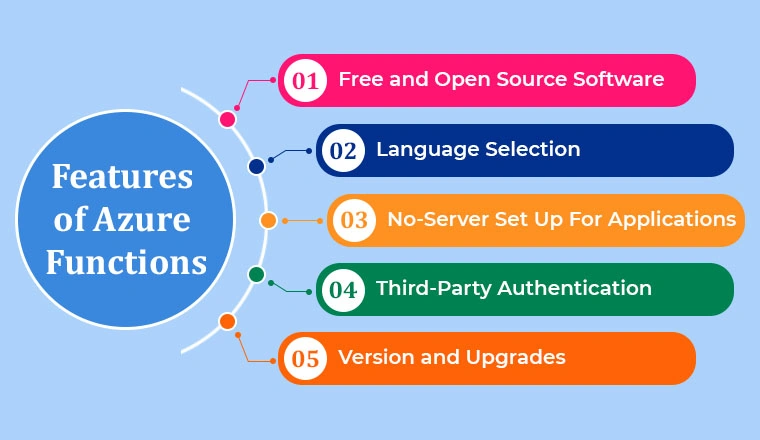
Azure Functions is an effective tool for creating serverless, event-driven applications. Because it scales automatically, developers don't have to worry about infrastructure and can concentrate on writing code that addresses particular business problems. The next generation of cloud-native applications will be made possible by Azure Functions as more and more applications migrate to the cloud.
Read more here, What Is Azure Functions: A Beginner's Tutorial.
Join the conversation! Your thoughts help the community grow.