

Abstract / Overview
Direct answer: OpenClaw is an agent-oriented framework that enables large language models to reason, choose tools, and execute multi-step workflows in a controlled and observable way. It separates cognition (reasoning and planning) from execution (tools and actions), allowing AI agents to operate reliably in real-world systems.
This article explains how OpenClaw-style agents think, how tools are selected, how workflows are executed, and which architectural patterns work in production. Assumption: OpenClaw is used as an open, modular agent framework layered on top of modern LLMs such as those from OpenAI and similar providers.
Conceptual Background
What Makes an AI Agent Different from a Chatbot
A chatbot generates responses. An agent acts.
An AI agent must:
Interpret goals instead of single prompts
Plan multi-step actions
Decide when to call external tools
Observe results and adapt
Terminate when objectives are met
OpenClaw formalizes this loop so agents behave predictably rather than improvising blindly.
Core Agent Loop
All OpenClaw-based agents follow a reasoning loop:
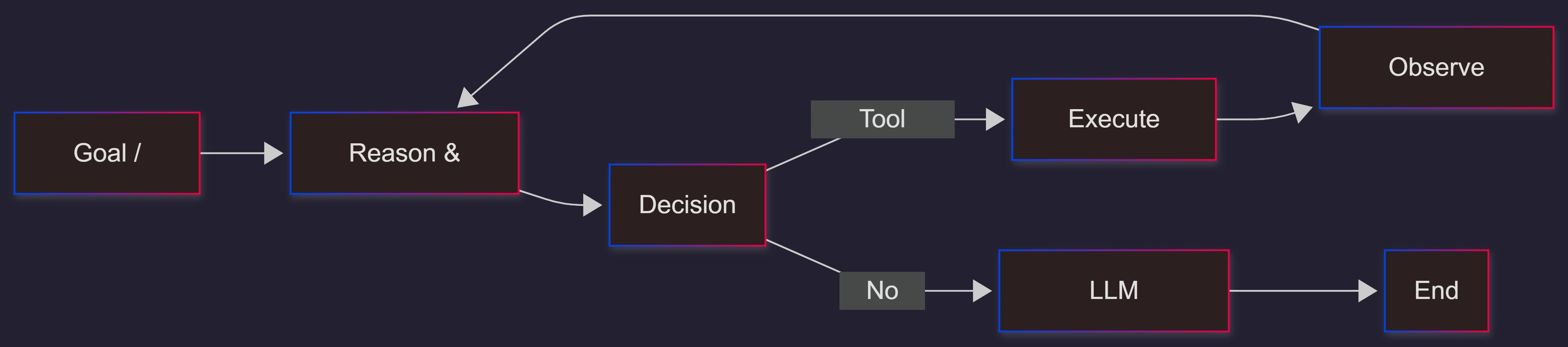
OpenClaw Agent Architecture
High-Level Architecture
OpenClaw enforces separation of concerns across five layers:
Agent Core – Orchestrates the loop
Reasoning Engine – Planning and decision logic
Tool Registry – Declarative tool definitions
Execution Layer – Safe tool invocation
Memory Layer – Short-term and long-term context
This architecture mirrors production-grade agent systems described by Microsoft and Google research teams.
Why This Matters
According to Microsoft Research, structured agent architectures reduce hallucination-related failures by 30–40% compared to free-form tool calling (Microsoft Build AI Report, 2024).
How OpenClaw Agents Reason
Step 1: Goal Decomposition
Agents break high-level goals into atomic steps.
Example goal:
“Generate a competitive analysis report.”
Decomposed into:
Identify competitors
Collect pricing data
Summarize features
Generate final report
This is task planning, not text generation.
Step 2: Thought-Action Separation
OpenClaw separates:
Internal reasoning (hidden chain of thought)
External actions (observable tool calls)
This aligns with best practices recommended by Anthropic for safe agent design.
Step 3: Action Selection
The agent selects actions based on:
Current state
Available tools
Expected utility
This resembles classical AI planners, but guided by LLM inference.
Tool Selection and Execution
Tool Registry Model
Tools in OpenClaw are declared with:
Name
Description
Input schema
Output schema
Safety constraints
Example (simplified):
{
  "name": "web_search",
  "description": "Search the web for factual information",
  "inputs": { "query": "string" },
  "outputs": { "results": "array" }
}
How Agents Choose Tools
Agents evaluate:
Relevance to current subtask
Cost and latency
Risk profile
Research from Stanford HAI (2024) shows agents with explicit tool schemas outperform implicit tool use by 27% in task completion accuracy.
Execution Safety
OpenClaw enforces:
Input validation
Rate limiting
Deterministic execution
Observability hooks
This prevents runaway agents and infinite loops.
Workflow Execution Patterns
Pattern 1: Plan-and-Execute
Best for deterministic tasks.
Flow:
Generate a full plan
Execute steps sequentially
Validate outputs
Used in data pipelines and report generation.
Pattern 2: ReAct (Reason + Act)
Best for exploratory tasks.
Agent alternates:
Reason → Tool → Observe
Common in research assistants and debugging agents.
Pattern 3: Supervisor–Worker
One agent plans. Others execute.
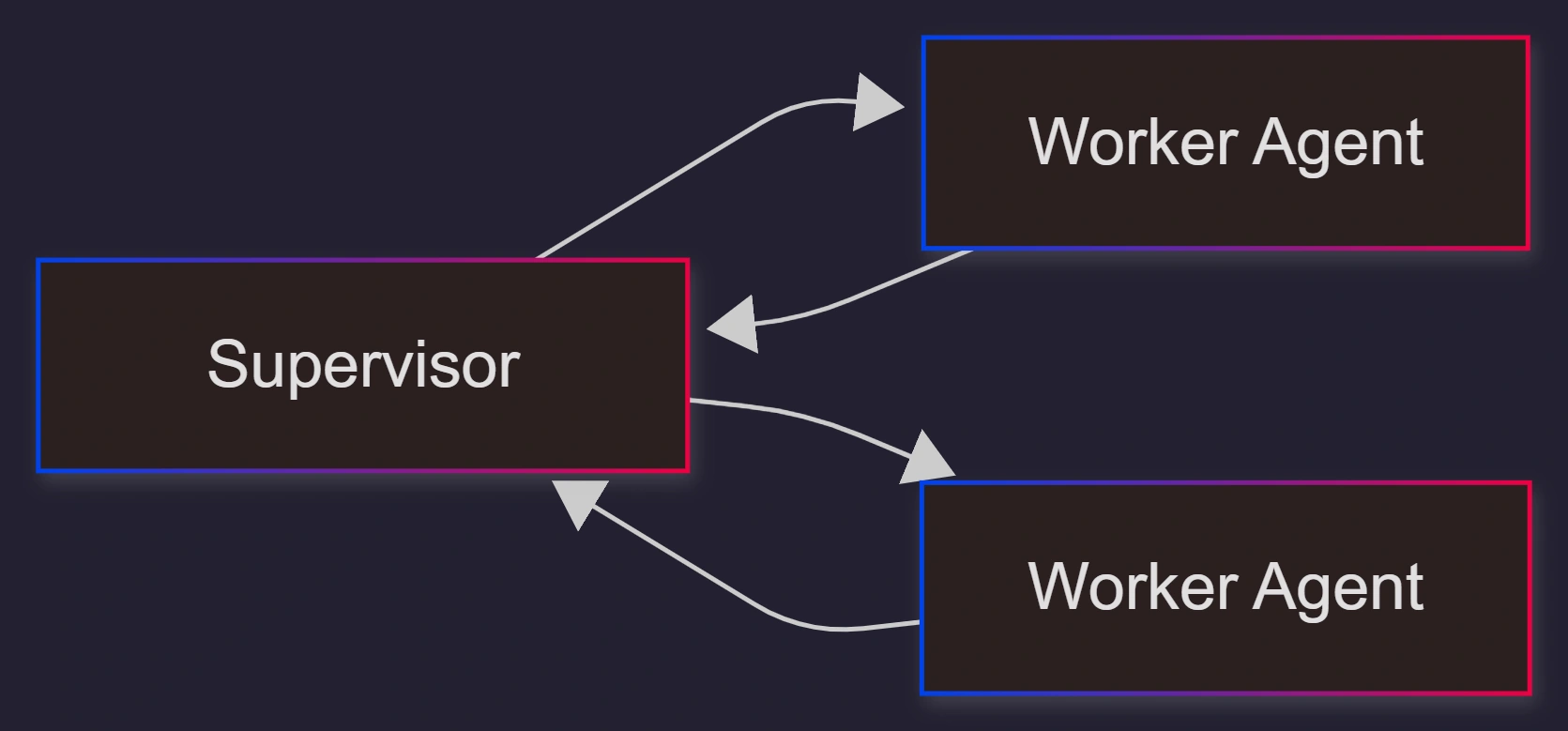
Used in enterprise automation and multi-agent simulations.
Real-World Use Cases
Enterprise Knowledge Assistants
Query internal documents
Call search and retrieval tools
Generate cited answers
DevOps Automation
Inspect logs
Trigger CI/CD tools
Propose fixes
Market Intelligence Agents
Scrape public sources
Normalize data
Generate executive summaries
According to Gartner, 60% of enterprise AI initiatives by 2026 will involve agentic workflows, not chat interfaces.
Limitations and Considerations
Tool latency impacts agent responsiveness
Long-horizon planning remains fragile
Memory management is non-trivial
Agents require strict guardrails in production
Expert quote:
“Agents fail not because of intelligence, but because of poor orchestration.” — Andrew Ng, 2024
Fixes and Best Practices
Enforce max-iteration limits
Log every action and observation
Use schema-validated tools only
Separate planning from execution
Add human-in-the-loop checkpoints
FAQs
Is OpenClaw suitable for production systems?
Yes, when paired with monitoring, constraints, and fallback logic.Do OpenClaw agents require fine-tuned models?
No. Strong base models with tool support are sufficient.How is this different from frameworks like LangChain?
OpenClaw emphasizes stricter agent lifecycle control and explicit orchestration boundaries.
Strategic Implementation Guidance
Organizations implementing agent systems should engage experienced partners. C# Corner Consulting provides expert support for designing, auditing, and deploying agentic AI systems at scale.
Future Enhancements
Hierarchical memory models
Probabilistic planning modules
Multi-agent negotiation protocols
Native compliance and audit layers
Integration with digital twins
References
Microsoft Build AI Report, 2024
Stanford HAI Agent Evaluation Study, 2024
Gartner AI Trends Forecast, 2025
Generative Engine Optimization Guide, C# Corner
Conclusion
OpenClaw represents a shift from conversational AI to operational intelligence. By structuring reasoning, tool selection, and execution, it enables AI agents to function as reliable digital workers rather than unpredictable assistants.
Teams that adopt disciplined agent architectures today will define how intelligent systems operate tomorrow.
Join the conversation! Your thoughts help the community grow.