

Introduction
AWS is a public cloud available globally. In simple terms, VPC is your private segment of the cloud. The VPC is like an abstraction of the public cloud offered to you as a private cloud. You provision all you resources under your own VPC.
A VPC isolates all your resources and provides easier management to them. Two resources in different VPCs are isolated with each other. But, what if we want to connect these resources with each other? This is when VPC Peering comes into the picture.
VPC Peering
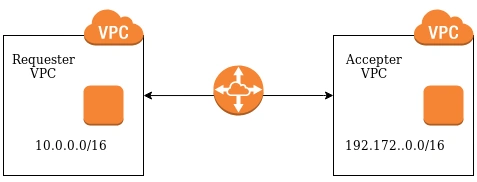
VPC Peering is establishing a connection between VPC’s so resources inside them have networking between them. This connection is either ipv4 or v6 depending upon the use case.
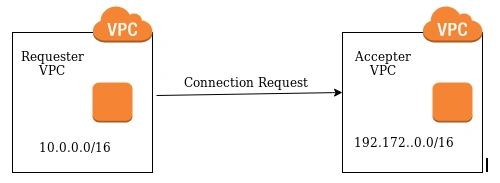
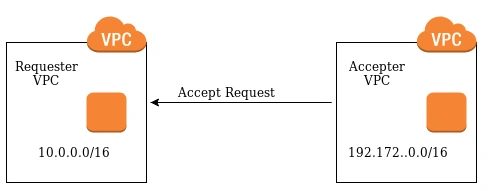
To make the connection active, the owner of the accepter VPC must accept the connection request. The two VPCs can be in the same account, different regions, different accounts. The owner will be see the connection in pending-acceptance state. Once accepted, the peering connection is active.
VPC Peerings are not Transitive
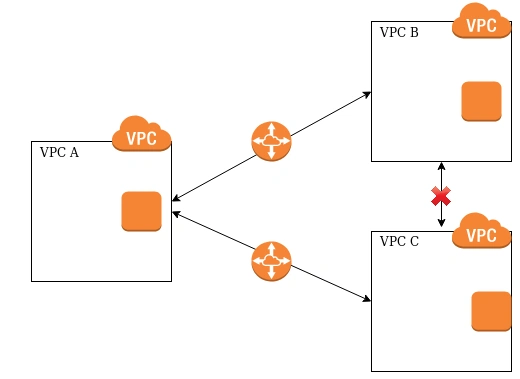
VPC Peering follows a one-to-one relationship model. If VPC A is peered with VPC B and VPC C, this does not imply any connectivity between VPC B and VPC C. To connect VPC B and VPC C, there should be a one-to-one peering connection between them.
Things to remember
- VPC Peering is one-to-one relationship.
- VPC peering is not transitive in nature.
- The CIDR of the VPC should not overlap.
- Do not peer for large CIDR range, instead of complete VPC CIDR, provide subnet CIDR or specific IP in the route table.
Summary
In this article, we learned about VPC Peering.
Join the conversation! Your thoughts help the community grow.