

Many people have issues choosing which email to use while creating a trial organization, so I thought to provide the steps on how to set up an email and then set up trial dynamics organization and environment
As a developer, I am constantly on the lookout for solutions that can help me improve my daily workflow, so I try to keep up with the novelties on the market (another reason is to later brag about using them before it was cool). Today I prepared for you my pick of relatively new, interesting extensions from the VS Code marketplace that have recently been growing in popularity. My goal was to find less known but high-quality extensions that can really make a difference in your developer workflow. Take a look at my list and who knows, maybe you’ll discover your next favorite tool!
GitLive
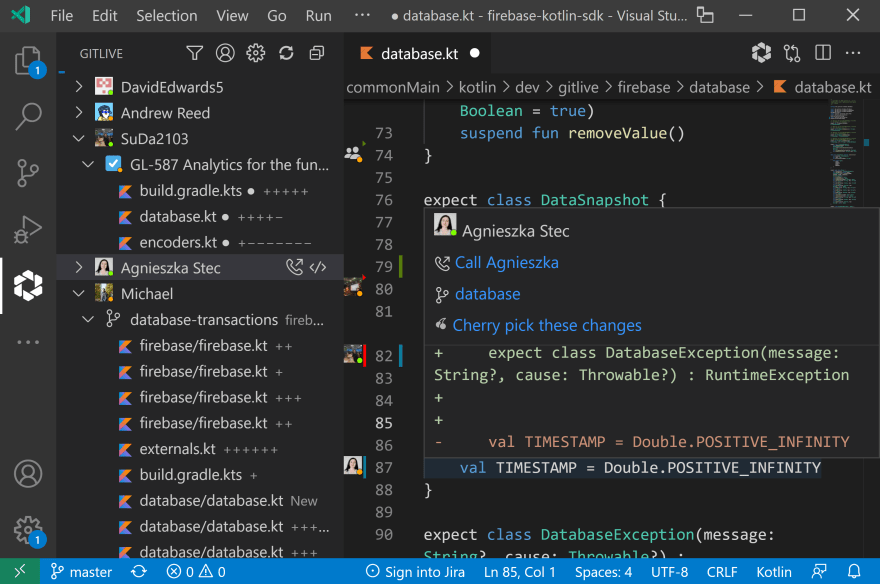
GitLive is a fantastic extension to enhance the IDE’s built-in Git functionality with real-time features such as online presence for team members and instant merge conflict detection.
Online presence for team members
The IDE plugin adds a team sidebar/tool window where you can see who in your team is online, what issues and branches they are working on and the changes they’ve made on those branches. This is great for remote teams and really helps when you want to view or share work in progress without resorting to a screen share or cut and pasting snippets of code into Slack or Teams.
Instant merge conflict detection
Indicators in the gutter of your editor show the difference between your changes and the changes of others. These update in real-time as you and your teammates are editing and provide an early warning of potential merge conflicts. They are a great way to get upfront insight into the potentially overlapping work of your colleagues without interruption.
Trunk
A good tool for scalably checking, formatting, and monitoring code is many developers’ dream. If you’re among them you should check out Trunk — fast and easy to use meta code checker and formatter with cool features like caching, pre existing issue detection, a daemon, and a language server. It’s managed completely via config-as-code, so you can easily pin your repo to specific versions of your linters, formatters, and static analyzers.

Join the conversation! Your thoughts help the community grow.