

Introduction
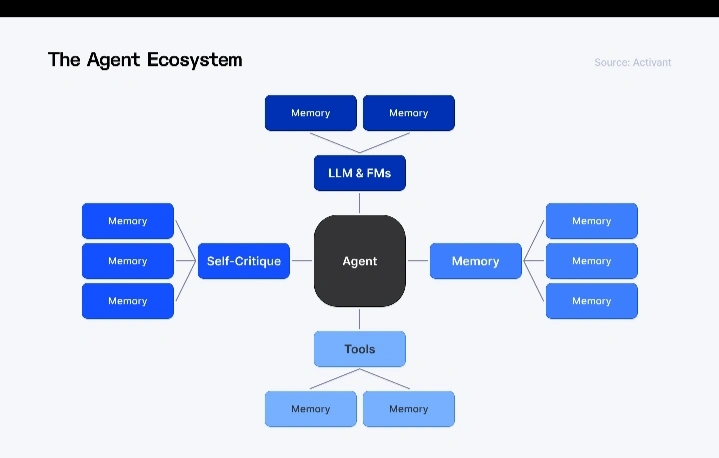
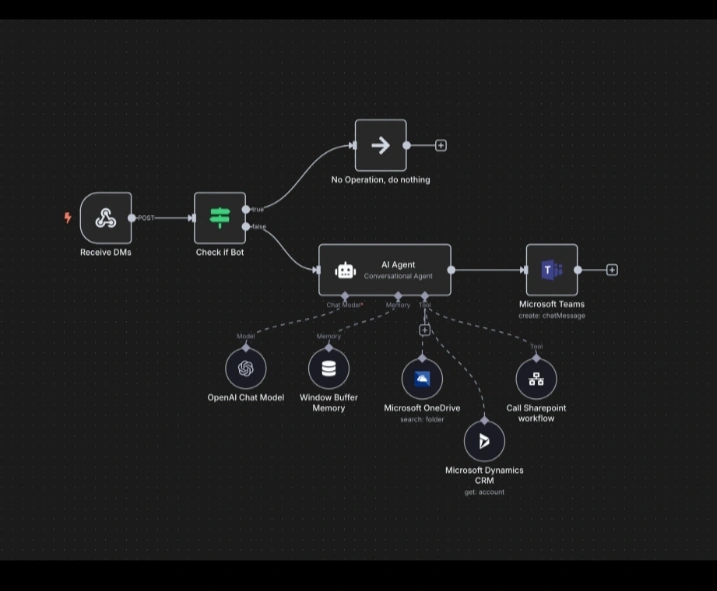
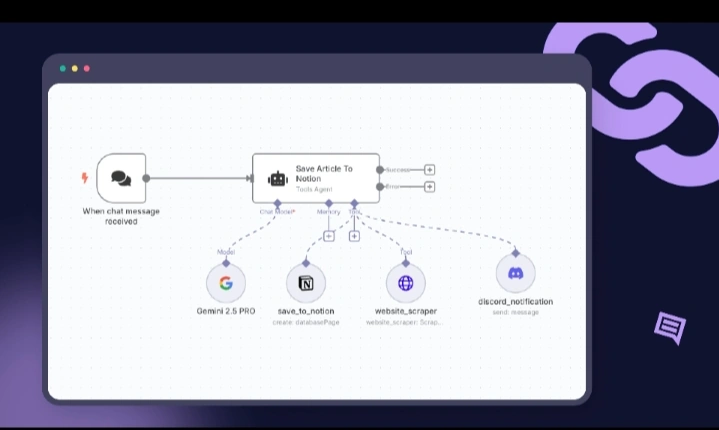
Artificial Intelligence is rapidly transforming the way modern software is designed, developed, and maintained. One of the most powerful innovations in this space is the concept of AI agents. These agents are intelligent systems capable of making decisions, performing tasks, and interacting with users and systems autonomously.
Unlike traditional software that only follows fixed instructions, AI agents can analyze data, understand context, and dynamically choose the best action. This makes them highly valuable in modern applications such as chatbots, automation tools, recommendation systems, and DevOps monitoring solutions.
AI agents are becoming an essential part of modern software ecosystems, especially in cloud-native and intelligent applications.
What Is an AI Agent?
An AI agent is a software entity that can:
Observe its environment
Process information
Make intelligent decisions
Perform actions automatically
Improve performance over time
In simple terms, an AI agent acts like a digital worker that can perform tasks independently.
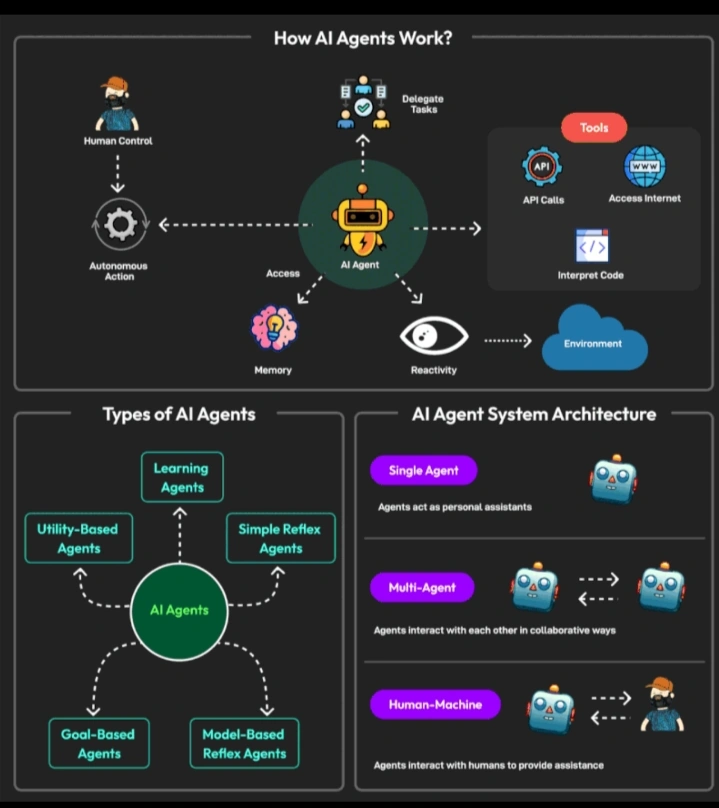
Key Characteristics of AI Agents
1. Autonomy
AI agents can operate without continuous human control. Once configured, they can perform tasks independently.
2. Intelligence
They use AI models such as machine learning and large language models to make smart decisions.
3. Reactivity
AI agents can respond to changes in their environment in real time.
4. Goal-Oriented Behavior
Agents work toward achieving specific objectives, such as answering user questions or optimizing system performance.
5. Learning Capability
Advanced agents can learn from data and improve over time.
Core Components of an AI Agent.
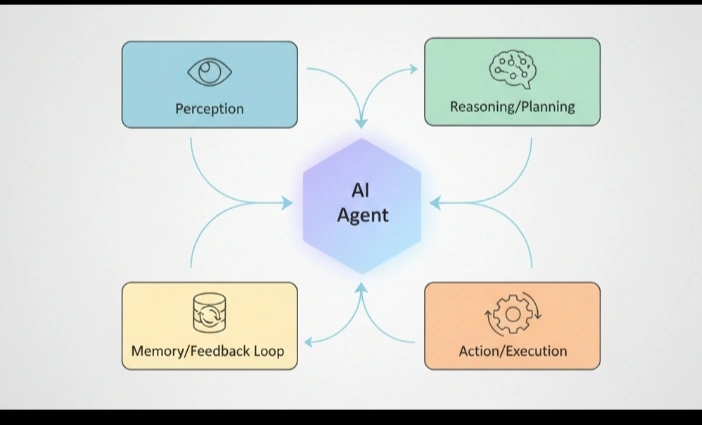
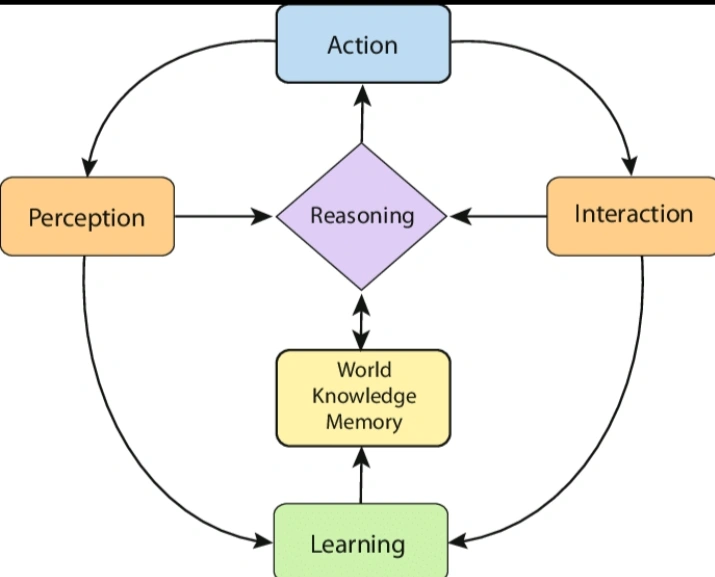
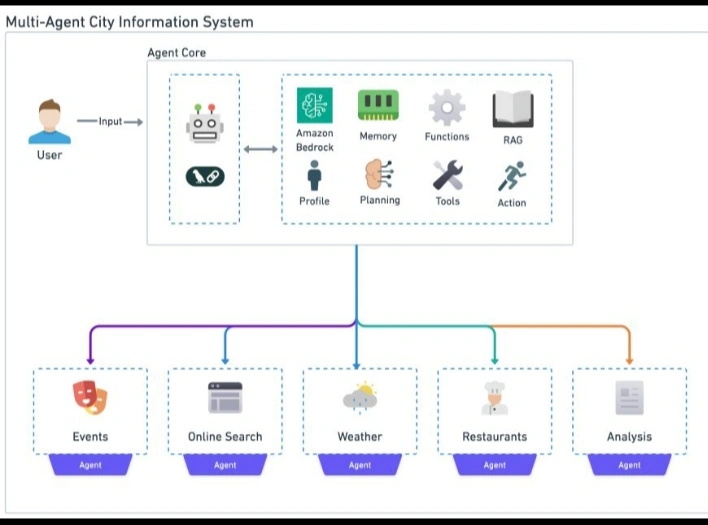
Environment
The environment is where the agent operates. This can be a web application, server, database, or user interface.
Input (Perception)
The agent receives data from various sources such as user input, APIs, logs, or sensors.
Processing (Decision Engine)
The agent analyzes the data using AI models, rules, or logic.
Action (Execution)
Based on its decision, the agent performs an action such as responding, triggering a process, or updating a system.
Feedback and Learning
The agent uses feedback to improve its future performance.
How AI Agents Work
AI agents follow a continuous cycle:
Receive input from the environment
Analyze and understand the input
Decide the best action
Execute the action
Learn from the outcome
This process allows agents to operate intelligently and autonomously.
Types of AI Agents
Simple Reflex Agents
These agents follow predefined rules. They do not learn or store past information.
Example: Basic automation scripts
Model-Based Agents
These agents maintain internal state and use past information.
Example: Smart monitoring systems
Goal-Based Agents
These agents plan actions to achieve specific goals.
Example: Navigation systems
Learning Agents
These agents improve performance using data and feedback.
Example: Recommendation systems
Autonomous Agents
These are fully independent systems capable of complex decision-making.
Example: Advanced AI assistants
Real-World Applications of AI Agents
Customer Support Systems
AI agents automatically respond to customer queries and resolve issues.
DevOps and Monitoring
Agents monitor system health, detect failures, and trigger alerts.
Software Development
AI coding assistants help developers write, review, and optimize code.
Recommendation Systems
Agents suggest products, videos, or content based on user behavior.
Smart Automation
AI agents automate repetitive business processes.
Benefits of Using AI Agents
Improves productivity
Reduces manual work
Provides intelligent automation
Works continuously without breaks
Improves user experience
AI Agents in Modern .NET Applications
AI agents can be integrated into .NET applications for intelligent automation and decision-making.
Common use cases include:
Intelligent chatbots in ASP.NET Core
Automated background services
Smart recommendation engines
Monitoring and alerting systems
Popular technologies include:
OpenAI integration
Semantic Kernel
Azure AI Services
ML.NET
Future of AI Agents
AI agents will play a major role in the future of software development. They will become more autonomous, intelligent, and capable of handling complex tasks.
In the future, AI agents may:
Build applications automatically
Manage infrastructure independently
Provide intelligent decision support
Automate entire workflows
AI agents represent the next generation of intelligent software systems.
Conclusion
AI agents are transforming modern software development by enabling intelligent automation and autonomous decision-making. They can observe environments, analyze data, and perform actions efficiently.
As AI technology continues to advance, AI agents will become a core component of modern applications, helping developers build smarter, faster, and more efficient systems.
Join the conversation! Your thoughts help the community grow.