

Introduction
Microservices architecture allows applications to be built as a collection of small, independent services. Each service handles a specific business function and communicates with other services. While this approach improves scalability and flexibility, it also introduces complexity in communication between clients and services.
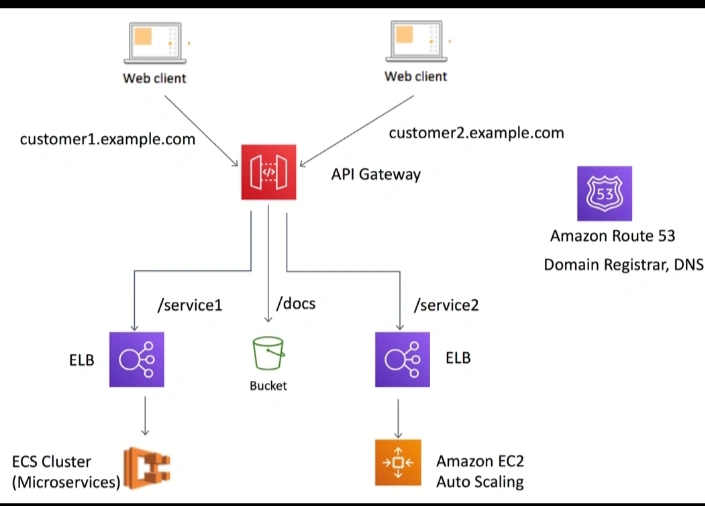
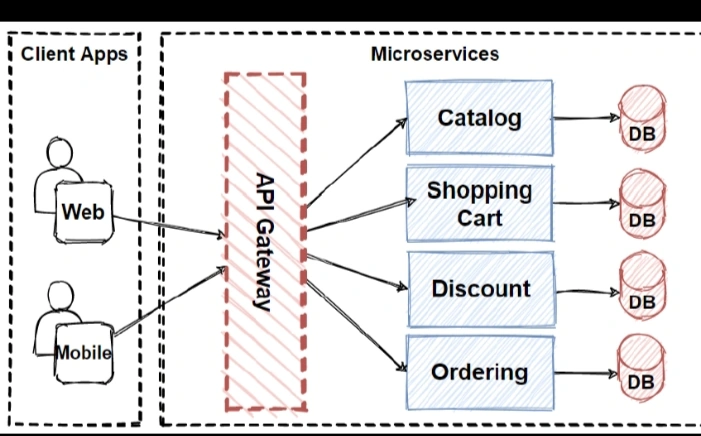
The API Gateway Pattern solves this problem by providing a single entry point for all client requests. Instead of clients directly calling multiple microservices, they communicate with the API Gateway, which routes requests to the appropriate services.
This pattern is widely used in modern .NET microservices to improve security, performance, and maintainability.
What is an API Gateway?
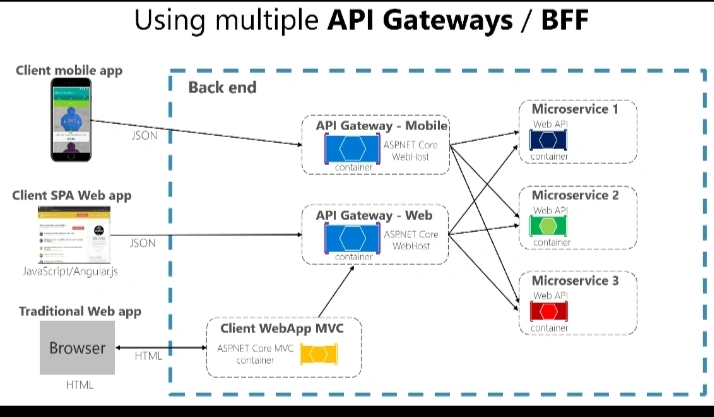
An API Gateway is a service that acts as a single entry point between clients and microservices.
Instead of clients calling multiple services directly, they send requests to the API Gateway. The gateway then forwards the request to the correct microservice and returns the response to the client.
This simplifies client communication and centralizes important features like authentication, logging, and routing.
Why API Gateway is Needed in Microservices
In microservices architecture, there can be many services such as:
User Service
Order Service
Payment Service
Product Service
If clients communicate directly with each service, it creates several problems:
Complex client logic
Multiple network calls
Security challenges
Difficult maintenance
The API Gateway solves these problems by acting as a centralized communication layer.
How API Gateway Works
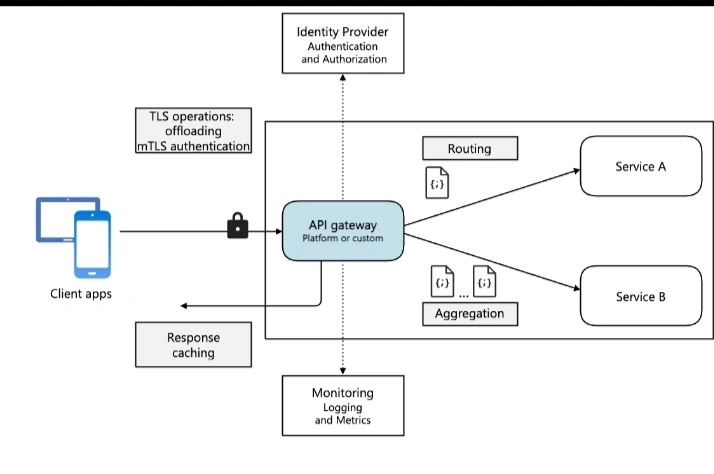
The API Gateway receives requests from clients and performs several tasks before forwarding them to the appropriate microservice.
These tasks include:
Routing the request to the correct service
Authentication and authorization
Logging and monitoring
Load balancing
Response aggregation
The gateway then sends the response back to the client.
This makes communication simpler and more efficient.
Benefits of API Gateway Pattern
Simplified Client Communication
Clients communicate with only one endpoint instead of multiple services.
This reduces complexity and improves usability.
Improved Security
Authentication and authorization can be handled in one place.
This protects microservices from unauthorized access.
Better Performance
The gateway can combine responses from multiple services into a single response.
This reduces network calls and improves performance.
Centralized Logging and Monitoring
All requests pass through the gateway, making it easier to monitor and track system behavior.
Loose Coupling
Clients do not need to know the internal structure of microservices.
This improves flexibility and maintainability.
API Gateway in .NET Applications
In .NET, API Gateway can be implemented using technologies provided by Microsoft and the .NET ecosystem.
Popular options include:
YARP (Yet Another Reverse Proxy)
Ocelot API Gateway
ASP.NET Core Reverse Proxy
These tools help developers build efficient and scalable API Gateways.
The gateway is built as an ASP.NET Core application that routes requests to microservices.
Common Responsibilities of an API Gateway
An API Gateway handles several important responsibilities.
Routing ensures requests are forwarded to the correct microservice.
Authentication verifies user identity.
Authorization ensures users have permission to access resources.
Load balancing distributes requests across multiple service instances.
Logging helps track and monitor requests.
Caching improves performance by storing frequently requested data.
These responsibilities improve system performance and security.
API Gateway vs Direct Client Communication
Without an API Gateway, clients communicate directly with each microservice. This increases complexity and creates security risks.
With an API Gateway, clients communicate with a single endpoint. The gateway manages routing and security.
This simplifies the architecture and improves system maintainability.
When to Use API Gateway Pattern
Use the API Gateway pattern when building microservices architecture.
It is especially useful when:
Multiple microservices exist
Security needs to be centralized
Client communication needs simplification
Monitoring and logging are required
Scalability is important
API Gateway is essential for modern cloud-native applications.
Best Practices
Keep the API Gateway lightweight and focused on routing and cross-cutting concerns.
Avoid putting business logic in the gateway.
Use proper authentication and authorization mechanisms.
Implement logging and monitoring.
Use caching to improve performance.
Ensure proper error handling.
Conclusion
The API Gateway Pattern is an essential component of microservices architecture. It provides a single entry point for client requests and simplifies communication between clients and services.
It improves security, performance, and maintainability by centralizing routing, authentication, and monitoring.
In modern .NET applications, API Gateway is widely used to build scalable and efficient microservices systems.
By implementing the API Gateway pattern, developers can create clean, secure, and scalable microservices architectures suitable for modern cloud environments.
Join the conversation! Your thoughts help the community grow.