


Photo by Tobias Tullius / Unsplash
Introduction
Suppose you're wondering if there's an AWS service designed to detect malicious activity and unauthorized behavior against your organization's AWS account. You came to the right place.
In this article, we'll discuss AWS Guard Duty, what it is, its key features, and simple steps on how to create one.
Ok, let's get started then.
What is AWS Guard Duty?
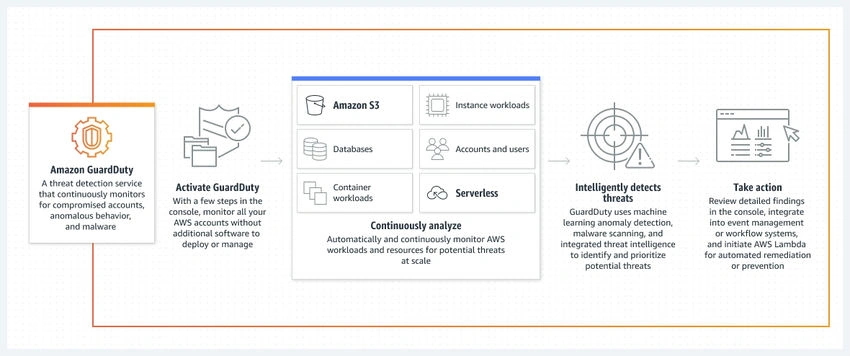
Image Source: https://aws.amazon.com/guardduty/
It helps our organization to protect its AWS accounts and workloads by continuously monitoring for malicious activity and unauthorized behavior.
In other words, AWS Guard Duty is a threat detection service that can analyze and detect malicious activity against your organization's AWS account and application workloads.
What are Some Of The Threats That AWS Guard Duty Can Detect?
- Use of exposed credentials.
- Any communication with malicious IP addresses and domains.
- Odd activities in an AWS account.
- Notice ECS instance compromises such as those associated with cryptocurrency mining.
- S3 bucket compromises, like unusual S3 API activity from unauthorized access from known malicious IP addresses.
What are The Key Features of AWS Guard Duty?
In this section, let's discuss some key points and features of AWS Guard Duty.
Threat Detection
To find potential threats and suspicious activity. AWS Guard Duty examines different data sources in your organization's AWS environment, such as AWS CloudTrail, VPC Flow, and DNS Logs.
Anomalies and well-known attack patterns are easily pinpointed using threat intelligence and machine learning algorithms.
Intelligent Alerts
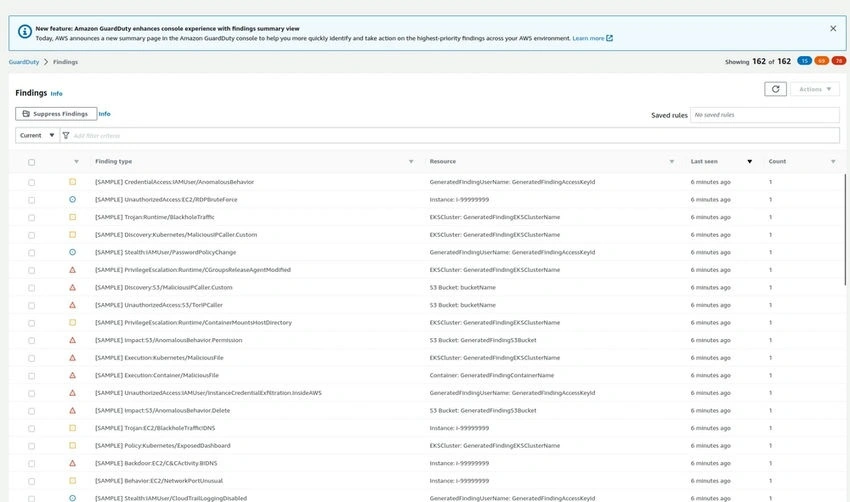
This service generates security findings and warnings when it detects a potential attack via AWS Management Console, Amazon CloudWatch Events, or Amazon Simple Notification Service (SNS).
Join the conversation! Your thoughts help the community grow.