

Introduction
Cloud computing is a revolution for the computer next generation. SO many thoughts and definitions are there on internet. I have a very simple understanding definition for cloud computing i.e.
"A pool of abstracted, highly scalable, and managed compute infrastructure capable of hosting end-customer applications and billed by consumption"
The "Cloud" = 10X Improvements
- Ease of Use
It is just a mouse click away to deploy your application on the cloud environment. You can do it remotely from anywhere and anytime. No cabling or screw driver is required to deploy your application on the cloud environment.
- Scalability
You can control your infrastructure from your own application. The thing that you only need is to have an internet connection at your home or office. You do not require anything to purchase apart from the licence of the cloud provider.
- Risk
You can cancel immediately your sevice on the cloud environment. You have not bought any server or network. Automatically your risk is reduced.
- Reliability
Cloud envirment is designed very well to handle failure such as to switch from one to others. So the application will not hamper in terms of performance or in terms of usage.
- Cost
This is very important point when we are talking about cost for cloud environment. You only need to pay what you have used. You can turn off your application if it is not in use. You do not need to buy any thing in advance. Whatever storage your application will consume, you only need to pay for that. "Pay For Only What You Use."
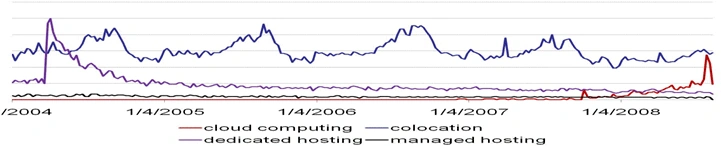
Colocation - 1st step to outsourcing
Managed Hosting - dedicated servers managed by 3rd party take some pain away
Cloud Hosting - Lower cost, easier, lower risk, more reliable
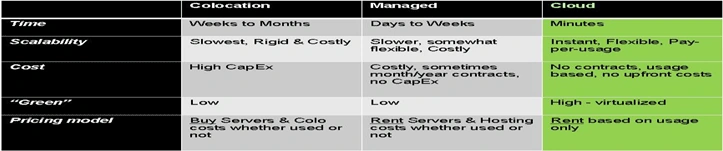
Problems with Traditional Hosting Costs Continue to Grow in terms of :
- High CapEx
- Low facility asset utilization (55%)
- High Depreciation (42-50%)
- Power/Cooling costs > Server Costs
- Not "Green"
- 30% hardware obsolescence
Cloud Environment is divided in three segment
- SAAS - Software delivery Model
- Increasingly popular with SMEs
- No hardware or software to manage
- Service delivered through a browser
Examples of SAAS
- CRM
- Financial Planning
- Human Resources
- Word processing
SAAS Architechture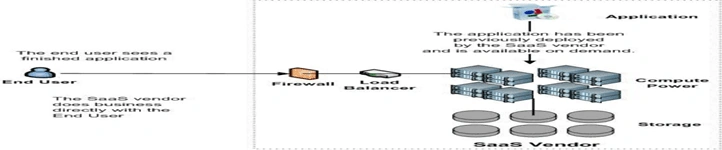
- PAAS - Platform Delivery Model
- Platforms are built upon Infrastructure, which is expensive
- Estimating demand is not a science!
- Platform management is not fun!
Advantages of Paas
- Pay per use
- Instant Scalability
- Security
- Reliability
- APIs
Example of PAAS
- Google App Engine
- Mosso
- AWS: S3
PAAS Architechture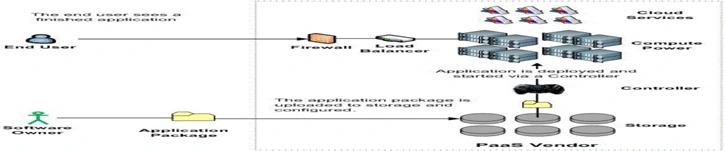
- IAAS - Infrastructure as a service
- Access to infrastructure stack:
- Full OS access
- Firewalls
- Routers
- Load balancing
- Pay per use
- Instant Scalability
- Security
- Reliability
- APIs
I would like to conclude this article with the final definitions that contains each part that I tried to covered so far.
Cloud computing is a virtualized computing power and storage delivered via platform-agnostic infrastructures of abstracted hardware and software accessed over the Internet. These shared, on-demand IT resources, are created and disposed of efficiently, are dynamically scalable through a variety of programmatic interfaces and are billed variably based on measurable usage.
Cloud ZonePosted Sep 21, 2010, 10:19 AM
Great overview on cloud computing. I have posted this article on my twitter page @cloud_zone. Bring on the cloud!
sanjay gopePosted Sep 21, 2010, 3:36 AM
Good , Go ahead
Mahesh ChandPosted Sep 20, 2010, 7:01 AM
Thank you for sharing Vivek.