

If you want to know how to get started with UI-Grid and how to set up a project in AngularJS and Web API, read the articles given below first.
- UI-Grid With AngularJS And WebAPI
- Export Data In Angular-UI-Grid Using WebAPI
- Filtering In UI-Grid With AngularJS And WebAPI
- Custom Scroll In AngularJS-UI-Grid With Web API
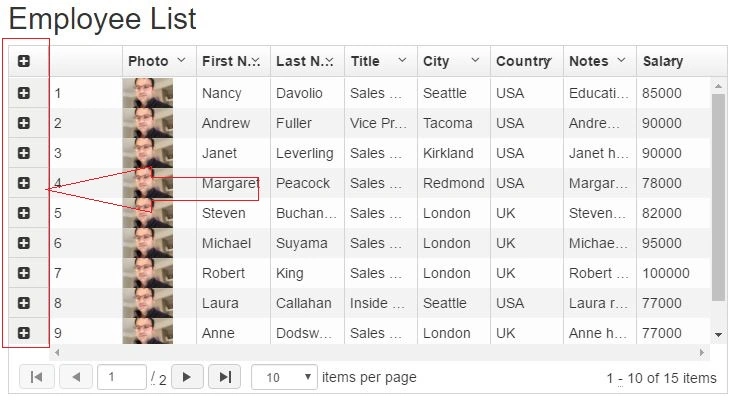
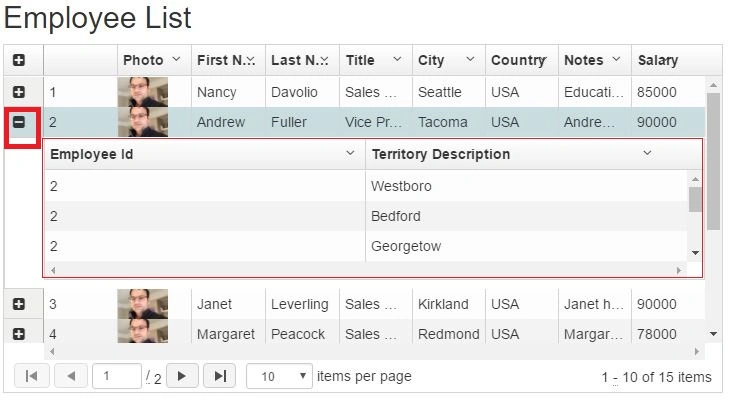
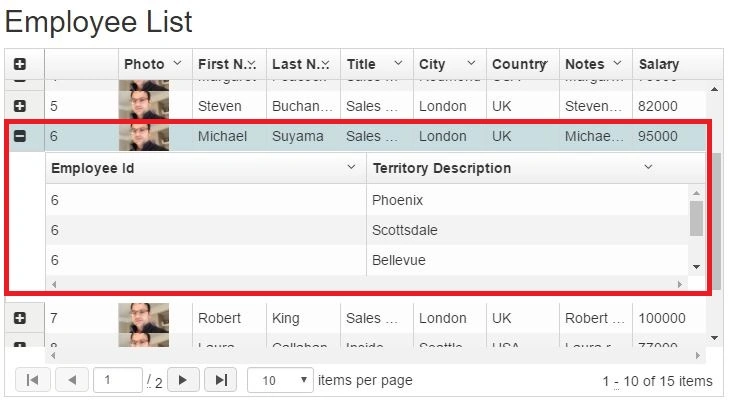
Angular-UI-Grid has expandable feature which adds the sub grid feature to grid. You can load any data source when click on expand icon.
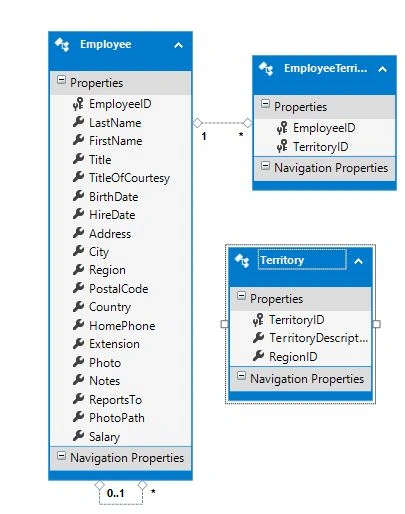
In this article, I am going to use NORTHWND database and Employee, Employee Territories tables. My feature grid will load all employees and when click on expand then employees territories will load in sub grid.
After creating all basic and adding mandatory script, let’s implement expandable feature on ui-grid. Thus, after adding data in Entity Model, create a Web API to get the data from Entity model.
Entity Model
Web API
Here, my Web API class code is given below.
- using ng_ui_grid_sample.Models;
- using System.Collections.Generic;
- using System.Data.Entity;
- using System.Data.Entity.Infrastructure;
- using System.Linq;
- using System.Net;
- using System.Threading.Tasks;
- using System.Web.Http;
- using System.Web.Http.Description;
- namespace ng_ui_grid_sample.Controllers
- {
- [RoutePrefix("api/employeeapi")]
- public class EmployeesAPIController : ApiController
- {
- private NORTHWNDEntities3 db = new NORTHWNDEntities3();
- // GET: api/Employees
- [Route("get")]
- public IQueryable<Employee> GetEmployees()
- {
- return db.Employees;
- }
- // GET: api/Employees/5
- [Route("detail")]
- [ResponseType(typeof(Employee))]
- public async Task<IHttpActionResult> GetEmployees(int id)
- {
- Employee employees = await db.Employees.FindAsync(id);
- if (employees == null)
- {
- return NotFound();
- }
- return Ok(employees);
- }
- // PUT: api/Employees/5
- [ResponseType(typeof(void))]
- public async Task<IHttpActionResult> PutEmployees(int id, Employee employees)
- {
- if (!ModelState.IsValid)
- {
- return BadRequest(ModelState);
- }
- if (id != employees.EmployeeID)
- {
- return BadRequest();
- }
- db.Entry(employees).State = EntityState.Modified;
- try
- {
- await db.SaveChangesAsync();
- }
- catch (DbUpdateConcurrencyException)
- {
- if (!EmployeesExists(id))
- {
- return NotFound();
- }
- else
- {
- throw;
- }
- }
- return StatusCode(HttpStatusCode.NoContent);
- }
- // POST: api/Employees
- [ResponseType(typeof(Employee))]
- public async Task<IHttpActionResult> PostEmployees(Employee employees)
- {
- if (!ModelState.IsValid)
- {
- return BadRequest(ModelState);
- }
- db.Employees.Add(employees);
- await db.SaveChangesAsync();
- return CreatedAtRoute("DefaultApi", new { id = employees.EmployeeID }, employees);
- }
- // DELETE: api/Employees/5
- [ResponseType(typeof(Employee))]
- public async Task<IHttpActionResult> DeleteEmployees(int id)
- {
- Employee employees = await db.Employees.FindAsync(id);
- if (employees == null)
- {
- return NotFound();
- }
- db.Employees.Remove(employees);
- await db.SaveChangesAsync();
- return Ok(employees);
- }
- protected override void Dispose(bool disposing)
- {
- if (disposing)
- {
- db.Dispose();
- }
- base.Dispose(disposing);
- }
- private bool EmployeesExists(int id)
- {
- return db.Employees.Count(e => e.EmployeeID == id) > 0;
- }
- [Route("getterritoriesbyid")]
- public IEnumerable<EmployeeTerritory> GetEmployeeTerritoriesByEmployee(int id)
- {
- return (from et in db.EmployeeTerritories.AsEnumerable()
- join t in db.Territories.AsEnumerable() on et.TerritoryID equals t.TerritoryID
- where et.EmployeeID == id
- orderby et.TerritoryID
- select new EmployeeTerritory
- {
- EmployeeID = et.EmployeeID,
- TerritoryID = et.TerritoryID,
- TerritoryDescription = t.TerritoryDescription
- });
- }
- }
- }
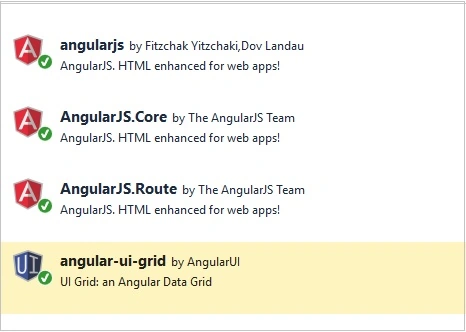
- var employeeapp = angular.module('employeeapp', ['ui.grid', 'ui.grid.pagination',
- 'ui.grid.selection', 'ui.grid.exporter',
- 'ui.grid.grouping', 'ui.grid.expandable']);
Service
Join the conversation! Your thoughts help the community grow.