

Introduction
Swagger (Open API) is a language-agnostic specification for describing and documenting the REST API. Swagger Allows both the Machine and Developer to understand the working and capabilities of the Machine without direct access to the source code of the project. The main objectives of swagger (Open API) are to:
- Minimize the workload to connect with Microservice.
- Reduce the Time Needed to accurately document the Microservice.
Default Addition of Swagger in .NET 5 & .NET 6
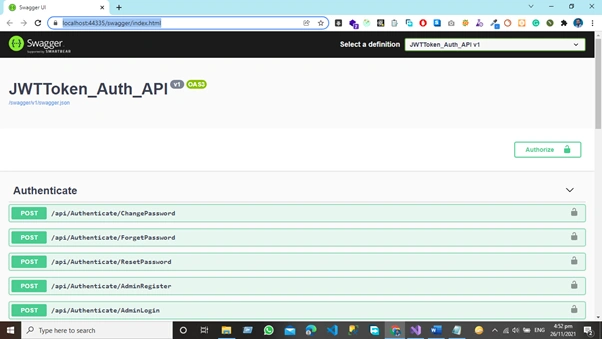
Swagger open API is used for developing APIs using ASP.Net Core versions .Net 5 and .Net 6. We can test our all-API Endpoints in a default functionality because it's directly integrated with our API for testing like
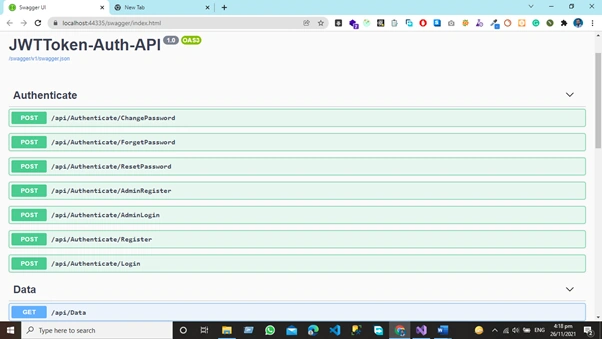
Swagger revealed all our endpoints in the Default view, and we can test them using JSON Schema. Like
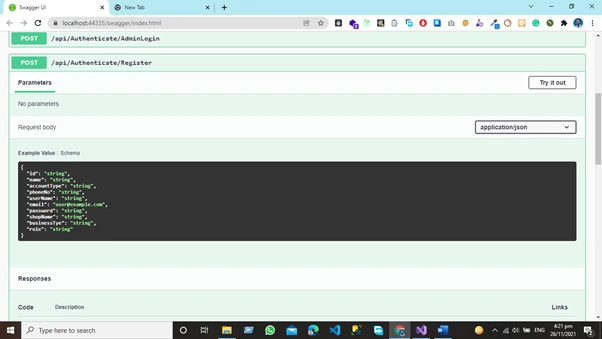
However, we have a challenge in that we wish to retrieve data from a secured endpoint that requires a Token as well as a Role-based Token. After submitting a JWT Token and a Role, the endpoint shown below will return data.
[HttpGet]
[Authorize(Roles = "Admin")]
public IEnumerable < WeatherForecast > Get() {
    var rng = new Random();
    return Enumerable.Range(1, 5).Select(index => new WeatherForecast {
        Date = DateTime.Now.AddDays(index),
            TemperatureC = rng.Next(-20, 55),
            Summary = Summaries[rng.Next(Summaries.Length)]
    }).ToArray();
}
Demo
We'll test the endpoint listed below without a token or a role.
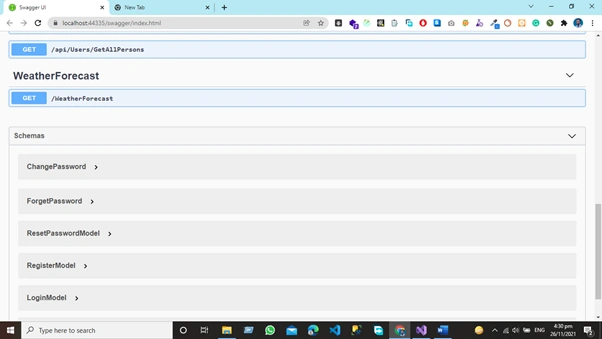
After hitting the endpoint, we have the output like
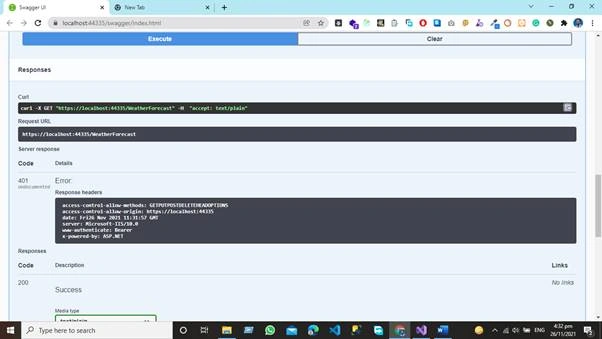
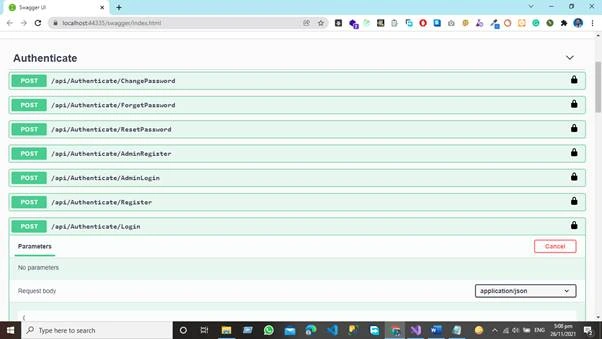
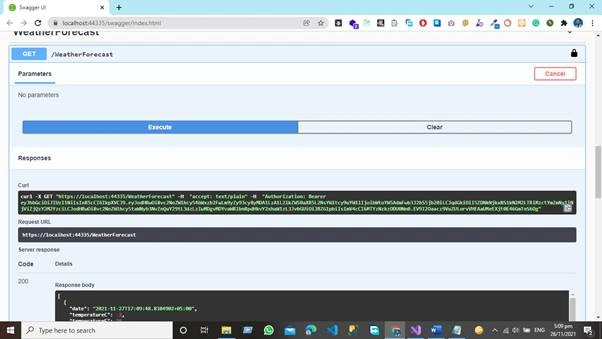
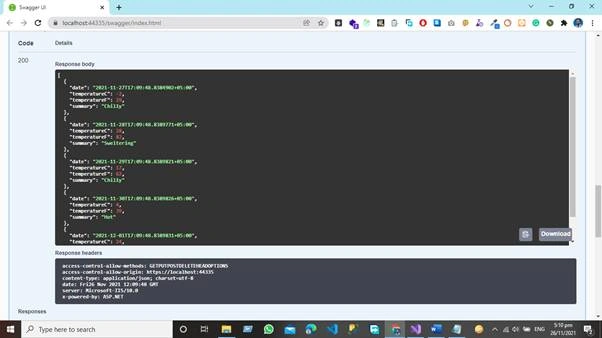
Unauthorized Access because the endpoint requires a JWT Token and a Role in order to access data from the database. By default, Swagger does not provide capability for token-based authorization of endpoints. We are currently adding JWT Token-based functionality to our API.
Default View
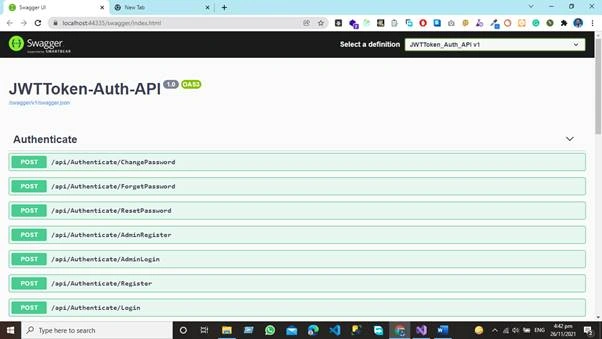
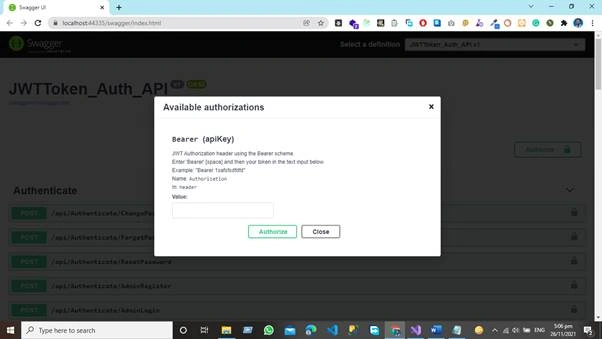
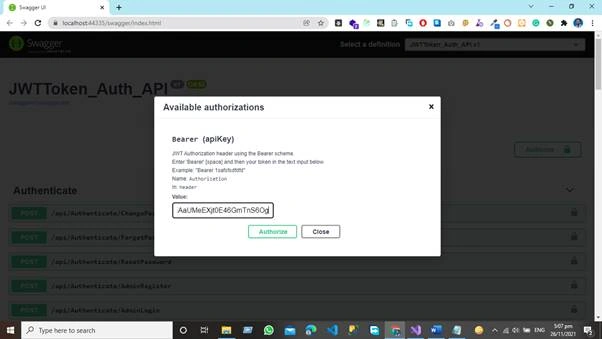
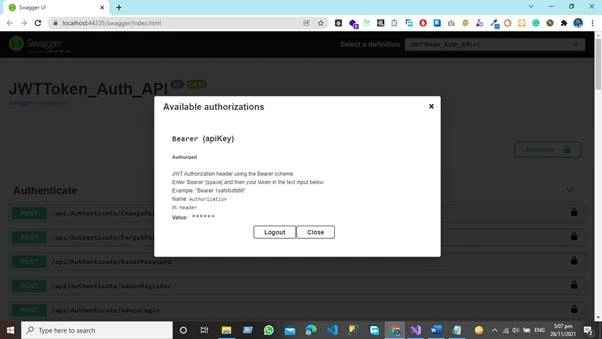
Adding JWT Token Functionality in Our API
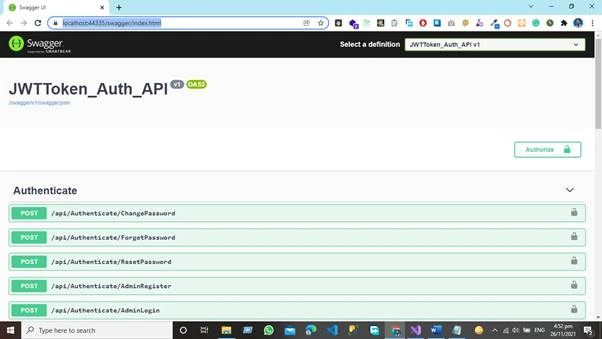
First and foremost, you must change the default swagger functionality in our startup.cs class
public void ConfigureServices(IServiceCollection services) {
    services.AddDbContext < ApplicationDbContext > (options => options.UseSqlServer(Configuration.GetConnectionString("ConnStr")));
    services.AddControllers();
    services.AddControllers();
    //Default Functionality Added by Swagger
    services.AddSwaggerGen();
    // For Entity Framework
    // For Identity
    services.AddIdentity < ApplicationUser, IdentityRole > ().AddEntityFrameworkStores < ApplicationDbContext > ().AddDefaultTokenProviders();
    // Adding Authentication
    services.AddAuthentication(options => {
            options.DefaultAuthenticateScheme = JwtBearerDefaults.AuthenticationScheme;
            options.DefaultChallengeScheme = JwtBearerDefaults.AuthenticationScheme;
            options.DefaultScheme = JwtBearerDefaults.AuthenticationScheme;
        })
        // Adding Jwt Bearer
        .AddJwtBearer(options => {
            options.SaveToken = true;
            options.RequireHttpsMetadata = false;
            options.TokenValidationParameters = new TokenValidationParameters() {
                ValidateIssuer = false,
                    ValidateAudience = false,
                    ValidAudience = Configuration["JWT:ValidAudience"],
                    ValidIssuer = Configuration["JWT:ValidIssuer"],
                    IssuerSigningKey = new SymmetricSecurityKey(Encoding.UTF8.GetBytes(Configuration["JWT:Secret"]))
            };
        });
    //services.AddTransient<PersonService, PersonService>();
}
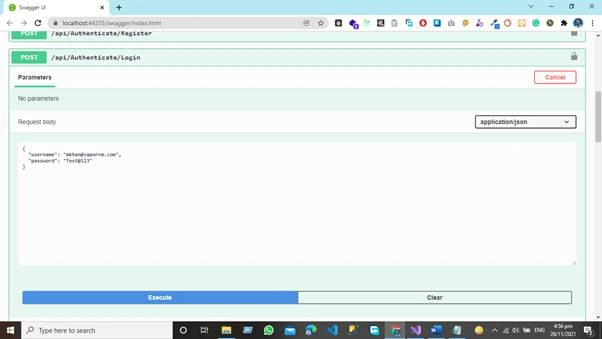
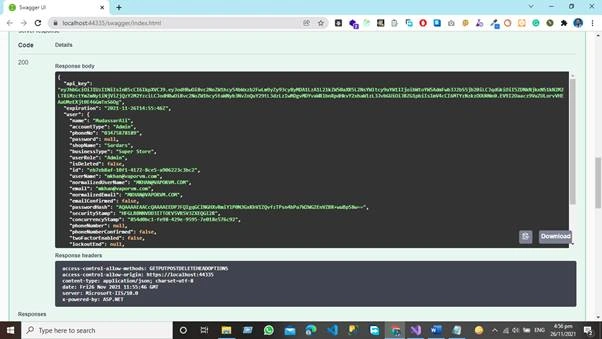
Hassan ArafatPosted Mar 14, 2024, 7:54 PM
This is awesome, Thanks
Moslem HadiPosted Apr 30, 2023, 1:50 PM
Amazing and clear. Thanks a lot.
ovis ariesPosted Jun 30, 2022, 12:30 PM
Very nice walk through, work perfectly
Pranam BhatPosted Dec 1, 2021, 3:53 AM
Good one. Thanks for sharing.