

Many organizations have started using Exchange Online at some point with Exchange 2010 under Hybrid to take advantage of most of the features available with Office 365.
But as we all know that Exchange 2010 is coming to its end of life, so everyone must migrate their Exchange 2010 to Exchange 2013 or Exchange 2016 at some point before it reaches its end date.
Many organizations use Hybrid configuration for easy management of Active Directory users to Office 365 and mail flow for internal relay from all MFD’s & on-prem applications.
In this article, I have covered the migration from Hybrid Exchange 2010 to Hybrid Exchange 2016.
- Add Exchange Server 2016 to your environment.
- Exchange 2016 prerequisites
- Prepare AD
- Install the following software:
- Active Directory schema update
- Prepare Active Directory
- Refresh Directory Schema – AD Connect
- Installation of Exchange 2016
- Activate the server using a free hybrid license key
- Update the Service Connection Point (SCP)
- Import the Exchange UCC certificate
- Update Exchange Virtual Directories & Outlook Anywhere settings
- Add anonymous SMTP relay connector
- Update DNS and firewall rules, and update send connectors
- Uninstall the Legacy Exchange Server
- Run the new hybrid configuration wizard
Part-1 covers Exchange 2016 installation with Hybrid license activation.
Exchange 2016
Exchange 2016 Prerequisites
Prepare AD
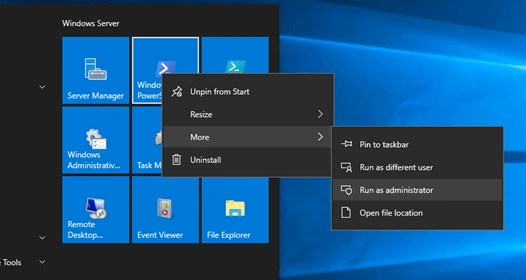
Install-WindowsFeature RSAT-ADDS
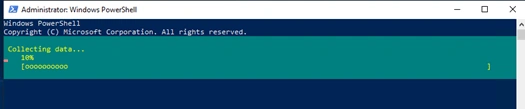

Check the Prerequisites for Exchange 2016 Mailbox servers on Windows Server 2016
Install-WindowsFeature NET-Framework-45-Features, RPC-over-HTTP-proxy, RSAT-Clustering, RSAT-Clustering-CmdInterface, RSAT-Clustering-Mgmt, RSAT-Clustering-PowerShell, Web-Mgmt-Console, Dir-Browsing, Web-Dyn-Compression, Web-Http-Errors, Web-Http-Logging, Web-Http-Redirect, Web-Http-Tracing, Web-ISAPI-Ext, Web-ISAPI-Filter, Web-Lgcy-Mgmt-Console, Web-Metabase, Web-Mgmt-Console, Web-Mgmt-Service, Web-Net-Ext45, Web-Request-Monitor, Web-Server, Web-Stat-Compression, Web-Static-Content, Web-Windows-Auth, Web-WMI, Windows-Identity-Foundation, RSAT-ADDS


Reboot the server.
Install the following software in order.
- .NET Framework 4.7.1
- Microsoft Knowledge Base article KB3206632
- Visual C++ Redistributable Package for Visual Studio 2012
- Visual C++ Redistributable Package for Visual Studio 2013
- Microsoft Unified Communications Managed API 4.0, Core Runtime 64-bit
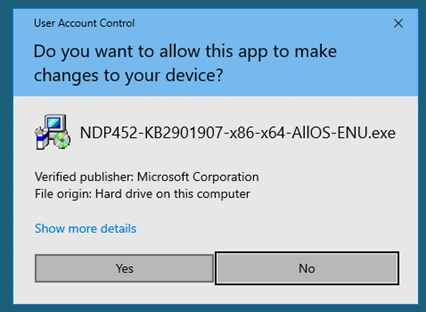
https://www.catalog.update.microsoft.com/Search.aspx?q=kb3206632
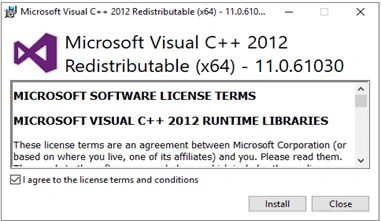
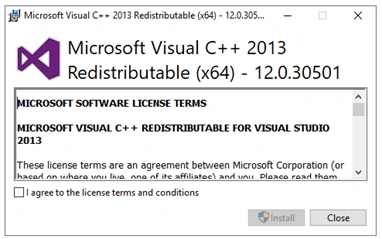
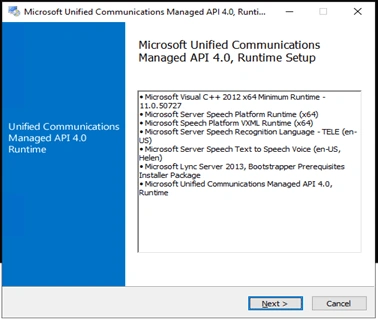
Reboot the server.
Active Directory schema update
In normal cases, we will run the
setup.exe /PrepareSchema /IAcceptExchangeServerLicenseTerms command to prepare the schema but as we are already using a hybrid active directory instead of AD Schema, we will prepare a Tenant Organization config. For that, we need to download the Tenant Organization config from Exchange Online. So, connect to Exchange Online PowerShell.
Log into your O365 tenant - Run.
Get-OrganizationConfig | Export-clixml -Path c:\script\0365oconfig.xml

Perform Active Directory schema update by running the command from the path you’ve downloaded the Exchange Server 2016 installation files from.
To prepare the Tenant Organization config, run the following command on PowerShell.
Setup /PrepareAD /TenantOrganizationconfig:C:\0365oconfig.xml /IAcceptExchangeServerLicenseTerms

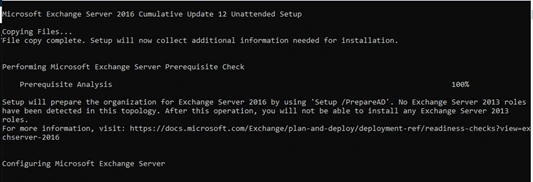

Prepare Active Directory
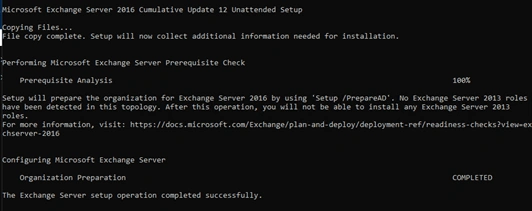
Prepare Active Directory by running the following command.
setup.exe /PrepareAD /IAcceptExchangeServerLicenseTerms
Note
User needs to be a member of the Schema Admins and Enterprise Admins group.
User needs to be a member of the Schema Admins and Enterprise Admins group.

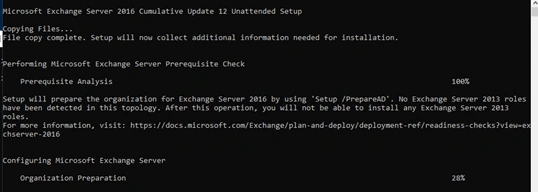
Refresh Directory Schema – AD Connect
Once your AD Schema is prepared for new Exchange 2016, you will start receiving emails from [email protected] saying Unable to update this object in Azure Active Directory.
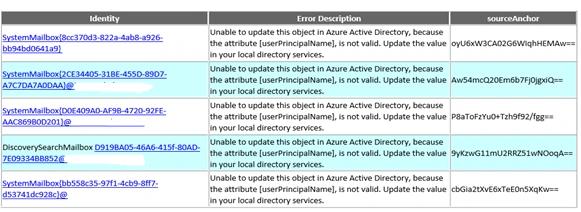
This is because of the newly introduced Attributes. AADConnect will not recognize that change. Changes that are made to the source directory schema after the Connector has been created are not automatically reflected. We do have a manual way to force a refresh of the schema from within the MIISClient tool, which is too much setting from the back-end.
Simply re-run the AADConnect setup tool located at “C:\Program Files\Microsoft Azure Active Directory Connect”.
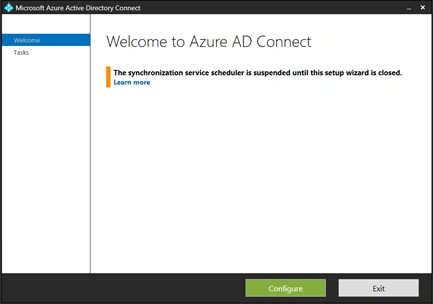
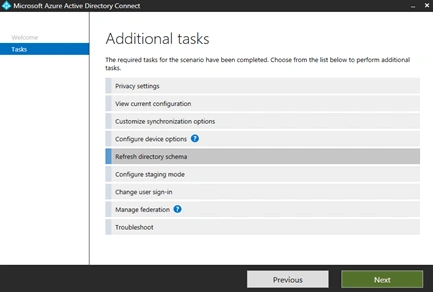
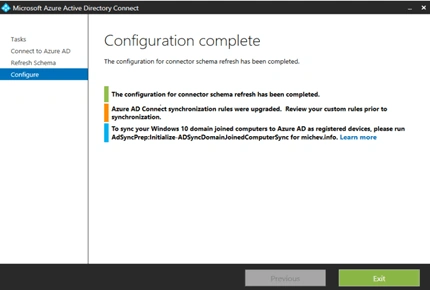
Once the process is completed, all the new attributes got added to sync with Azure Active Directory.
Installation of Exchange 2016
To prepare the Exchange 2010 Servers in your organization for coexistence with Exchange 2016, you'll need to do the following before you install Exchange 2016.
- Verify that the Exchange Server 2010 Service Pack 3 (SP3) is installed on all the Exchange Servers in your organization.
- Verify that at least Update Rollup 11 for Exchange 2010 Service Pack 3 is installed on all the Exchange 2010 SP3 servers in your organization.
- Install a hotfix for Outlook Anywhere on any Exchange 2010 SP3 computers running Windows 2008 R2.
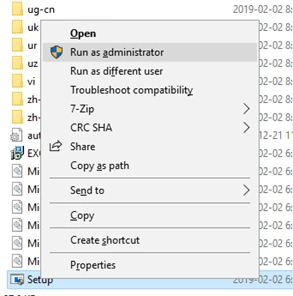
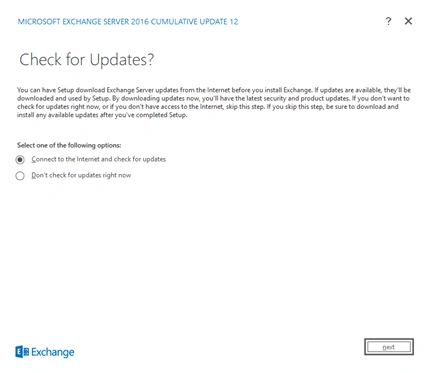
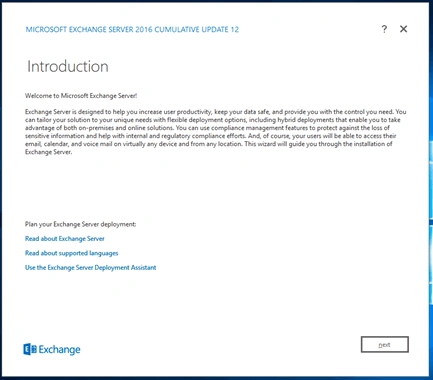
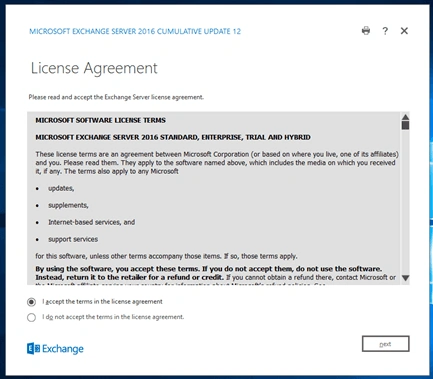
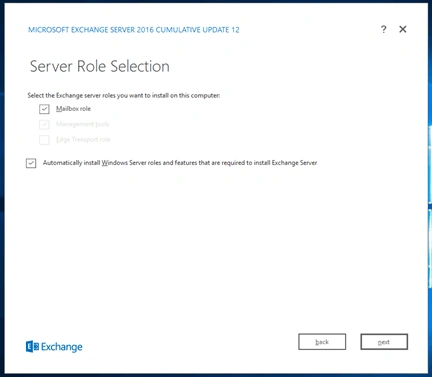
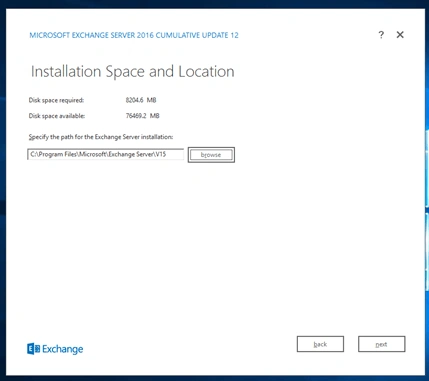
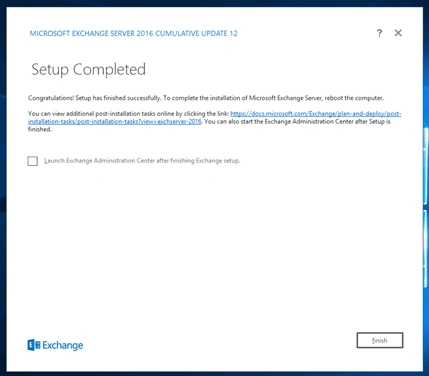
Run Exchange Server 2016 installation file as administrator.
Ensure that you have the latest cumulative update file for Exchange Server 2016.
Activate the server using a free hybrid license key
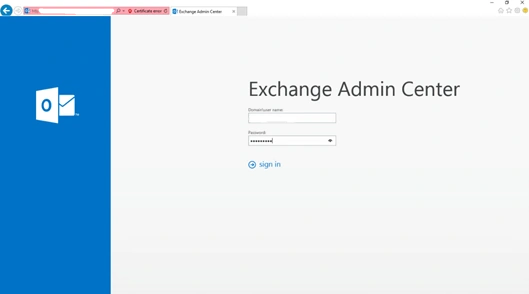
Log into Exchange Admin Center with Exchange admin username and password.
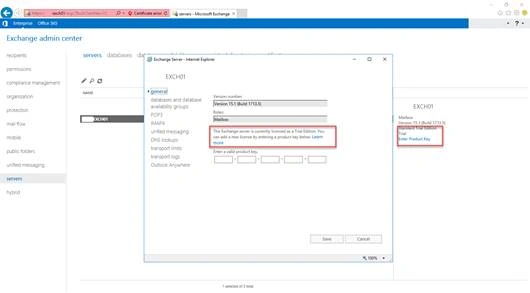
Under Servers, select the new server – it shows as Trial Edition.
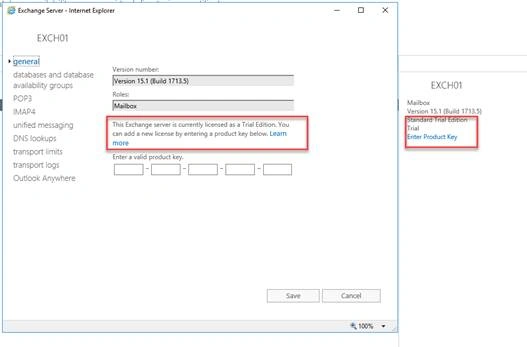
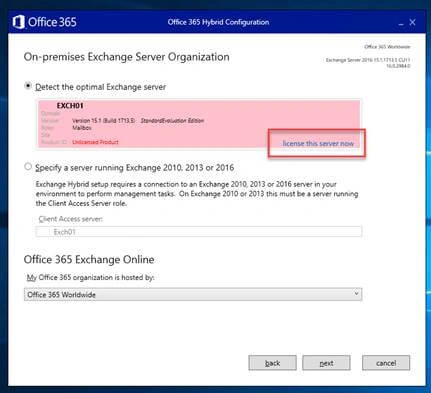
To get a hybrid license key, we need to run the Hybrid Configuration tool, which can be download from Hybrid option under Exchange Online Admin Center or http://aka.ms/HybridWizard
Make sure you run this from the new Exchange 2016 Server so it can detect all the settings automatically.
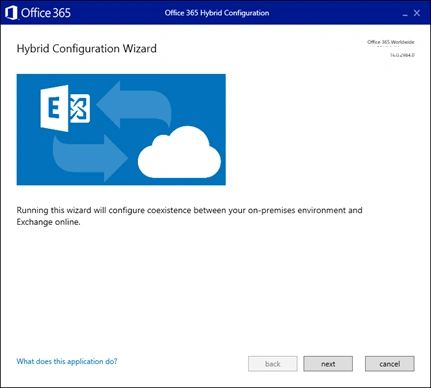
Once this detects optimal Exchange Server, click "License this server now".
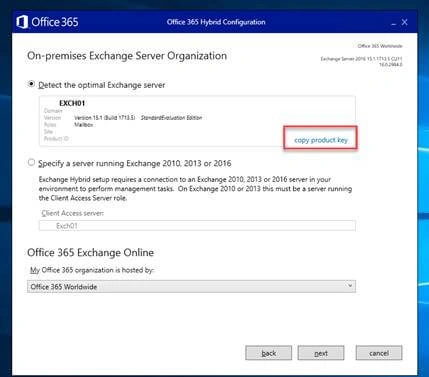
You can copy the product key if you need to run re-installation on the same server.
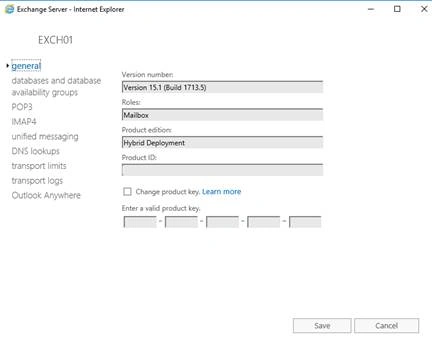
Under Servers, now the new server shows up as Hybrid Deployment.
Part 2 of this article will cover the configuration update and migration of Hybrid Exchange 2010 to Hybrid Exchange 2016.
Feel free to reach out if you have any question or concerns.
Thank you for reading.
Pradeep KatiyarPosted Jul 8, 2024, 6:32 AM
Nice thanks!
Tb WorkPosted Jun 27, 2023, 9:01 PM
This is a great article! Now that Exchange 2019 CU12 is allowed the free Hybrid license, any chance you could update it or add some steps for Hybrid Exchange 2016 To Hybrid Exchange 2019?
TOmmy GambrellPosted Sep 22, 2021, 4:37 PM
Great article! Question, when you run the Hybrid Config tool to get the License key do you continue through that HC tool to finish or stop once you get the key? I copied the key and stopped the wizard but not sure if I need to finish entire wizard or not. Thanks!!
john jorgePosted May 15, 2021, 11:47 AM
New Exchange server are giving latest features and functionalities and also give more security. If you are planning to migrate your Exchange 2016 to 2019 or Exchange 2010 to 2016 and many more, EdbMails Exchange migration is one of the best Exchange migration solutions that meet all your Exchange migration requirements.
Phil MapfumoPosted Mar 16, 2021, 10:43 PM
Hi Krunal, we have can't seem to find the free hybrid key via the Office365 admin console as the server option does not show via the Office365 admin console is there any other way we can get the key? Inaddition do we need to import the federation certificate from the 2010 exchange server to the 2016 one? Many thanks in advance
Phil MapfumoPosted Mar 5, 2021, 4:39 PM
Hi Krunal, thanks for the post, however l have a few questions: 1)We have an exchange server 2010 in hybrid mode, do we do an upgrade or new install: 2) Do we need to obtain a new license from Microsoft for exchange 2016 or is it free if we are in hybrid mode? :3) In the "Uninstall the Legacy Exchange Server" it mentions removing mailboxes, address books and public folders, will we lose data if there are removed? Thanks in advance
Johnny MoorePosted Nov 9, 2020, 2:10 PM
Hi Krunal, Thanks for this post it's so helpful. I am in the process of preparing to upgrade to Exchange 2016 in our Hybrid environment. As we will be removing the Exchange 2010 server, Is it possible to use the same Namespaces that the Exchange 2010 server uses for the SCP and Virtual Directories when configuring the 2016 server?
Nicholas RayPosted Nov 3, 2020, 1:09 PM
I have a 2008 Active Directory currently. We are in the process of migrating to 2019 but not sure if I can get this completed before migrating mail. Will updating the AD schema have any impact on my 2008 AD and in turn cause issues for my users? We are trying to migrate off of a 2010 Exchange server to O365. I want to stand up a 2016 server to handle this migration but don't want to lose functionality or break any of my users.
John LeighPosted Oct 7, 2020, 1:29 PM
Hi Krunal, thanks for putting this together! I haven't found a single source online with this much useful information about this process anywhere. One question - can I perform this process with active mailboxes and distribution lists still operating on my Exchange 2010 server? If so, at what step should I swing those over to the new Exchange 2016 server?
DC expPosted Aug 25, 2020, 8:02 AM
Hi Krunal, thanks for the great article. I'm with little knowledge on exchange environment and inherited partial completed migration on new role, company migrated to O365 year ago but i still see 5 exchange servers. 2 are exchange 2007 and 3 are 2010. old hardware and 2008 R2 windows. what info i need to capture from existing structure as there is no documentation available. Thanks
Steven SiuPosted Aug 11, 2020, 6:44 PM
Hello Kaunas, I was able to follow the article to install Exchange 2016, but when I tried to log into EAC, I was in a login loop after entering my admin credential, where it just send me back to the login screen. I know the credentials are correct because I didn’t get a bad password error message. Appreciate your advice.
Hector E. Orozco A.Posted Aug 4, 2020, 8:26 AM
Hi Krunal, we migrated all mailboxes from Exchange 2010 to O365, then removed Arbitration Mailbox and server with role Mailbox, only left servers with role HT (For SMTP Relay) and we keep the Hybrid Enviroment (integrated with active directory), now want to change those old Exchange 2010 (HT) for a new Exchange 2016 and cannot complete the installation because there is no Arbitration Mailbox. I understand that re-running "Setup.exe / PrepareAD" should recreate the Arbitration Mailboxes but don't have any Mailbox / Database role servers for the Mandatory User Mailbox. We need to reinstall a Exchange 2010 with Mailbox role in the organization prior to the installation of the new Exchange 2016 (MB) so that Arbitration / System Mailbox can be enabled ?. Not need use mailboxes OnPremises is only for SMTP Relay and integration and authorization with active directory (Hybrid).How can I migrate Exchange 2010 to 2016?. Thanks for help and support.
Saqlain RazaPosted Aug 4, 2020, 4:15 AM
Hi Krunal, great article. we have to set up exchange 2016 in the same setup but what is to change in case we have an edge subscription, and hybrid is configured to send/receive emails to/from O365 with it.
Dean JamesPosted Jul 30, 2020, 1:57 PM
Hi Krunal, I have a similar question to Ronald. We presently have Exchange 2010 setup in a hybrid fashion on Windows Server 2008. Do we upgrade to Exchange 2016 first and then do an in-place upgrade of Windows Server 2008 to Windows Server 2016/2019? Or would we do the in-place upgrade first and then upgrade the Exchange Server? I don't think migration to a new server would be possible due to limited resources.
Hector E. Orozco A.Posted Jul 27, 2020, 7:48 AM
1-. When you have a hybrid environment with Exchange 2010, before implementing the first Exchange 2016 the command is not executed setup.exe /PrepareSchema /IAcceptExchangeServerLicenseTerms command to prepare the schema?, now run directly /PrepareAD to prepare the Tenant Organization config, run the following command on PowerShell for example:Setup /PrepareAD /TenantOrganizationconfig:C:\0365oconfig.xml /IAcceptExchangeServerLicenseTerms and later run: setup.exe /PrepareAD /IAcceptExchangeServerLicenseTerms.
Hector E. Orozco A.Posted Jul 27, 2020, 7:44 AM
Hi, congratulations excellent article, but have any questions:
Aus SupportPosted Jul 6, 2020, 7:42 AM
Hi Krunal, We have two ADFS and ADFS Proxy configured? So do we need to check or any extra steps required?
Ronald MartensPosted May 25, 2020, 10:23 AM
Hi Krunal, I have only one Exchange 2010 server on Windows Server 2008 R2. I'm installing Hybrid agent on a new Windows Server 2016. Do I install Exchange 2016 on this server or first perform the migration with my Exchange 2010 server?
Guest UserPosted May 13, 2020, 5:25 PM
Hi Krunal, thanks for these articles. Very helpful. We have yet to move to Exchange 2016, but will be this weekend. I'm wondering what happens with Mail Contacts after we have made the move. Do they need to be manually migrated from Exchange 2010 to Exchange 2016? Or do they get synced to the new server once Exchange has been installed and configured for 2016? Thanks.
Christian FlaggPosted May 1, 2020, 9:56 AM
This is a great article! We currently have exchange 2010 SP3 full patched in a full hybrid config with O365 and are right in the middle of migrating about 1300 mailboxes to O365. Can I add the exchange 2016 server now to manage the O365 mailboxes or should I wait until we have completed the migrations?
Scott HaighPosted Apr 22, 2020, 12:51 PM
Thanks for this excellent overview. In a situation where we will be installing multiple exchange 2016 servers to replace multiple 2010 servers, should we complete the installation of all 2016 servers prior to running the Hybrid configuration wizard again?
Daniel BeckerPosted Feb 6, 2020, 4:26 PM
Right now, our flow with 2010 is Account creation using EMC, which writes email attributes to AD. The newly created account get's pushed to Office 365 via AAD Connect. At no time does Exchange (which we keep powered off) communicate with Office 365 in our org. Please advise, thank you.
Simon MartinPosted Jan 14, 2020, 10:29 PM
Hi Krunal, I'm following the guide but on the Hybrid Configuration wizard, 'minimal hybrid configuration' is greyed out. How can I enable this?
Daniel BeckerPosted Jan 1, 2020, 10:20 PM
In part two you mention configuring Outlook Anywhere, auto discover, transport rules and certificates. Our mail is currently on Exchange Online Office 365, and all we use Exchange for is on prem account creation with Active Directory attributes. Do we need to set up all those functions on the 2016 hybrid server? Thanks.
Mohamed El HutiPosted Dec 27, 2019, 5:52 AM
Great article Krunal! actually I managed to migrate Hybird exchange 2010 to 2016 successfully after reading all of this, so thank you. Can I use same steps to migrate the Hybird 2016 to 2019 as that is the goal? and one more thing, how to prepare child (PrepareAllDomains) domains in this scenario?
Anthony PackPosted Dec 9, 2019, 5:23 AM
Hi Krunal, Nice write up. To confirm if you run Setup /PrepareAD /TenantOrganizationconfig and specify the configuration file, that performs all the necessary schema updates. I gather you dont then need to run setup.exe /PrepareAD /IAcceptExchangeServerLicenseTerms afterwards?
Daniel BeckerPosted Dec 5, 2019, 11:03 AM
Hi Krunal, Right now, we have our Exchange 2010 on a Windows 2008 R2 VM we need to retire per microsoft's life cycle. Any additional considerations needed to migrate to 2016 Exchange Hybrid. All of our mailboxes reside in the cloud and we merely begin account creation from on prem. Thanks.
Simon DuncanPosted Oct 2, 2019, 3:18 PM
Have you any experience with resource forest Account Forest (Fabrikom.local) ? Windows 2008 R2 Resource Forest (Contoso.local) ? Exchange 2010 SP3 ? Linked Mailboxes are linked to the account forest (Fabrikom.local) ? There is a trust between these forests. Plan ? Move mailboxes from resource forest to Office 365. ? Want to completely decommission the Resource forest. ? Create one on-prem exchange server in Account forest for administrative tasks as we’ve AD still in on-prem and need SSO. One idea: simplest approach: Move all mailboxes to Exchange Online from the resource forest – AAD Connect natively handles linked mailboxes with no additional configuration unless the customer specifically has done something strange like enabling the accounts underlying the linked mailboxes, etc. No worries about servers/applications/devices relaying SMTP in the resource forest. Install Exchange Server in the account forest Htbrid Exchange 2016, tricky part i have to consider copy all Exchange metadata from the resource forest to the account forest. (This is not a simple task, i presume i'll need to change the users in the account forest to remote mailboxes, preserving SMTP addresses, Exchange parameters, DG memberships, etc. I only have about 300 users to deal with. When completed, reinstall/reconfigure AAD Connect so it no longer syncs the resource forest. Finally, decommission the resource forest.
Rocus PeterPosted Aug 29, 2019, 5:43 PM
Hi Krunal, Your post is informative, i am currently looking to upgrade my exchange 2010 hybrid to exchange 2016 hybrid. Can i follow the article as a step by step to migrate to a hybrid 2016? Thanks
ankit patelPosted Jul 11, 2019, 7:15 AM
Hi krunal, it is a very helpful post from you. Great learning go ahead and post more few articles.