Introduction
In this article, we explore why AI agents require a strong, modern foundation with the Microsoft Agent Framework, highlight its key features, examine the four core pillars of the framework, and share examples of enterprise customers already leveraging it.
Microsoft Agent Framework
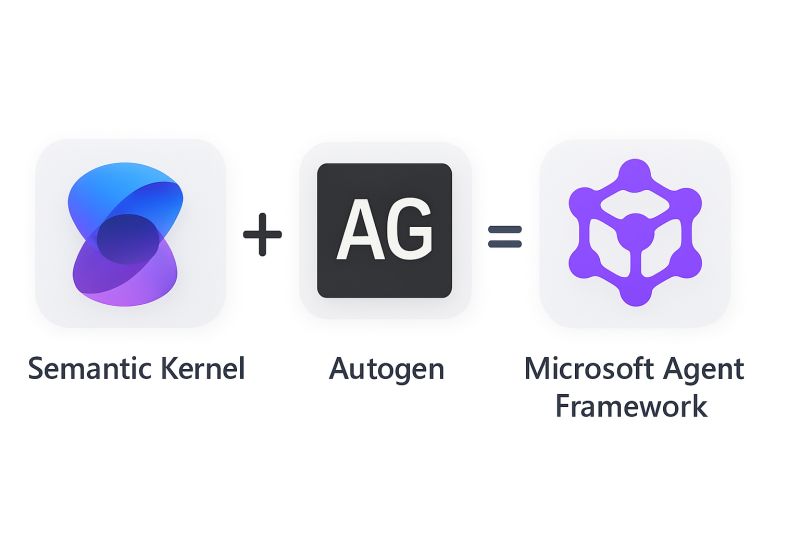
Microsoft Agent Framework is an open-source SDK and runtime built to simplify the creation, deployment, and management of complex multi-agent systems. By combining the proven enterprise foundations of Semantic Kernel with AutoGen's flexible orchestration, teams can move seamlessly from experimentation to production.
Key Capabilities
With Microsoft Agent Framework, you get:
Standards-first interoperability — Agents built with MCP, A2A, and OpenAPI remain portable across ecosystems.
From innovation to production — Cutting-edge research orchestration patterns, hardened for real-world enterprise use.
Extensible by design — Modular components, rich connectors, flexible memory, and declarative agent configuration.
Built for the enterprise — Comprehensive observability, governance, security, and durable long-running processes.
Microsoft Agent Framework Architecture
The core architecture of the framework is structured around four fundamental elements:
Standards-first Interoperability
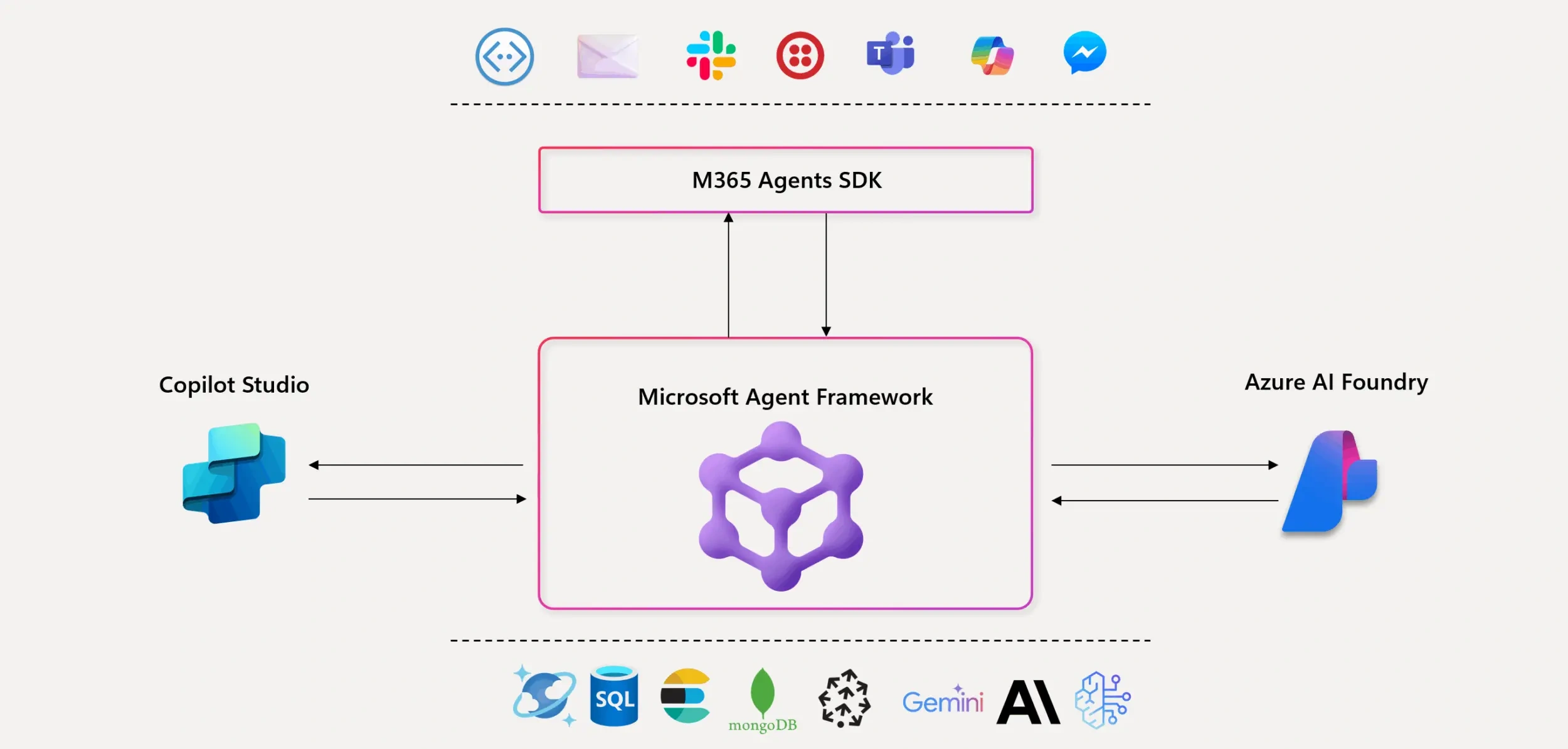
Agents don’t operate in isolation they must interact with data, tools, and other agents. Microsoft Agent Framework is built on open standards, giving developers the freedom to select integrations while ensuring portability across frameworks and cloud platforms.
Model Context Protocol (MCP): Agents can dynamically discover and invoke external tools or data services exposed through MCP. The framework simplifies integration with an expanding ecosystem of MCP-compliant services, eliminating the need for custom integration code.
Agent-to-Agent (A2A) communication: Agents can collaborate across runtimes using structured, protocol-based messaging. A2A enables distributed workflows where one agent gathers data, another performs analysis, and a third validates outcomes—even when agents run on different frameworks or environments.
OpenAPI-first approach: Any REST API defined with an OpenAPI specification can be instantly imported as a callable tool. Microsoft Agent Framework automatically manages schema interpretation, tool generation, and secure execution, allowing developers to tap into thousands of enterprise APIs without manual wrappers.
Cloud-agnostic runtime: Agents can be deployed in containers, on-premises, or across multiple cloud environments. Developers can initialize an agent using their preferred SDK (Azure OpenAI, OpenAI, and others), expose existing methods as AI functions, and seamlessly connect to external services.
Additionally, the latest updates to the VS Code AI Toolkit enhance the developer experience by streamlining how teams build with the Microsoft Agent Framework. Developers can now create, run, visualize, and debug multi-agent workflows locally, accelerating the inner development loop within the familiar VS Code environment.
From innovation to production
Microsoft Agent Framework serves as a bridge between cutting-edge research innovation and enterprise-grade production systems. Many of the most impactful advances in multi-agent orchestration originate from Microsoft Research through AutoGen, and this framework operationalizes those concepts for real-world use—without compromising reliability, governance, or performance.
The framework enables multiple orchestration patterns, including:
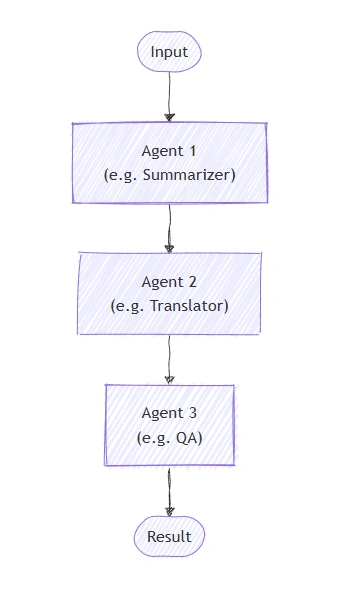
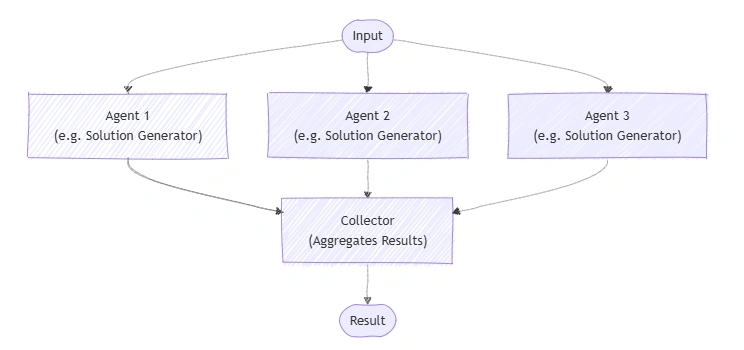
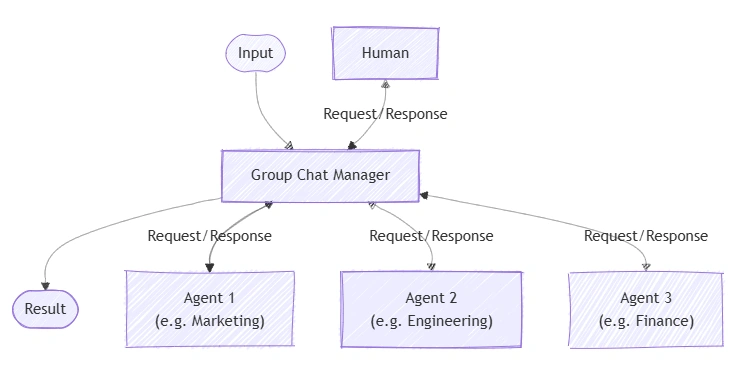
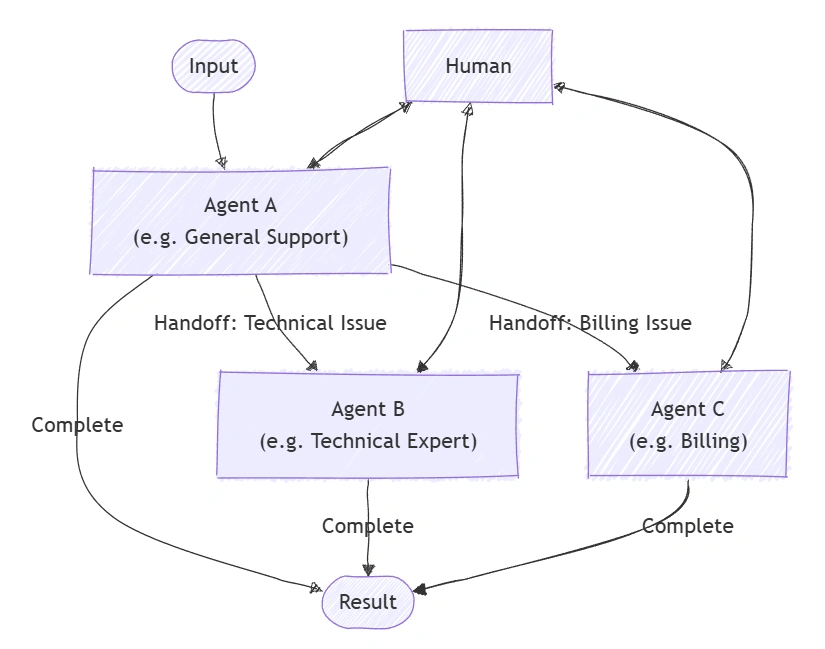
Magnetic orchestration, in which a manager agent maintains and continuously refines a dynamic task ledger, coordinating specialized agents—and, when needed, human input—to solve complex, open-ended problems.

Extensible by design and Community driven
Microsoft Agent Framework is fully open source and built to evolve alongside the community. Its modular architecture makes extension, customization, and contribution straightforward.
Enterprise system connectors: The framework includes a rich set of built-in connectors—such as Azure AI Foundry, Microsoft Graph, Microsoft Fabric, SharePoint, Oracle, Amazon Bedrock, MongoDB, and a wide range of SaaS platforms via Azure Logic Apps—enabling agents to access enterprise data from day one.
Pluggable memory modules: Developers can select from Redis, Pinecone, Qdrant, Weaviate, Elasticsearch, Postgres, or implement custom stores for conversational memory. The framework provides a unified abstraction while allowing full flexibility in choosing the backend.
Declarative agent definitions: Agents can be defined using YAML or JSON to declaratively specify prompts, roles, and tools. These definitions are easy to version-control, templatize, and share across teams.
Community-driven innovation: Microsoft Agent Framework is designed to incorporate community-led orchestration patterns, new connectors, and emerging best practices as the ecosystem grows.
Built for the Enterprise
Microsoft Agent Framework goes far beyond experimentation—it is purpose-built for enterprise-grade deployment from day one. It provides comprehensive tooling and runtime capabilities that enable teams to move confidently from prototype to production at scale, while deeply integrating with the Azure AI Foundry ecosystem.
End-to-end observability: Every agent action, tool invocation, and orchestration step can be instrumented using OpenTelemetry, enabling clear traceability of reasoning flows and performance monitoring through Azure AI Foundry dashboards.
Secure cloud hosting: Agents run natively on Azure AI Foundry with enterprise controls such as virtual network integration, role-based access control, private data handling, and built-in content safety mechanisms.
Security and compliance: With Azure AI Content Safety, Entra ID authentication, and structured logging, agents built on the framework are well-suited for deployment in regulated and compliance-driven environments.
Durable long-running execution: Agent workflows and threads can pause, resume, and recover from failures, with built-in retry and error-handling to ensure reliability for long-running, large-scale processes.
Human-in-the-loop governance: For scenarios requiring oversight, tools can be configured to require human approval. The framework automatically generates approval requests that can be routed to a UI or queue, and execution proceeds or halts based on the response—whether the tool is local or a remote service—keeping sensitive operations under control.
CI/CD integration: Native integration with GitHub Actions and Azure DevOps enables streamlined deployment pipelines, with telemetry flowing into Azure Monitor and Application Insights for enterprise-grade monitoring and root-cause analysis.
With these capabilities, Microsoft Agent Framework enables teams to prototype locally, debug using rich telemetry, and seamlessly scale into secure, production-ready deployments that meet modern enterprise AI requirements.
Growing Customer Adoption
Organizations across industries are actively evaluating Microsoft Agent Framework in production-like scenarios:
KPMG is building Clara AI, a multi-agent solution designed to automate audit testing and documentation.
Commerzbank is piloting Microsoft Agent Framework to enable avatar-based customer support, delivering more natural, accessible, and compliant customer interactions.
Sitecore is developing an intelligent agent–powered solution that enables marketers to interact more seamlessly with the Sitecore platform, automating tasks across the content supply chain from creating and managing web experiences to handling digital assets.
Summary
In this article, we explored how Microsoft Agent Framework provides a robust, enterprise-ready foundation for building intelligent multi-agent systems. We covered its key features, the four core architectural pillars, extensibility, community-driven innovation, and enterprise-grade capabilities such as observability, security, compliance, and CI/CD integration. We also highlighted real-world examples of organizations leveraging the framework to solve complex business challenges.
We hope this article was helpful, and we wish you happy reading and happy learning. See you in the next article!


Join the conversation! Your thoughts help the community grow.