

The Testing Gap That Developers Miss
Software engineers have learned to appreciate the value of automated testing. Continuous integration, unit tests, and integration suites are widely adopted best practices. Yet there is an entire category of software where traditional testing approaches fall apart: data‑driven visual pipelines.
Games, 3D engines, real‑time rendering applications, movie editors, AR/VR experiences—any application where the final output is a rendered image rather than a computer‑readable data structure—make conventional testing incomplete. If the application's behaviour is driven more by data than by code, the testing gap becomes even larger.
For example, if in‑game characters receive a new set of animations, the behaviour of the entire game may change without a single line of code being committed.
The consequences of bugs slipping into production can be severe. When Cyberpunk 2077 launched in a buggy state, CD Projekt Red’s stock dropped dramatically within a week, wiping billions off its market value and eroding user trust.
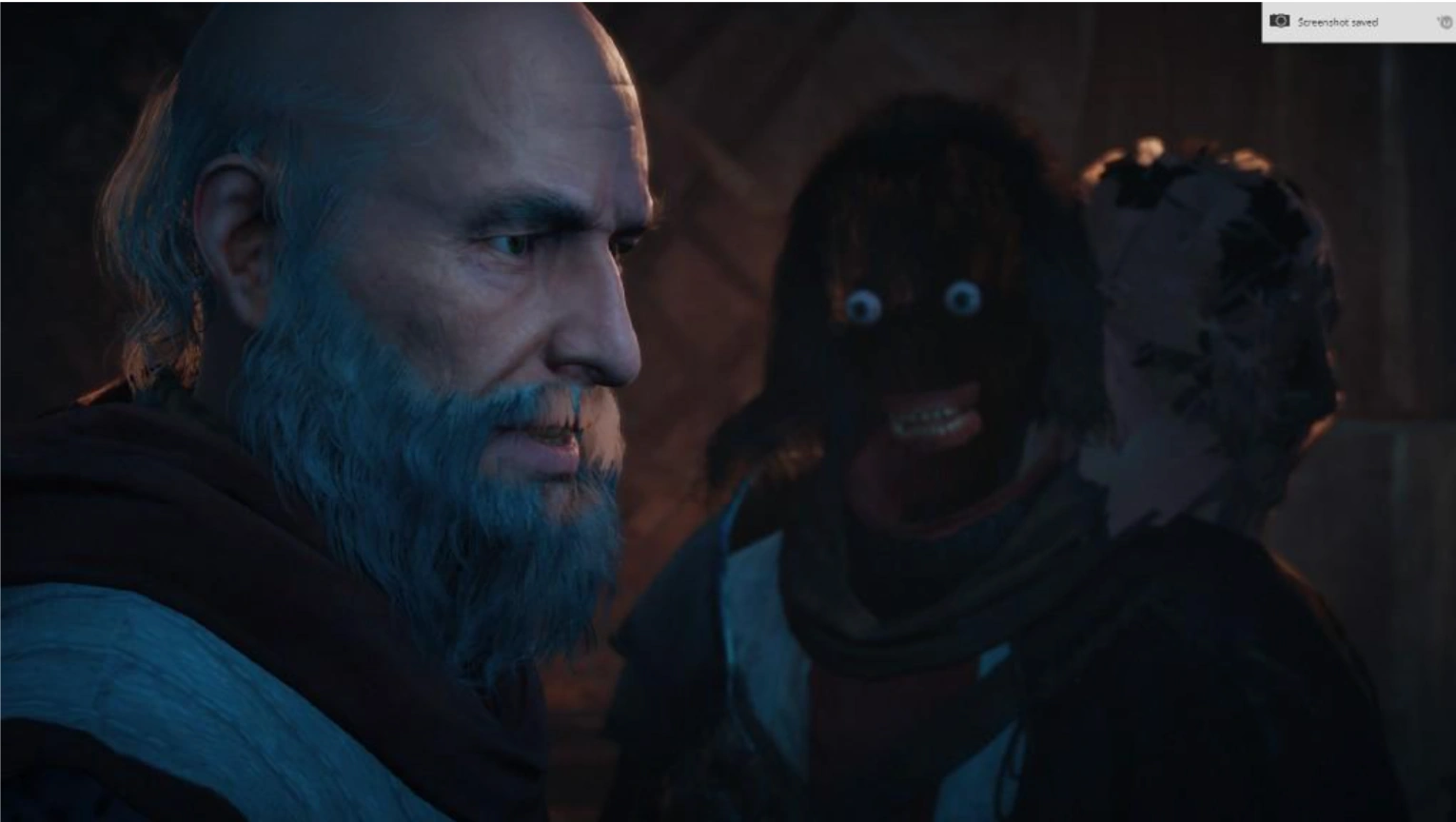
Another well‑known example occurred during the launch of Assassin’s Creed Unity, where characters rendered without facial geometry, leaving only floating eyes and teeth. The issue occurred because the face asset streamed with a different priority than the body. From the computer’s perspective, the system behaved correctly. From the human perspective, the result looked completely broken.
These problems highlight a fundamental challenge in testing modern visual systems.
Why Unit and Integration Tests Are Insufficient
In a typical web application, tests validate predictable outputs. A function returns JSON, a database query returns rows, or an API endpoint responds with a specific status code.
These outputs are discrete and deterministic, which allows simple assertions such as:
Assert.Equal(expected, actual)
However, visual pipelines violate this assumption.
Pixel Equality Is Not Reliable
A rendered frame is composed of millions of pixel values influenced by:
Lighting
Material properties
Camera position
Post‑processing
GPU behaviour
Two frames may appear identical to humans while having small pixel differences.
For instance, a character wearing a striped shirt might shift one pixel due to floating‑point calculations in animation math. Humans cannot notice this difference, but a computer comparing pixels will detect a change.
Conversely, a very small rendering error—like a flickering pixel in a character's eye—may indicate a serious regression but appear insignificant to a simple numerical comparison.
Logic Is Increasingly Data‑Driven
Modern applications often contain more data than code.
A single character’s appearance may depend on:
Mesh geometry
Skeleton rigs
Blend shapes
Material definitions
Texture atlases
Animation clips
Physics parameters
If blend shapes were exported for a different mesh topology, the character’s face may deform incorrectly even if the code itself is perfectly correct.
This means behaviour is effectively defined through layers of interconnected data.
Context Adds Even More Complexity
Visual applications are heavily state dependent.
A character that renders correctly during daytime might break at night. Animation transitions or environment changes may also introduce visual glitches.
Testing every possible state manually becomes extremely difficult.
Correctness Becomes Subjective
Perhaps the biggest challenge is that visual correctness is subjective.
If developers update a lighting system, the rendered output will change. The system cannot automatically determine whether the change is an improvement or a regression. A human must review the visual difference.
Anatomy of Visual Pipeline Failures
Understanding common failure types is important before designing a testing strategy.
Data Pipeline Failures
These include problems such as:
Missing texture references
Corrupted assets
Broken asset identifiers
Many engines intentionally display bright error textures to make missing assets noticeable during development.
Incorrect Asset Configuration
Assets may load successfully but contain incorrect configuration values, leading to visually incorrect results without producing any errors.
Race Conditions and Timing Issues
Rendering often involves asynchronous systems:
Render threads
Asset streaming
Background loading
Timing differences can cause intermittent visual bugs that are difficult to reproduce.
Platform Differences
Rendering may vary across platforms due to differences in:
GPU vendors
Graphics APIs
Driver versions
Hardware capabilities
These differences can cause visual inconsistencies even with identical code and assets.
Upstream Regressions
Changes in shared systems such as shaders, materials, or animation logic can unintentionally affect many assets across the project.
These regressions may pass traditional tests yet still break the visual output.
A Data‑Driven, Comparison‑Based Solution
Since the output of a visual pipeline is an image or video, testing should focus on comparing visual artifacts.
Instead of validating intermediate logic, the system captures rendered outputs and compares them against previously approved results.
When differences appear, the system flags them for human review.
Step 1: Ensure Deterministic Scenarios
Testing requires controlled environments.
Sources of randomness such as weather systems or procedural generation must be seeded so that test runs produce reproducible results.
Without deterministic inputs, automated comparisons become unreliable.
Step 2: Build a Data‑Driven Testing Framework
Creating tests should be simple for developers.
A test capture system should record:
Initial scene state
Random seeds
User input
Frame timing
Developers can replay this captured scenario later to reproduce the same conditions.
Parameterised tests allow developers to swap configurations such as:
Weather conditions
Time of day
Character configurations
This approach dramatically expands test coverage.
Step 3: Maintain a Scenario Library
Teams should maintain a growing library of visual test scenarios.
Important principles include:
Focus on high‑risk visual paths
Create tests when bugs are fixed
Keep scenarios short and stable
Long tests tend to accumulate non‑deterministic errors and become unreliable.
Step 4: Compare Artifacts Intelligently
Several comparison strategies can be used.
State Comparison
The application state can be serialized and compared between runs. This approach detects logical inconsistencies such as incorrect animation weights or material parameters.
Visual Comparison
Image comparison techniques include:
Mean square pixel error
Structural similarity (SSIM)
Perceptual difference algorithms
Diff images should be generated so developers can quickly identify where changes occurred.
Step 5: Build Effective Reporting
Automated systems should integrate directly with pull request workflows.
Key features include:
Showing before‑and‑after comparisons
Highlighting visual differences
Allowing reviewers to mark expected changes
Maintaining developer trust is critical. Flaky tests must be detected quickly and fixed or disabled.
Evidence from Production Systems
Many large engineering teams use similar visual validation systems.
Examples include automated frameworks used in major game development pipelines and rendering platforms.
These systems allow teams to run automated visual checks continuously while reducing reliance on manual QA.
Conclusion
Traditional automated testing works well for deterministic outputs such as APIs or data processing systems. However, applications that generate visual output require a different approach.
By capturing rendered results and comparing them against known baselines, teams can detect subtle visual regressions early in the development process.
Even a small visual testing framework can dramatically improve reliability and developer productivity.
When implemented carefully with deterministic scenarios and reliable reporting, visual comparison testing becomes a powerful addition to modern automated testing pipelines.
Join the conversation! Your thoughts help the community grow.