

Introduction
Unsupervised learning is training an Artificial Intelligence (AI) algorithm using clustering or classified labeled following an algorithm for information and self-learning. The goal in unsupervised learning problems is to discover similar examples within the data, where it is called clustering, or to determine how the data is distributed in space, known as density estimation.
Unsupervised learning allows for the performance of more complex problems and tasks compared to supervised learning. Unsupervised learning can be a complex and unpredictable model.
Unsupervised Learning Algorithm/Techniques
- Clustering
- Anomaly Detection
- Association Mining
- Latent variable model
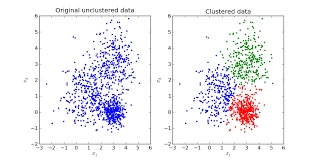
Clustering
Automatically splits the data into groups of similarity. Cluster analysis is a poor choice for application segmentation and targeting.
Anomaly Detection
Automatically discovers unusual data in your dataset. Anomaly detection is the process of identifying unexpected items or datasets.
Association Mining
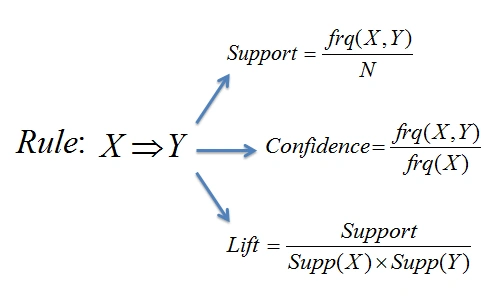
Rule mining is a procedure which aims to observe frequently occurring pattern, associations from the dataset.
- Support
- Confidence
- Lift
Support
Support indicates how frequently the if/then relationship appears in the database.
Confidence
Confidence tells about the number of times those relationships have been found to be true
Latent variable model
With a latent variable, we assume that when learning a directed or undirected model, traditional approaches of data analysis are in most cases ineffective and a very simple model of data distribution.
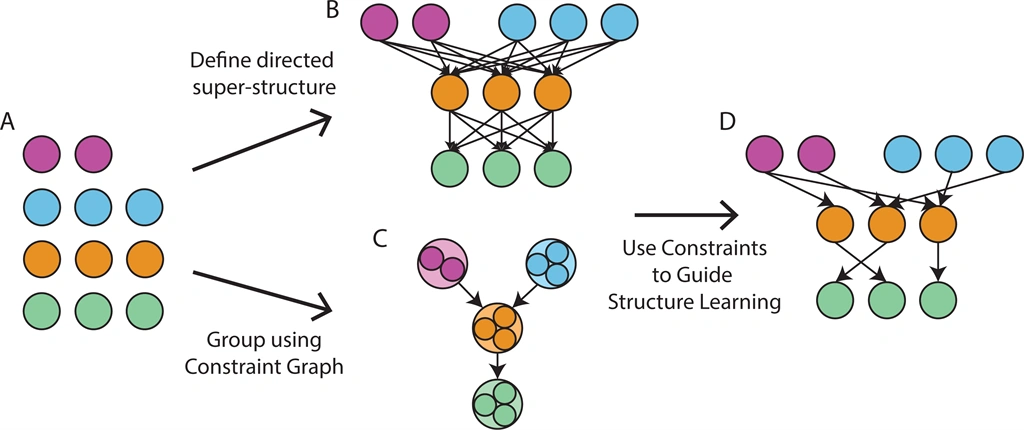
Directed Model
Disadvantages of Unsupervised Learning
- Less accuracy because the input data is not labeled by people in advance, so the machine is required to do it itself.
- The spectral classes do not always correspond to informational classes.
- The user needs to spend time interpreting and label the classes which follow classification.
Conclusion
We have seen unsupervised learning in machine learning (ML). I hope this article is useful to you. Thanks!
Stephen SimonPosted Mar 30, 2020, 11:17 AM
This is great! How about using some sample datasets to make it more interesting