

📌 Introduction
Derivation paths are one of those topics most wallet apps hide from users, right up until something goes wrong. Then suddenly they matter a lot.
If you have ever restored a wallet with the correct recovery phrase and still could not see your funds, the derivation path is usually the reason. Understanding what it is and why it exists removes a lot of confusion around wallet restores and address mismatches.
🧠 What a Derivation Path Really Is
A derivation path is simply a structured way to tell a wallet how to derive private keys from a recovery phrase.
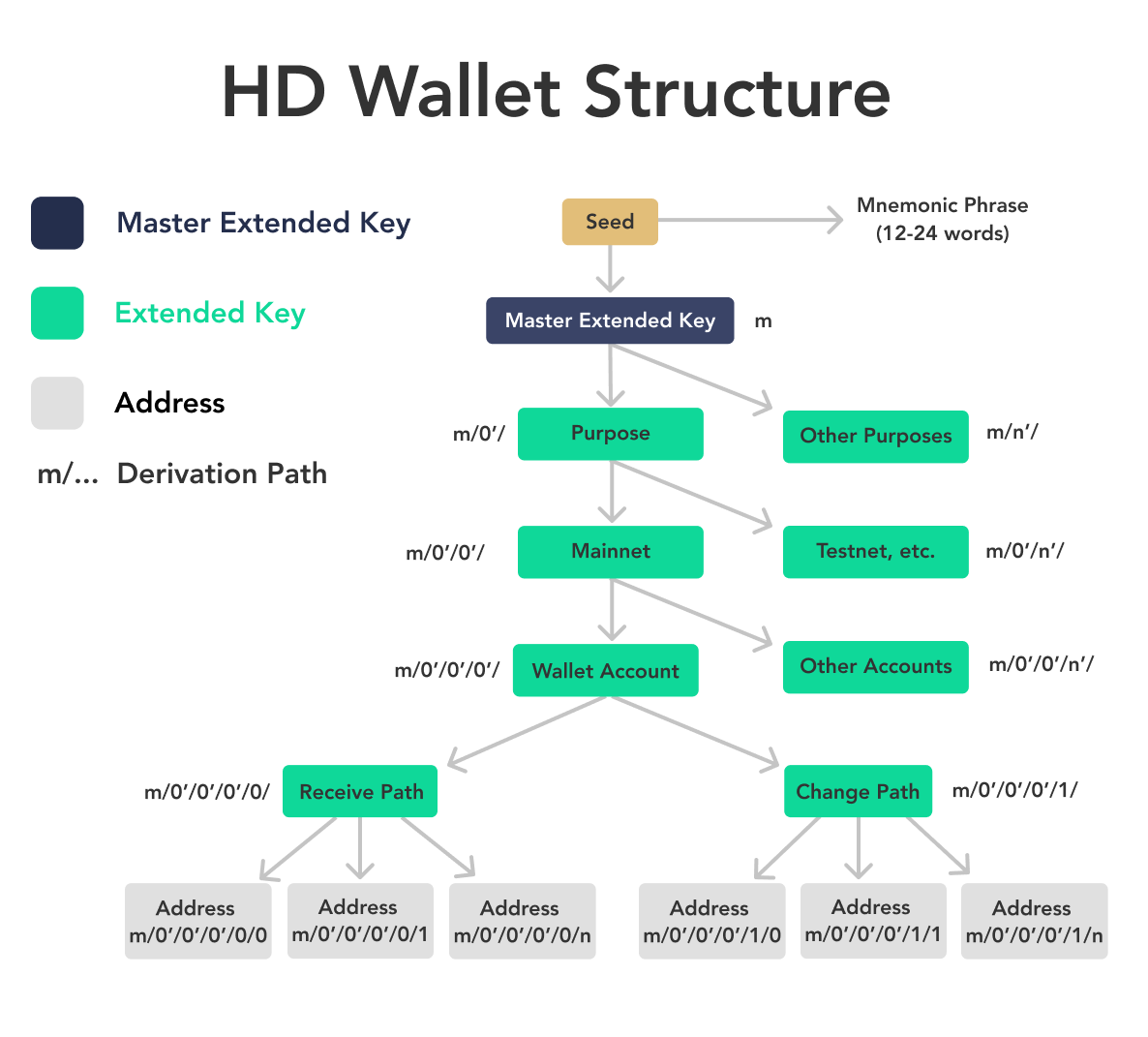
Remember that a recovery phrase does not create one private key. It creates a master key, and from that master key the wallet derives many child keys. The derivation path is the map that tells the wallet which branch of that key tree to follow.
Without a derivation path, there would be no predictable way to regenerate the same addresses after a restore.
🔢 What the Numbers in a Derivation Path Mean
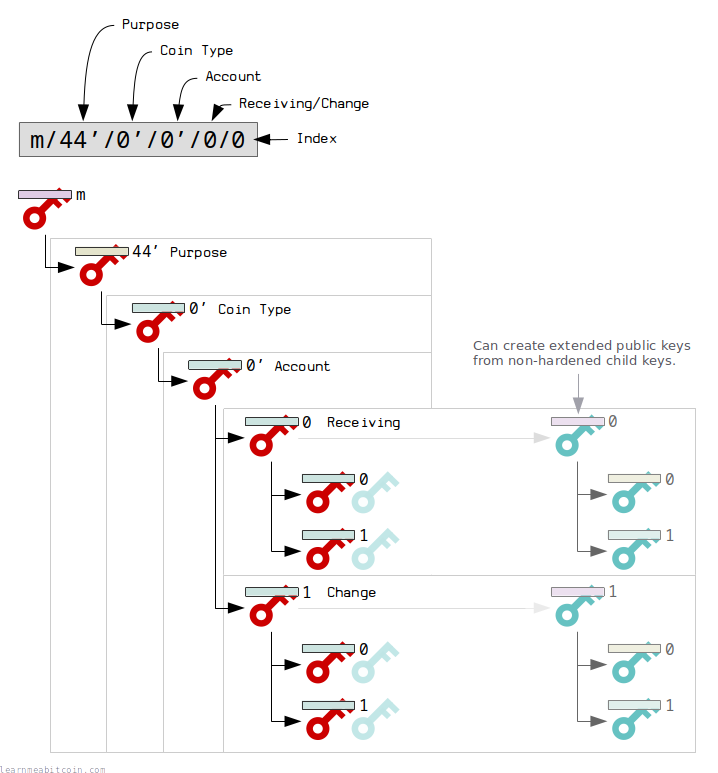
A derivation path usually looks something like this:
m / 44' / 60' / 0' / 0 / 0
Each level has a specific meaning. One level defines the general standard being used. Another defines the blockchain. Another defines the account. The remaining levels define address chains and indexes.
You do not need to memorize these numbers to use a wallet, but you do need to understand that changing any of them changes the resulting addresses.
Even with the same recovery phrase, a different path means a different wallet view.
🔁 Why Wallets Use Derivation Paths at All
Derivation paths exist to keep wallets organized and compatible.
They allow a single recovery phrase to support multiple blockchains, multiple accounts, and many addresses without collisions. They also make it possible for different wallet apps to restore the same keys, as long as they follow the same path standards.
From a systems design perspective, derivation paths are what make HD wallets scalable and predictable.
⚠️ Why Different Wallets Show Different Addresses
Not all wallets use the same default derivation path.
Some wallets focus on compatibility with older standards. Others default to newer formats. Some allow multiple paths automatically. Others lock you into one unless you change advanced settings.
If you restore a recovery phrase into a wallet that uses a different default path than the original wallet, the derived addresses will not match, even though the phrase itself is correct.
This is one of the most common causes of “missing funds” after a restore.
🧩 Accounts Are Part of the Derivation Path
When wallets talk about multiple accounts, they are really just talking about different branches in the derivation path.
Account zero, account one, account two are all derived from the same recovery phrase, but from different indexes. If you used a non default account previously, restoring into account zero will show an empty balance.
Nothing is lost. The wallet is simply looking at the wrong branch.
🧪 Address Scanning Depends on the Path
When restoring a wallet, apps scan for activity along a specific derivation path. They do not scan every possible path or index because that would be inefficient.
If your funds were sent to addresses derived further along the path than the wallet expects, they may not appear until you extend the scan or manually adjust settings.
Again, this is a path issue, not a recovery phrase issue.
🧠 A Simple Mental Model
Think of the recovery phrase as the root of a tree. The derivation path is the route you take through the branches. Addresses are the leaves.
If you take a different route, you end up at different leaves, even though the tree is the same.

🚨 Why Derivation Paths Matter for Security and Recovery
Derivation paths do not weaken security, but misunderstanding them causes panic and mistakes. Users often assume a wallet failure when the real issue is simply a mismatch in how keys are derived.
Knowing that the recovery phrase is correct, but the path might be different, helps you troubleshoot calmly instead of making risky decisions like creating new wallets or moving funds unnecessarily.
✅ Final Takeaway
A derivation path tells a wallet how to turn a recovery phrase into specific private keys and addresses. The same phrase can produce different addresses if the path changes, and that is expected behavior.
When restoring a wallet, matching the derivation path is just as important as entering the correct recovery phrase. Once you understand this, wallet restores become predictable instead of stressful.
Join the conversation! Your thoughts help the community grow.