

Introduction
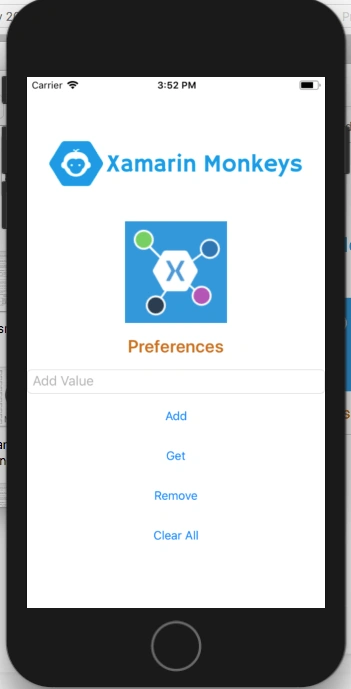
Xamarin.Forms code runs on multiple platforms - each of which has its own filesystem. This means that reading and writing the files are most easily done using the native file APIs on each platform. Alternatively, embedded resources are a simpler solution to distribute data files with an app.
Xamarin.Essentials

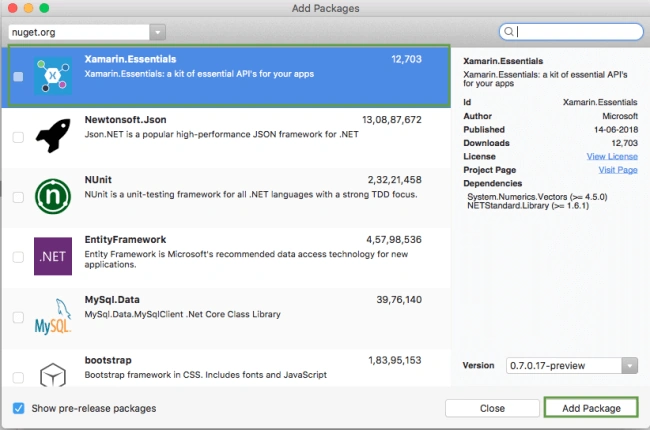
Xamarin.Essentials plugin provides 20+ cross-platform APIs for mobile application development. Xamarin.Essentials API works with all Xamarin.Forms, Xamarin.Android, Xamarin.iOS, or UWP applications that can be accessed from shared code. We are developing Xamarin with Android, iOS and UWP apps, but now Xamarin.Essentials overcomes the problem, so developers can access every native platform API using C#. This plugin provides many APIs so initially, there is no need for more plugins for Xamarin. Xamarin.Essentials plugin impacts your app's minimum size.
Platform Support
Xamarin.Essentials supports the following platforms and operating systems.
| Platform | Version |
| Android | 4.4 (API 19) or earlier |
| iOS | 10.0 or higher |
| UWP | 10.0.16299.0 or earlier |
Application Storage
Xamarin Android - Shared Preferences
Android provides many ways of storing the data of an application. One of the ways is called Shared Preferences. Shared Preferences allows you to save and retrieve the data in the form of a key-value pair.
In order to use shared preferences, you have to call a method, getSharedPreferences() ,that returns a SharedPreference instance pointing to the file that contains the values of preferences.
Xamarin iOS - NSUserDefaults
The NSUserDefaults class provides a way for iOS Apps and Extensions to programmatically interact with the system-wide Default System. By using the Defaults System, the user can configure an app's behavior or styling to meet their preferences (based on the design of the app). For example, to present data in Metric vs Imperial measurements or select a given UI Theme.
UWP - ApplicationDataContainer
Represents a container for app settings. The methods and properties of this class support creating, deleting, enumerating, and traversing the container hierarchy.
Xamarin Forms - Properties Dictionary
The Application subclass has a static Properties dictionary which can be used to store data, in particular for use in the OnStart, OnSleep, and OnResume methods. This can be accessed from anywhere in your Xamarin.Forms code using Application.Current.Properties.
The Properties dictionary uses a string key and stores an object value.
Xamarin.Essentials
Preferences class helps to store application preferences in a key/value store using Xamarin.Essentials
Preferences Supported Data Types
- string
- int
- bool
- double
- float
- long
- DateTime
Prerequisites
- Visual Studio 2017 (Windows or Mac)
Setting up a Xamarin.Forms Project
Start by creating a new Xamarin.Forms project. You’ll learn more by going through the steps yourself.
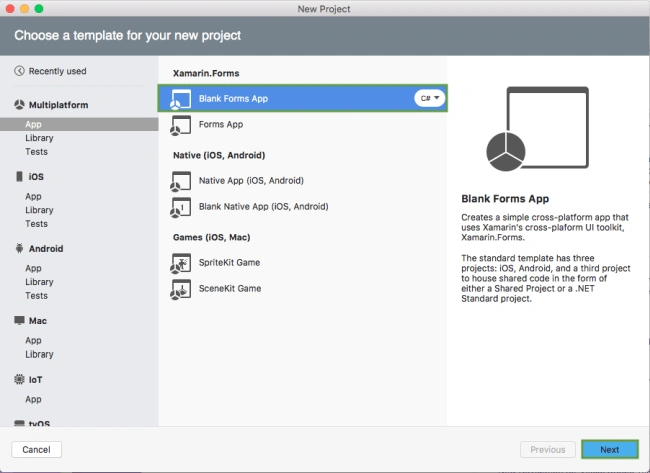
Choose the Xamarin.Forms App Project type under Cross-platform/App in the New Project dialog.
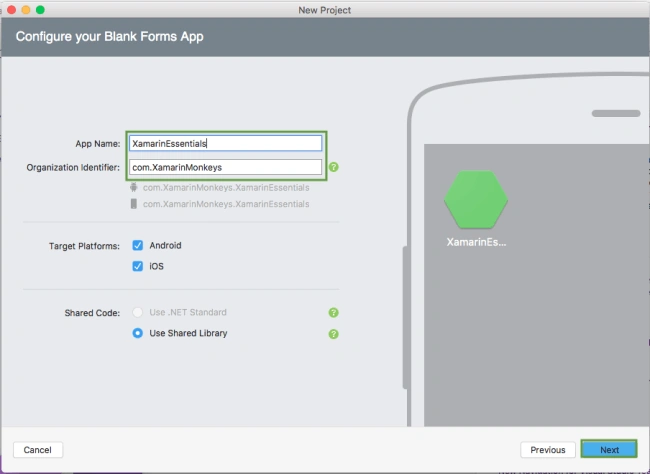
Name your app, select “Use Portable Class Library” for shared code, and target both Android and iOS.
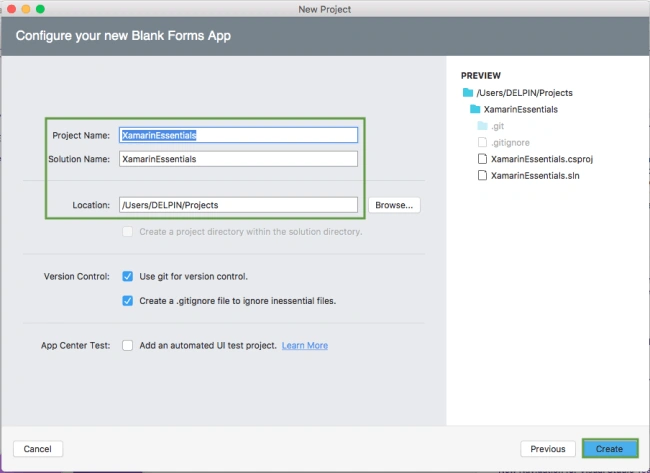
You probably want your project and solution to use the same name as your app. Put it in your preferred folder for projects and click Create.
You now have a basic Xamarin.Forms app. Click the play button to try it out.
Setting up the User Interface
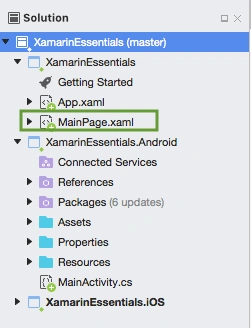
Go to MainPage.Xaml and write the following code.
MainPage.xaml
- <?xml version="1.0" encoding="utf-8" ?>
- <ContentPage xmlns="http://xamarin.com/schemas/2014/forms"
- xmlns:x="http://schemas.microsoft.com/winfx/2009/xaml"
- xmlns:local="clr-namespace:XamarinEssentials"
- x:Class="XamarinEssentials.MainPage">
- <StackLayout>
- <StackLayout HorizontalOptions="Center" VerticalOptions="Start">
- <Image Margin="0,50,0,0" x:Name="imgBanner" Source="banner.png" ></Image>
- <Image Margin="0,0,0,10" x:Name="imgXamarinEssential" Source="xamarinessential.png" ></Image>
- <Label Margin="0,0,0,10" FontAttributes="Bold" FontSize="Large" TextColor="#CA6F1E" HorizontalTextAlignment="Center" Text="Preferences"></Label>
- <Entry x:Name="txtValue" Placeholder="Add Value"> </Entry>
- <Button x:Name="btnAdd" Text="Add" Clicked="btnAdd_Clicked"/>
- <Button x:Name="btnGet" Text="Get" Clicked="btnGet_Clicked" />
- <Button x:Name="btnRemove" Text="Remove" Clicked="btnRemove_Clicked" />
- <Button x:Name="btnClear" Text="Clear All" Clicked="btnClear_Clicked"/>
- </StackLayout>
- </StackLayout>
- </ContentPage>
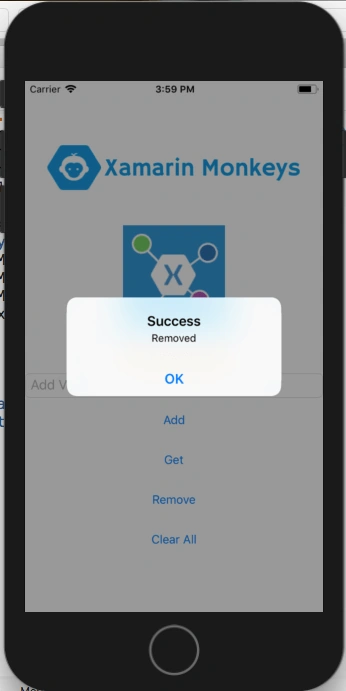
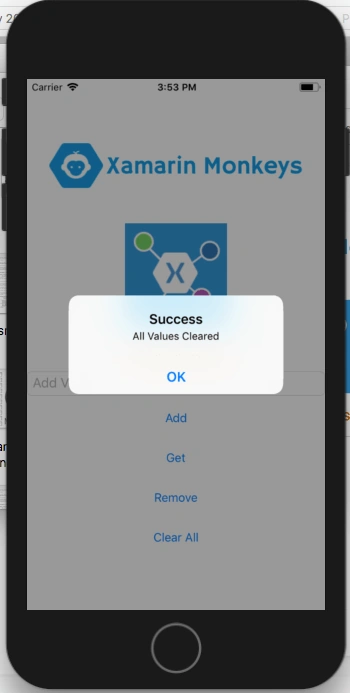
Join the conversation! Your thoughts help the community grow.