
Large Language Models (LLMs) have rapidly moved from experimental tools to production-critical systems. They write code, analyze documents, generate reports, answer customer queries, and assist with strategic decision-making. Despite their capabilities, LLMs exhibit a fundamental and often misunderstood failure mode: hallucination.
An LLM hallucination occurs when a model produces information that is confidently stated but factually incorrect, fabricated, or unverifiable. This article explains why hallucinations occur at a structural level, how to recognize them in real systems, and how teams can meaningfully reduce their impact.
What Is an LLM Hallucination?
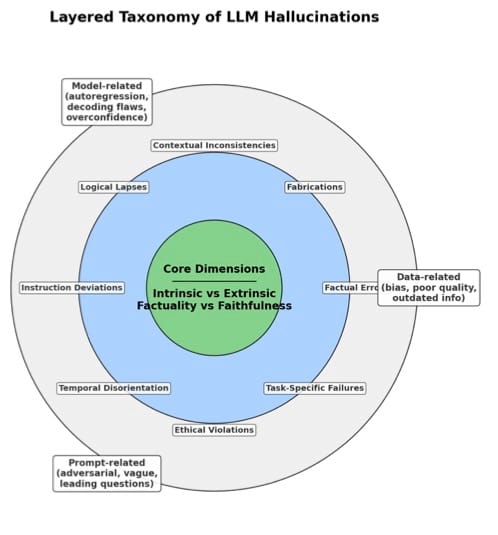
An LLM hallucination is not a bug in the traditional software sense. It is a consequence of how these models are designed.
A hallucination occurs when:
The model invents facts, citations, APIs, or historical events
The output sounds plausible but cannot be verified
The model fills knowledge gaps instead of admitting uncertainty
Crucially, the model does not “know” it is hallucinating. From its perspective, it is generating the most statistically likely continuation of text.
Why Do LLMs Hallucinate?
To understand hallucinations, you must understand what LLMs actually do.
1. LLMs Predict Tokens, Not Truth
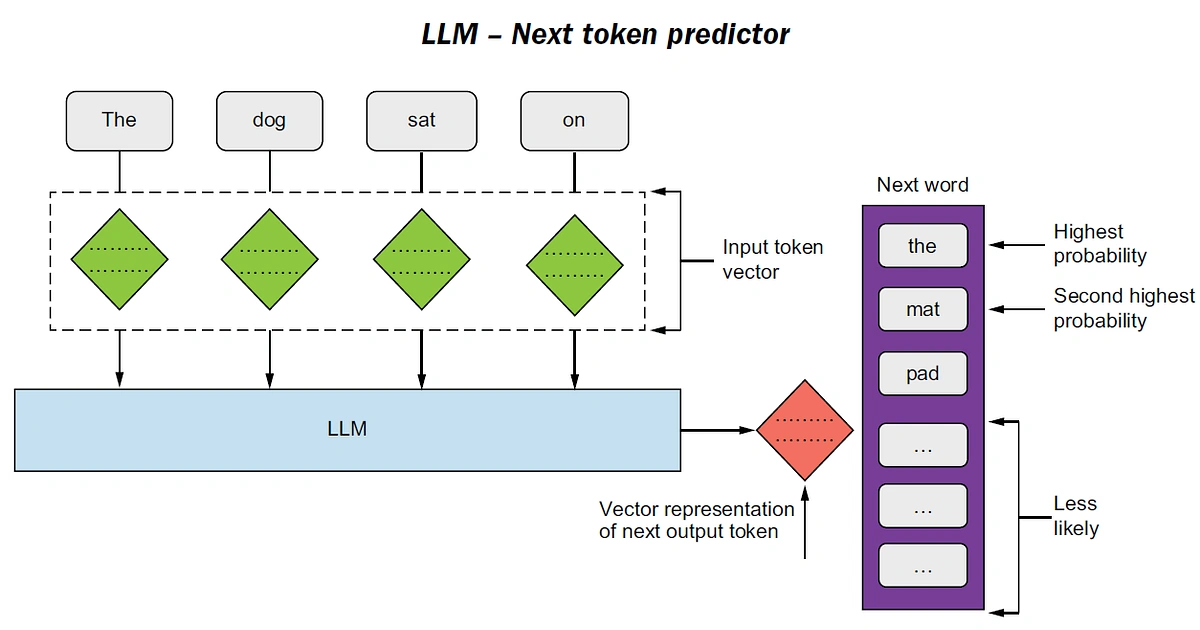
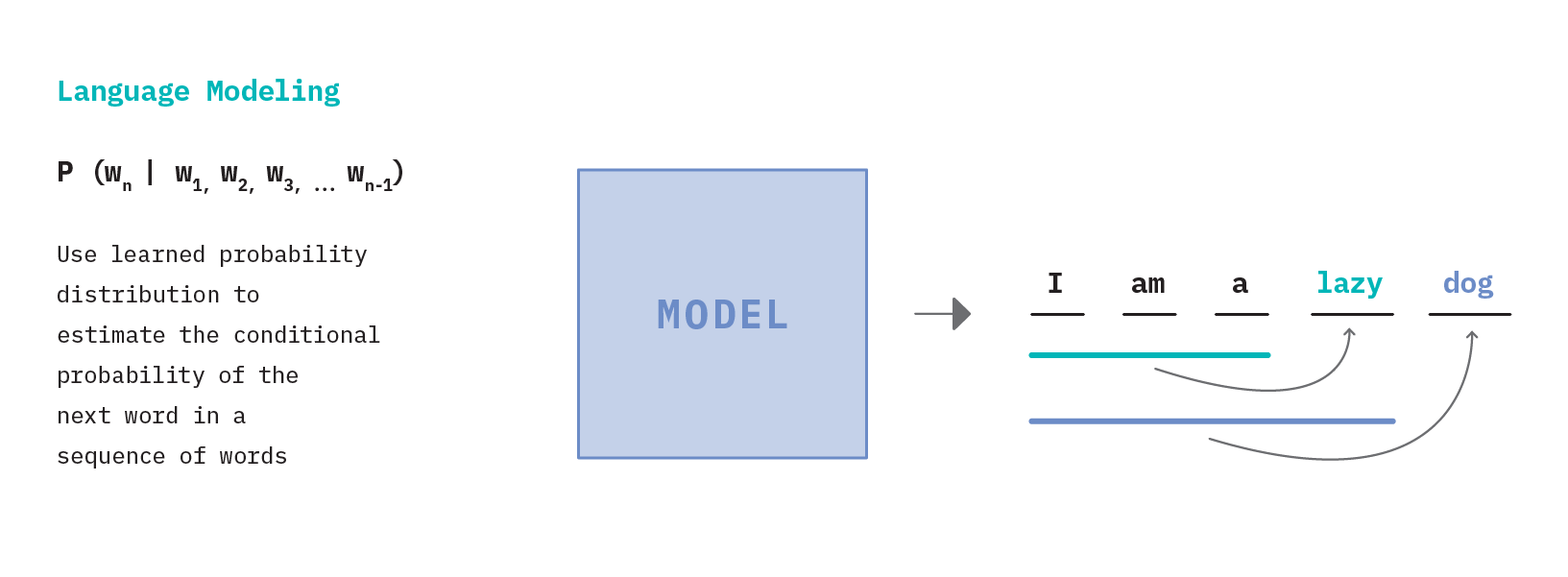
At their core, models like GPT are probabilistic text predictors. Given a sequence of tokens, they estimate the probability of the next token.
They do not:
Query a database
Check facts against reality
Verify sources unless explicitly instructed and provided
If a continuation sounds right based on training data, the model will generate it—even if it is false.
2. Training Data Is Incomplete, Noisy, and Contradictory
LLMs are trained on massive datasets that include:
High-quality documentation
Outdated blog posts
Incorrect explanations
Fictional writing
Conflicting opinions
When the model encounters an edge case or a rare topic, it interpolates across patterns. Interpolation can easily turn into fabrication.
3. Models Are Penalized for Saying “I Don’t Know”
Most training regimes reward:
Fluency
Completeness
Confidence
They do not strongly reward uncertainty.
As a result, when faced with insufficient information, the model often chooses a plausible answer over admitting ignorance.
4. Prompt Ambiguity Amplifies Hallucinations
Vague prompts such as:
“Explain how this system works”
“Give me the best approach”
“Summarize the law around this”
leave room for interpretation. The model fills gaps creatively unless constrained by:
Context
Sources
Explicit instructions
5. Long Contexts Increase Error Probability
As responses grow longer:
Early inaccuracies propagate
Assumptions compound
The model begins reasoning on top of fabricated premises
This is especially dangerous in multi-step reasoning or long reports.
Common Types of LLM Hallucinations
1. Factual Hallucinations
Incorrect dates, names, statistics
Fabricated historical events
“The XYZ Act of 2019 mandates…”
(When no such act exists.)
2. Citation Hallucinations
Fake research papers
Nonexistent journal articles
Broken URLs that look legitimate
This is common in academic or legal outputs.
3. Code Hallucinations
APIs that do not exist
Incorrect function signatures
Deprecated libraries presented as current
This is particularly risky in production systems.
4. Logical Hallucinations
Arguments that sound coherent but rely on false premises
Circular reasoning masked by technical language
5. Instruction-Violation Hallucinations
The model claims it followed constraints when it did not
It asserts access to systems or data it does not have
How to Spot Hallucinations in Practice
1. Overconfidence Without Sources
Makes precise claims
Uses authoritative language
Provides no references
Treat the output as unverified.
2. Vague or Generic Citations
“According to a 2021 study…”
“Research shows…” without a verifiable source
3. Inconsistencies Across Follow-Up Questions
Ask the same question differently
Request justification
Drill into specifics
4. Impossibly Broad Knowledge
“All companies follow…”
“This is universally accepted…”
Reality is rarely that clean.
5. Non-existent Proper Nouns
Laws
APIs
Academic papers
Technical standards
Especially if they look “almost right”.
Final Thoughts
LLM hallucinations are not a flaw to be “patched away.” They are a natural consequence of probabilistic language modeling.
Used correctly, LLMs are transformative. Used blindly, they are a liability.
Join the conversation! Your thoughts help the community grow.