

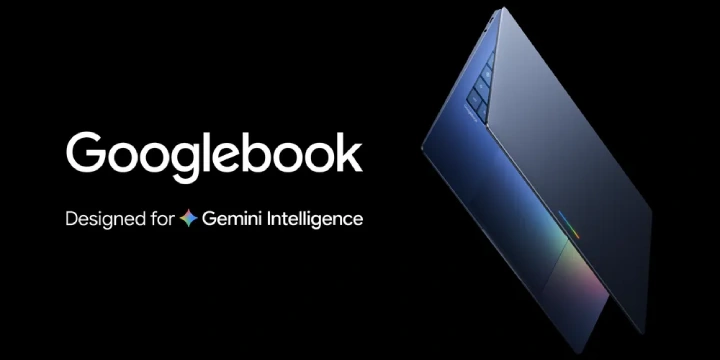
Fifteen years after the debut of the first Chromebook, Google has officially announced its successor: the Googlebook. Revealed today by Alex Kuscher, Senior Director for Laptops & Tablets at Google, this new category of premium devices marks the total integration of the Android ecosystem, ChromeOS efficiency, and the power of Gemini Intelligence.
The Googlebook isn't just a laptop upgrade; it represents Google’s vision of a modern "Intelligence System" designed to work in perfect harmony with Android mobile devices.
The OS Evolution: Android Meets Desktop
While Google stopped short of calling it a "new OS," the Googlebook runs on a hybrid platform that fuses the extensibility of Android with the security and speed of ChromeOS.
For developers and users, the biggest breakthrough is Native Android Integration. Unlike the emulation-heavy approach of the past, Googlebooks can run apps directly from your Android phone with zero lag. Features like Quick Access allow users to search, view, and drag-and-drop files from their smartphone onto their laptop desktop as if they were stored locally.
Groundbreaking AI Features: Magic Pointer & Glowbar
Google is reimagining the fundamental ways we interact with a laptop through two key innovations:
Magic Pointer: Developed in collaboration with Google DeepMind, this feature turns the standard mouse cursor into an AI agent. By simply hovering over or "wiggling" the cursor near content—like a date in an email or a photo of a product—Gemini provides contextual suggestions. You can point at a furniture listing and an image of your living room to have Gemini instantly "visualize" the item in your space.
The Glowbar: Every Googlebook will feature a signature hardware element—the Glowbar. This animated light strip, featuring Google’s iconic four colors, provides visual feedback for AI processing, notifications, and system status, giving the device a distinct "living" aesthetic.
Personalized with ‘Vibe Coding’
Following the trend of generative customization, Googlebooks will feature "Create My Widget." This allows users to use natural language prompts to build custom dashboard widgets. Whether you need a real-time tracker for a specific stock or a unified view of your Gmail and Calendar for a specific project, Gemini "codes" the widget on the fly based on your request.
Hardware Partners and Availability
Google is not going it alone. The company has confirmed partnerships with major OEMs to launch the first wave of Googlebook hardware this fall, including:
Acer
ASUS
Dell
HP
Lenovo
These devices are positioned as premium hardware, moving away from the "budget-friendly" stigma often associated with early Chromebooks.
The move toward a more "Android-centric" desktop experience means that skills in mobile app development and AI integration will be more valuable than ever on the desktop. We are moving toward a future where "Write Once, Run Anywhere" finally feels native across both pocket and desk.
Expect more details, including pricing and specific hardware specs, at Google I/O later this month.
Join the conversation! Your thoughts help the community grow.