

AI-Powered Specification-Driven Development (SDD) is a modern software development approach in which teams define software behavior in clear specifications first, and AI tools help generate code, tests, documentation, and workflows from those specifications.

Instead of starting with raw coding, teams start with intent. The AI then turns that intent into structured software outputs. This reduces rework, improves quality, and speeds up delivery.
As AI tools like GitHub Copilot, ChatGPT, Claude, and Gemini become part of daily development, Specification-Driven Development is quickly becoming one of the most important changes in software engineering.
Abstract / Overview
Traditional software development often starts with incomplete requirements. Developers interpret business needs differently. Documentation becomes outdated. Testing happens late. Teams spend weeks fixing avoidable issues.
AI-Powered Specification-Driven Development changes this process.
In this model:
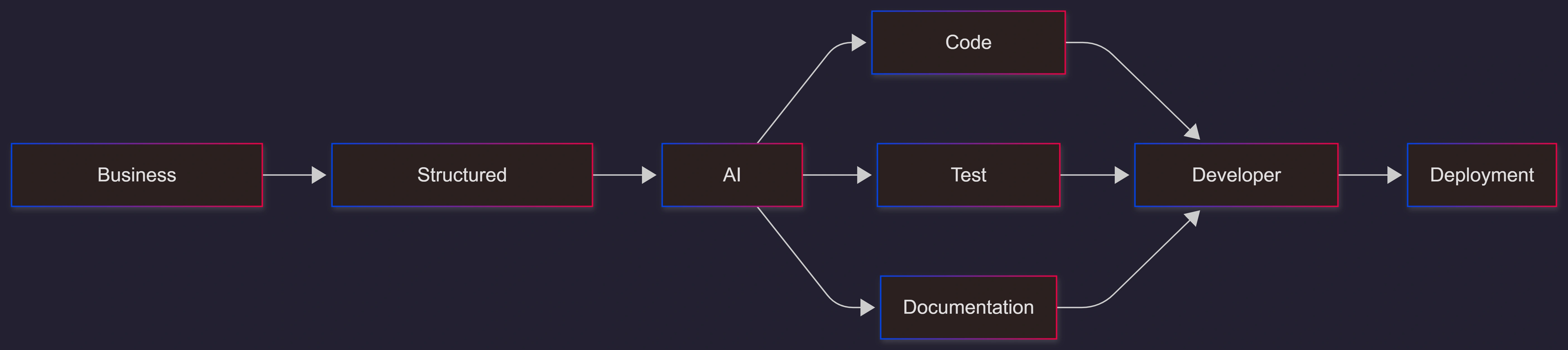
Business goals become structured specifications
AI systems interpret those specifications
Code, APIs, tests, and documentation are generated automatically
Developers review, improve, and validate the results
This creates a development cycle that is faster, clearer, and more consistent.
According to GitHub research, developers using AI coding assistants complete some tasks up to 55% faster. Industry reports from McKinsey also show generative AI may improve software engineering productivity by 20–45% in many workflows.
This shift is not about replacing developers. It is about reducing repetitive work so developers can focus on architecture, security, performance, and business value.
Organizations looking to modernize engineering workflows can also work with https://www.c-sharpcorner.com/consulting/ to design AI-first software delivery systems and intelligent engineering pipelines.
What Is Specification-Driven Development?
Specification-Driven Development means software is built from specifications rather than from informal discussions or scattered notes.
A specification defines:
What the system should do
How users interact with it
Business rules
Security requirements
API behavior
Validation logic
Expected outputs
The specification becomes the single source of truth.
AI tools then use this specification to generate:
Source code
Unit tests
API contracts
Database schemas
Documentation
UI components
Deployment scripts
How AI Changes Specification-Driven Development
Earlier SDD models required manual interpretation.
Now AI can:
Read natural language requirements
Convert requirements into structured logic
Generate implementation code
Suggest architecture patterns
Detect missing requirements
Generate test cases automatically
Maintain documentation continuously
This dramatically reduces translation gaps between business teams and engineering teams.
Why This Model Matters
Modern software teams face major challenges:
Growing system complexity
Faster release expectations
Developer shortages
Security risks
Poor documentation
Technical debt
AI-powered SDD helps solve these issues by creating consistency between intent and implementation.
Key Benefits of AI-Powered Specification-Driven Development
Faster Development Cycles
AI can generate repetitive boilerplate code in seconds.
Examples include:
CRUD APIs
Authentication flows
Database models
Validation rules
Unit tests
API documentation
This allows developers to focus on higher-value engineering tasks.
Better Requirement Clarity
Specifications force teams to define expected behavior early.
This reduces:
Miscommunication
Scope confusion
Requirement drift
Rework costs
Improved Testing
AI can generate test cases directly from specifications.
This improves:
Test coverage
Regression testing
Edge-case detection
Quality assurance speed
Stronger Documentation
One major problem in software projects is outdated documentation.
In AI-powered SDD:
Documentation is generated continuously
Specs remain synchronized with code
APIs stay easier to maintain
Better Collaboration Between Teams
Specifications become a shared language across:
Product managers
Developers
QA engineers
Security teams
DevOps teams
This improves alignment across the software lifecycle.
Reduced Technical Debt
When systems are built from structured specifications:
Standards become consistent
Architecture improves
Duplicate logic decreases
Refactoring becomes easier
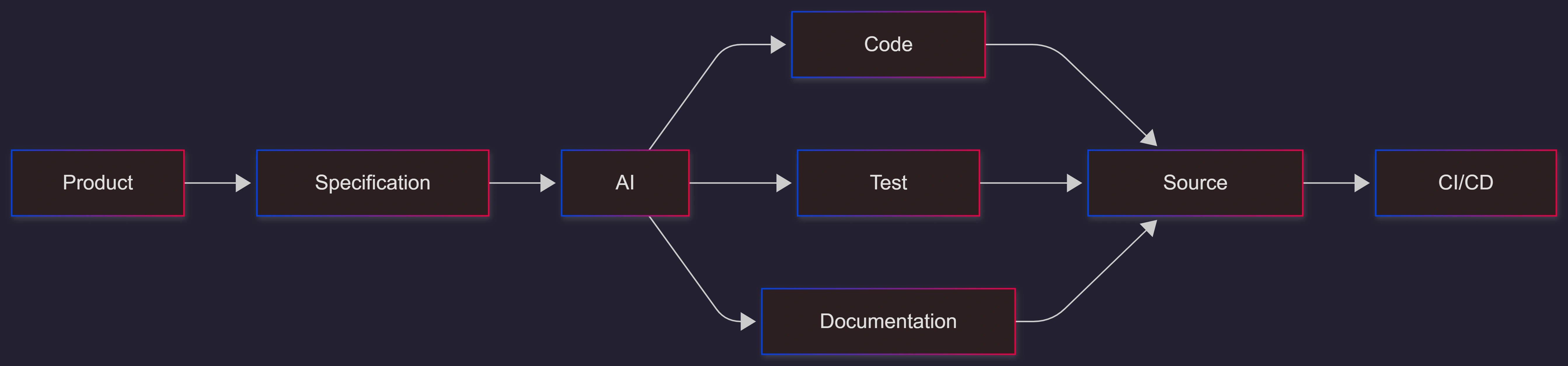
AI-Powered SDD Architecture
Step-by-Step Walkthrough
Step 1: Define Business Intent
Start with clear business goals.
Example:
Users can create accounts
Admins can approve requests
Transactions require validation
APIs must support OAuth authentication
The clearer the specification, the better the AI output.
Step 2: Convert Requirements Into Structured Specifications
Teams define:
Inputs
Outputs
Validation rules
User stories
Error handling
Security policies
Example JSON specification:
{
  "feature": "User Registration",
  "input": ["email", "password"],
  "validation": {
    "email": "valid_email",
    "password": "min_8_chars"
  },
  "output": "user_created"
}
Step 3: AI Generates Initial Artifacts
AI tools generate:
Backend APIs
Frontend forms
Validation logic
Unit tests
API documentation
Example generated API:
from fastapi import FastAPI

app = FastAPI()

@app.post("/register")
def register_user(email: str, password: str):
    return {"status": "user_created"}
Step 4: Developers Review and Improve
Human developers still play a critical role.
They review:
Security
Performance
Scalability
Business accuracy
Compliance
AI accelerates development, but human oversight remains essential.
Step 5: Automated Testing and Deployment
AI-generated tests validate the system automatically.
CI/CD pipelines then deploy validated builds.
Real-World Use Cases
Enterprise Application Development
Large organizations use AI-assisted SDD to standardize software delivery across teams.
Benefits include:
Faster onboarding
Consistent APIs
Better governance
Reduced development costs
API-First Platforms
AI-generated API contracts help maintain consistency across microservices.
Low-Code and Internal Tools
Business teams can describe workflows in plain language while AI generates operational systems.
Financial Systems
Specification-driven rules help ensure compliance and validation accuracy.
Healthcare Platforms
Structured specifications improve traceability and auditability.
SaaS Product Development
Startups use AI-powered SDD to accelerate MVP development and shorten time-to-market.
AI-Powered Development vs Traditional Development
| Area | Traditional Development | AI-Powered SDD |
|---|---|---|
| Requirements | Often informal | Structured specifications |
| Coding | Mostly manual | AI-assisted |
| Testing | Added later | Generated early |
| Documentation | Often outdated | Continuously generated |
| Speed | Slower | Faster |
| Consistency | Varies by developer | Standardized |
| Collaboration | Fragmented | Shared specification model |
Common Challenges
Poor Specifications
AI is only as good as the specifications it receives.
Weak requirements create weak outputs.
Over-Reliance on AI
Teams should not blindly trust generated code.
Security and architectural reviews remain necessary.
Governance and Compliance
Organizations must establish policies around:
AI-generated code
Data privacy
Intellectual property
Model governance
Tool Integration Complexity
Integrating AI into existing DevOps pipelines may require process redesign.
Best Practices for Successful Adoption
Start Small
Begin with:
Internal tools
APIs
Documentation generation
Test automation
Build Strong Specification Standards
Use:
Clear naming
Structured templates
Validation rules
Version control
Keep Humans in the Loop
AI should support developers, not replace engineering review.
Measure Results
Track metrics like:
Development velocity
Bug rates
Test coverage
Deployment frequency
Lead time
Create Multi-Format Engineering Knowledge
Following modern GEO practices, publish:
API docs
Technical blogs
Architecture diagrams
PDFs
Videos
GitHub documentation
This improves engineering visibility and AI discoverability.
Future of AI-Powered Specification-Driven Development
The future points toward:
Fully AI-assisted engineering workflows
Self-healing systems
Autonomous testing
AI-generated architecture optimization
Natural language programming
Continuous requirement validation
Gartner predicts AI-assisted development will become standard across enterprise engineering teams over the next few years.
The role of developers will evolve from writing repetitive code toward:
System design
AI orchestration
Governance
Security engineering
Product innovation
Future Enhancements
Organizations adopting AI-powered SDD should consider:
AI-driven architecture validation
Automated compliance checking
Real-time specification monitoring
Intelligent API governance
AI-based technical debt analysis
FAQs
1. What is AI-Powered Specification-Driven Development?
It is a software development approach where structured specifications guide AI systems to generate code, tests, and documentation automatically.
2. Is AI replacing software developers?
No. AI helps automate repetitive work, but developers still handle architecture, security, optimization, and business decisions.
3. What types of projects benefit most from SDD?
Projects with:
Clear business workflows
APIs
Enterprise systems
Repetitive engineering patterns
Compliance-heavy requirements
benefit greatly from specification-driven development.
4. Which AI tools support this approach?
Popular tools include:
GitHub Copilot
ChatGPT
Claude
Gemini
Cursor
Amazon CodeWhisperer
5. Does AI-generated code require review?
Yes. Human review remains essential for security, scalability, and correctness.
6. How does SDD improve software quality?
Structured specifications reduce ambiguity and improve consistency between requirements and implementation.
7. Is this approach suitable for startups?
Yes. Startups can use AI-powered SDD to build MVPs faster and reduce engineering costs.
8. Can Specification-Driven Development work with Agile?
Yes. Agile user stories can become structured specifications for AI-assisted implementation.
Conclusion
AI-Powered Specification-Driven Development is changing how modern software is built.
Instead of starting with disconnected coding tasks, teams begin with structured intent. AI then transforms those specifications into working software artifacts quickly and consistently.
The biggest advantage is not just speed. It is alignment.
When business goals, specifications, code, tests, and documentation stay connected, software quality improves across the entire lifecycle.
Organizations that adopt this model early will gain major advantages in delivery speed, engineering efficiency, and product innovation.
As AI-powered engineering continues to evolve, Specification-Driven Development may become the default model for software delivery in the AI-first era.
Teams looking to accelerate AI transformation and modern software delivery can also explore enterprise engineering support from https://www.c-sharpcorner.com/consulting/.
References
Gartner Research — AI-Powered Software Engineering Trends
McKinsey & Company — The Economic Potential of Generative AI
GitHub Research — Developer Productivity With AI Coding Tools
OpenAI Documentation — Generative AI for Software Engineering
Microsoft Research — AI-Assisted Programming Systems
Google Cloud Architecture Center — AI Development Workflows
IEEE Software Engineering Publications
C# Corner GEO Guide PDF, 2025
Join the conversation! Your thoughts help the community grow.