

Introduction
Cold wallet versus hot wallet is one of the most important distinctions in crypto security, and also one of the most misunderstood. Many losses in crypto do not happen because blockchains fail. They happen because users store assets in the wrong type of wallet for their use case.
At a simple level, the difference comes down to internet exposure. Hot wallets are connected to the internet. Cold wallets are not. That single difference completely changes the security model, the risks you face, and how you should use each wallet.
This article explains cold wallets and hot wallets clearly, without buzzwords, so you can make informed decisions instead of relying on habits or marketing claims.
What Is a Hot Wallet
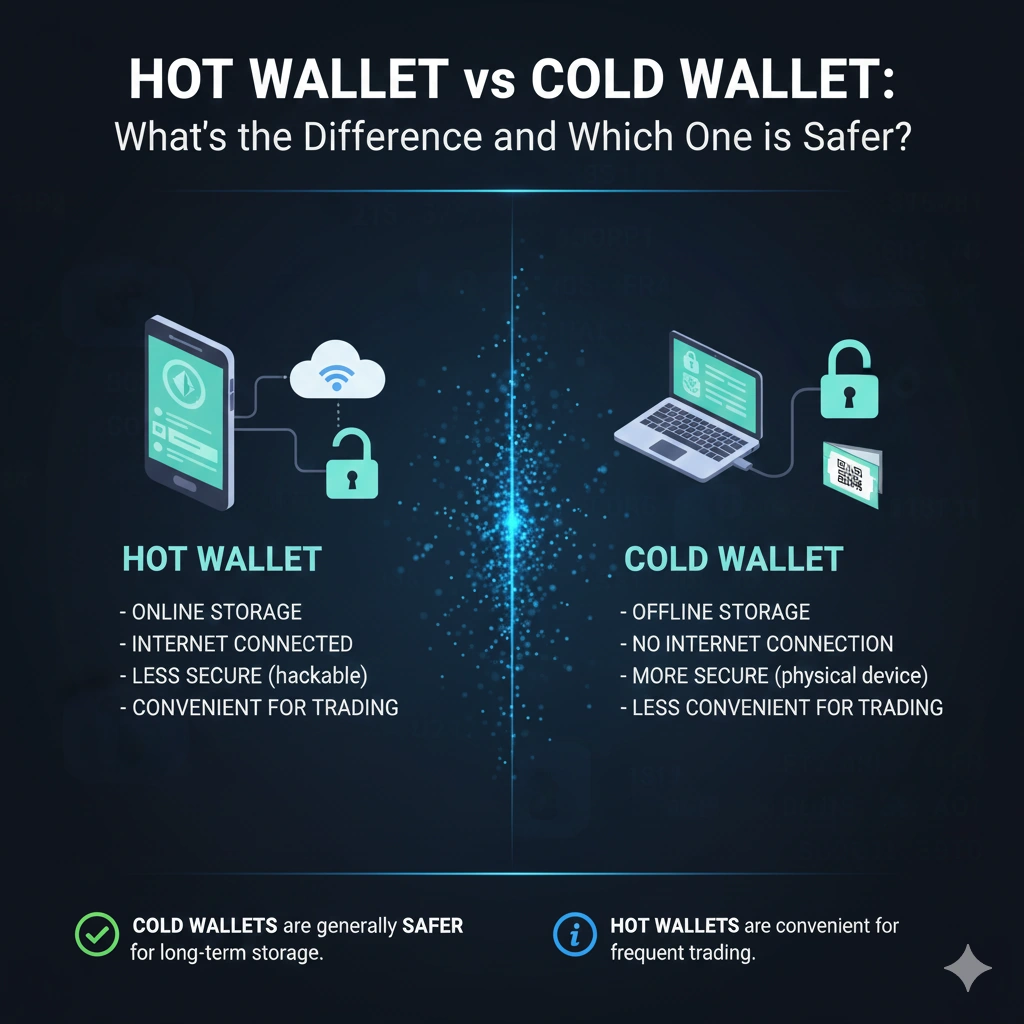
A hot wallet is a crypto wallet that is connected to the internet. It can be a mobile app, browser extension, desktop application, or exchange wallet.
Hot wallets are designed for convenience. They allow you to send, receive, and interact with crypto instantly. They are used for trading, payments, decentralized applications, and everyday activity.
Because hot wallets are online, they are exposed to internet based threats such as malware, phishing attacks, malicious browser extensions, and compromised devices.
Hot wallets prioritize speed and usability over maximum security.
What Is a Cold Wallet
A cold wallet stores private keys completely offline. The defining characteristic of a cold wallet is that the private key never touches an internet connected device.
Cold wallets can take many forms. Hardware wallets, air gapped computers, paper wallets, and offline generated keys stored securely are all examples of cold storage.
Because cold wallets are offline, they are immune to remote hacking. An attacker cannot steal what they cannot reach.
Cold wallets prioritize security over convenience.
The Core Difference Between Hot and Cold Wallets
The real difference is exposure.
Hot wallets are always one step away from the internet. Cold wallets are physically isolated from it.
That exposure determines everything else. Hot wallets are fast but risky. Cold wallets are secure but slower to use.
There is no such thing as a wallet that is both maximally convenient and maximally secure. You choose based on what you are doing.
Security Risks Compared
Hot wallets fail due to online attacks. Phishing links, fake websites, compromised devices, and malicious smart contracts are the most common causes of loss.
Cold wallets fail due to physical loss, poor backups, or user mistakes. If recovery phrases are lost or destroyed, funds are gone permanently.
Hot wallet losses are usually fast and external. Cold wallet losses are slow and self inflicted.
Usability and Everyday Use
Hot wallets are designed to be used frequently. They are ideal for small balances, daily transactions, DeFi interactions, and active trading.
Cold wallets are designed to protect value, not convenience. Moving funds requires additional steps and deliberate actions.
This friction is a feature, not a flaw. It prevents impulsive mistakes and reduces attack surfaces.
Custody and Control
Both hot and cold wallets can be self custodial if you control the private keys. The difference is how those keys are stored and accessed.
Join the conversation! Your thoughts help the community grow.