

Introduction
Requirements
- Android Studio
- An Android device or an emulator
STEP 1
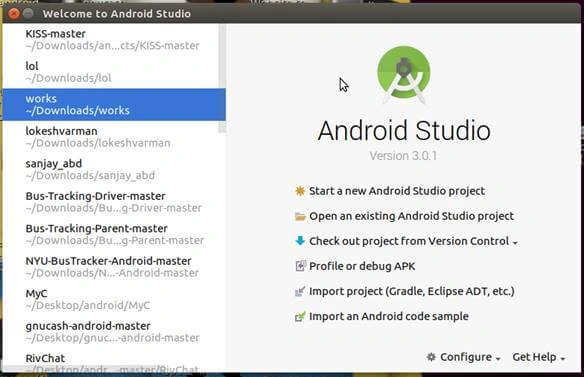
Open Android Studio and create a new project, as shown in the below steps.
STEP 2
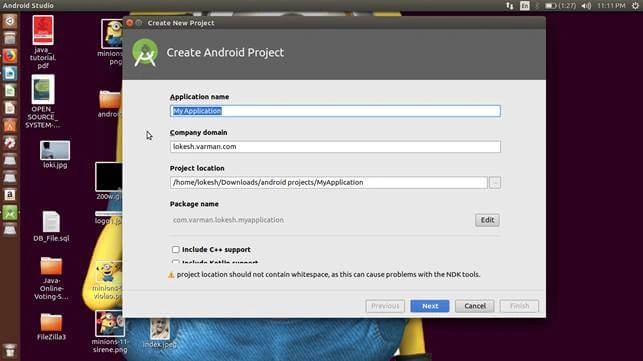
Name your app with whatever you want to, as shown below.
After creating the new project, just modify it with the codes as given below.
MainActivity.java is shown below.
- package com.example.lokesh.sanjay_abd;
- import android.app.Activity;
- import android.support.v7.app.AppCompatActivity;
- import android.os.Bundle;
- import android.view.Window;
- import android.webkit.WebSettings;
- import android.webkit.WebView;
- import android.webkit.WebViewClient;
- public class MainActivity extends Activity {
- public WebView webview;
- @Override
- protected void onCreate(Bundle savedInstanceState) {
- super.onCreate(savedInstanceState);
- requestWindowFeature(Window.FEATURE_NO_TITLE);
- setContentView(R.layout.activity_main);
- webview = (WebView) findViewById(R.id.webView);
- WebSettings webSettings = webview.getSettings();
- webSettings.setJavaScriptEnabled(true);
- webview.loadUrl("http://pec.paavai.edu.in/techfinix18/");
- // modify with your favorite website
- webview.setWebViewClient(new WebViewClient());
- }
- @Override
- public void onBackPressed() {
- if (webview.canGoBack()) {
- webview.goBack();
- } else {
- super.onBackPressed();
- }
- }
- }
activity_main.xml as below,
- <?xml version="1.0" encoding="utf-8"?>
- <android.support.constraint.ConstraintLayout xmlns:android="http://schemas.android.com/apk/res/android" xmlns:app="http://schemas.android.com/apk/res-auto" xmlns:tools="http://schemas.android.com/tools" android:layout_width="match_parent" android:layout_height="match_parent" tools:context="com.example.lokesh.sanjay_abd.MainActivity">
- <WebView android:id="@+id/webView" android:layout_width="0dp" android:layout_height="0dp" app:layout_constraintBottom_toBottomOf="parent" app:layout_constraintEnd_toEndOf="parent" app:layout_constraintStart_toStartOf="parent" app:layout_constraintTop_toTopOf="parent" />
- </android.support.constraint.ConstraintLayout>
In the below Androidmanifest.xml file, we have chosen only the internet access permission.
Androidmanifest.xml should be as follows.
- <?xml version="1.0" encoding="utf-8"?>
- <manifest xmlns:android="http://schemas.android.com/apk/res/android" package="com.example.lokesh.sanjay_abd">
- <uses-permission android:name="android.permission.INTERNET"></uses-permission>
- <application android:allowBackup="true" android:icon="@mipmap/ic_launcher" android:label="@string/app_name" android:roundIcon="@mipmap/ic_launcher_round" android:supportsRtl="true" android:theme="@style/AppTheme">
- <activity android:name=".MainActivity">
- <intent-filter>
- <action android:name="android.intent.action.MAIN" />
- <category android:name="android.intent.category.LAUNCHER" /> </intent-filter>
- </activity>
- </application>
- </manifest>
After all this coding process, just connect your mobile phone or use an emulator for running the app; that’s it. An app with your favorite site is ready now.
Finally, click the Play button above in the tab for Gradle build.
Below is the screenshot of the created app. You can generate a .apk by following the process below:
In the top menu tab, goto BUILD->build apk.
That's all. Your new apk for the Android app has been generated.

MrnamsPosted Nov 25, 2018, 7:28 AM
Sorry but why java code in c-sharpcorner.com?
Mahesh ChandPosted Mar 17, 2018, 9:43 PM
I think the title is misleading. You're not converting a website into an app. You're loading a website content into an Android app page. Also, please fix your bio grammar, spelling, and formatting. Cheers!
Sagar Pandurang KapPosted Mar 15, 2018, 11:57 PM
Very nice article.Helpful.Thanks.Keep sharing.....