

Introduction
In this article, we will learn about the difference between First FirstOrDefault and Single SingleOrDefault. We can better understand this step by step.
First()
Returns the first element of a collection, or the first element that satisfies a condition. Let's make it clear with an example
Example 1
class Program {
    static void Main() {
        IList < int > intList = new List < int > () {
            7,
            10,
            21,
            30,
            45,
            50,
            87
        };
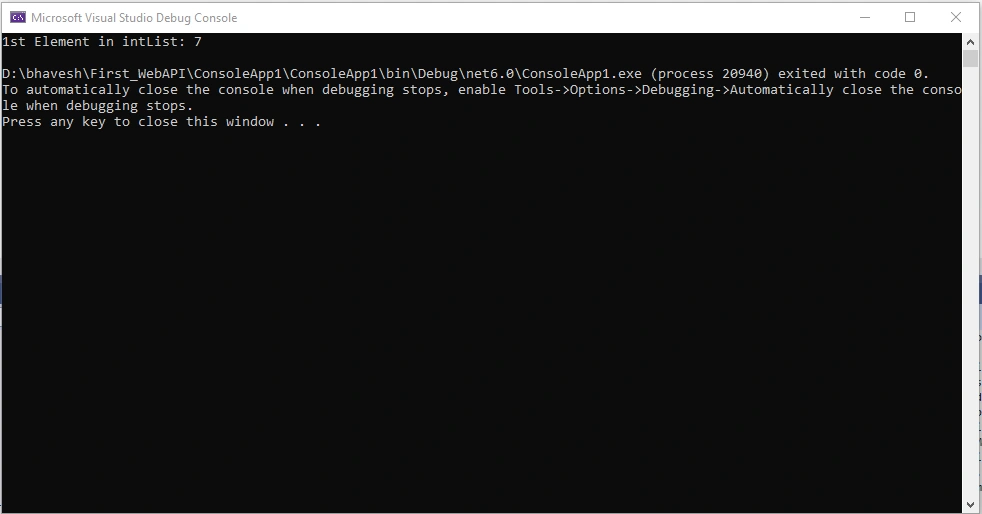
        Console.WriteLine(" intList: {0} ", intList.First());
    }
}
OUTPUT
Example 2
class Program {
    static void Main() {
        IList < string > strList = new List < string > () {
            null,
            "Two",
            "Three",
            "Four",
            "Five"
        };
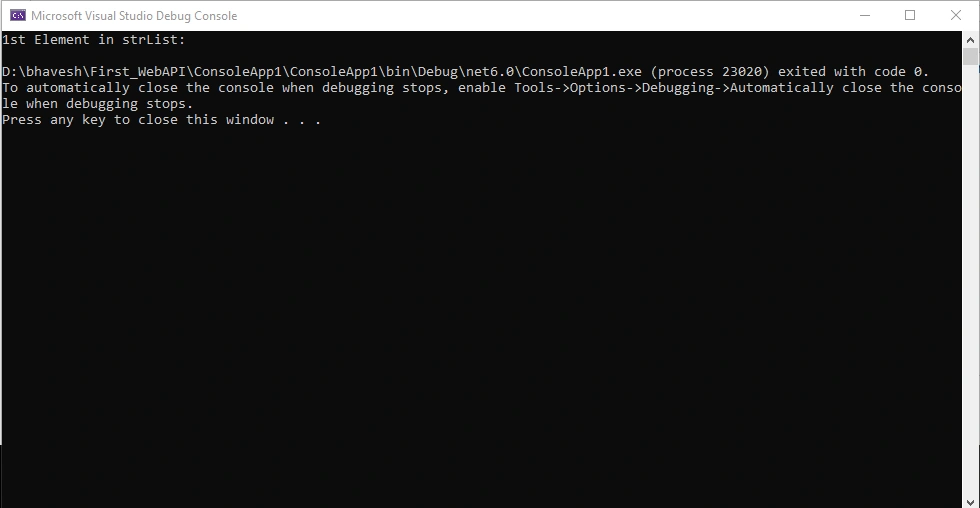
        Console.WriteLine("strList: {0}", strList.First());
    }
}
OUTPUT
Output is blank because First() is not showing null value
Example 3
class Program {
    static void Main() {
        IList < string > emptyList = new List < string > ();
        Console.WriteLine(emptyList.First());
    }
}
OUTPUT
System.InvalidOperationException because of First() function gives an error if Collection is empty.
Example 4
class Program {
    static void Main() {
        IList < string > strList = new List < string > () {
            "Two",
            "Three",
            "Four",
            "Five"
        };
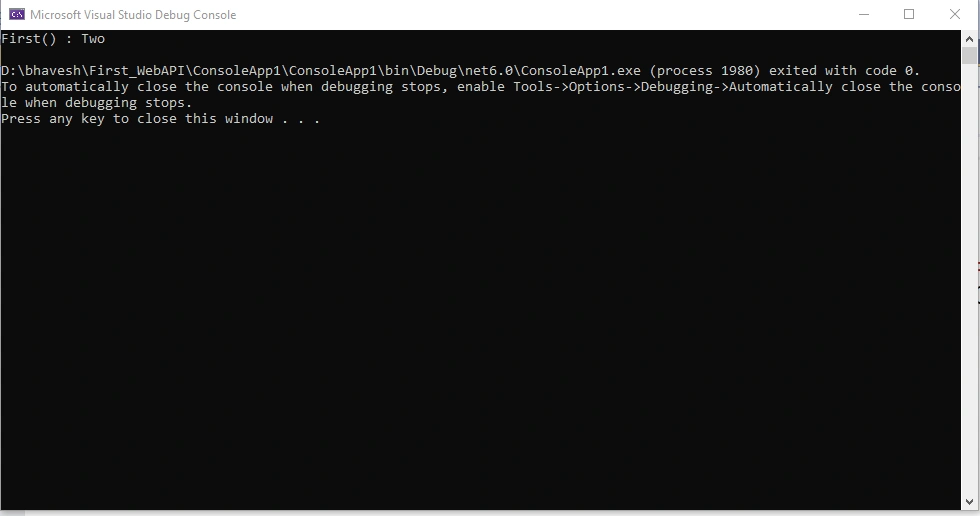
        Console.WriteLine("First() : {0}", strList.First(x => x.Contains('T')));
    }
}
OUTPUT
FirstOrDefault()
Returns the first element of a collection, or the first element that satisfies a condition. Returns a default value if index is out of range.
Example 1
class Program {
    static void Main() {
        IList < int > intList = new List < int > () {
            7,
            10,
            21,
            30,
            45,
            50,
            87
        };
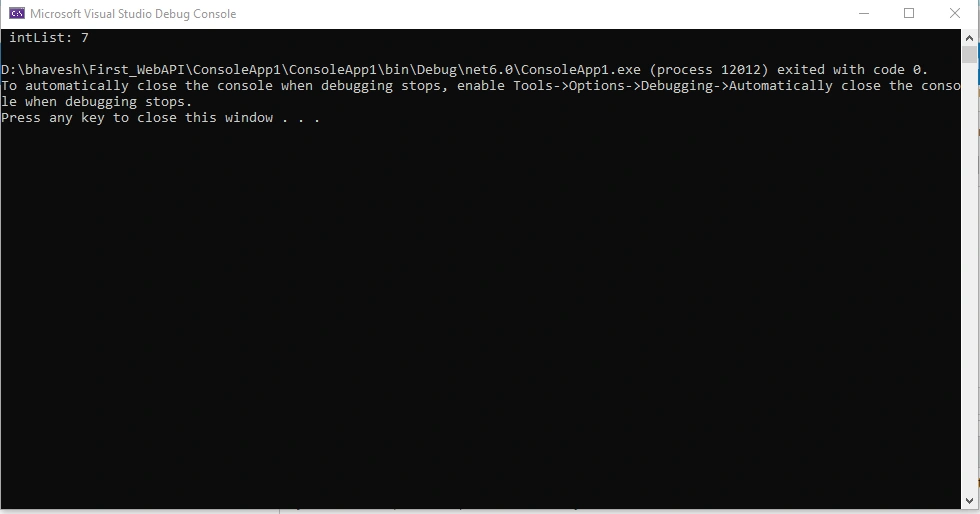
        Console.WriteLine(" intList: {0} ", intList.FirstOrDefault());
    }
}
OUTPUT
Example 2
class Program {
    static void Main() {
        IList < string > strList = new List < string > () {
            null,
            "Two",
            "Three",
            "Four",
            "Five"
        };
        Console.WriteLine("strList: {0}", strList.FirstOrDefault());
    }
}
OUTPUT
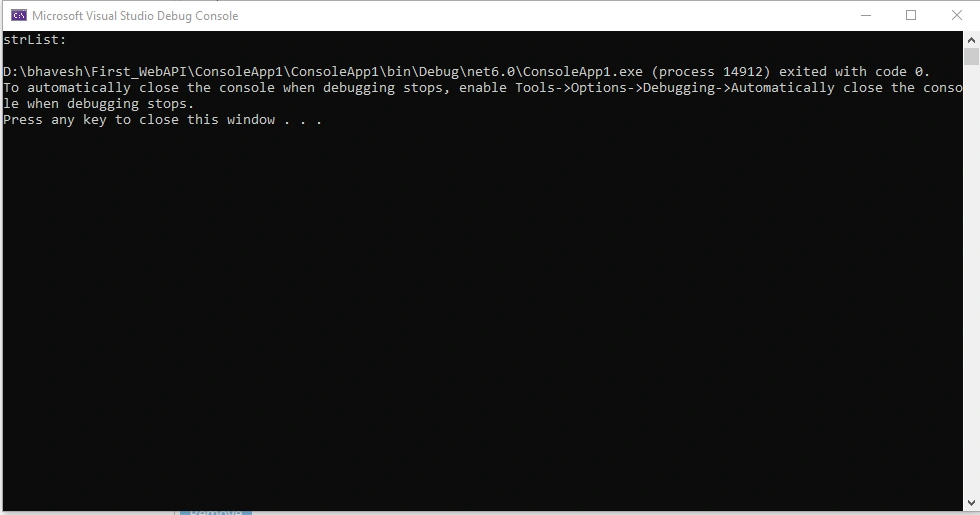
Output is blank because FirstOrDefault() is not showing null value
Example 3
class Program {
    static void Main() {
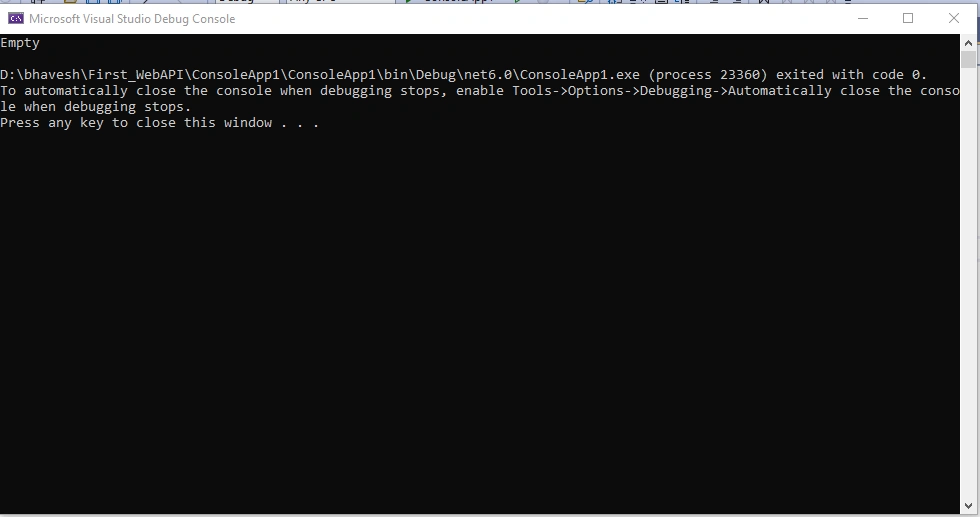
        IList < string > emptyList = new List < string > ();
        Console.WriteLine(emptyList.First());
    }
}
OUTPUT
Example 4
class Program {
    static void Main() {
        IList < string > strList = new List < string > () {
            "Two",
            "Three",
            "Four",
            "Five"
        };
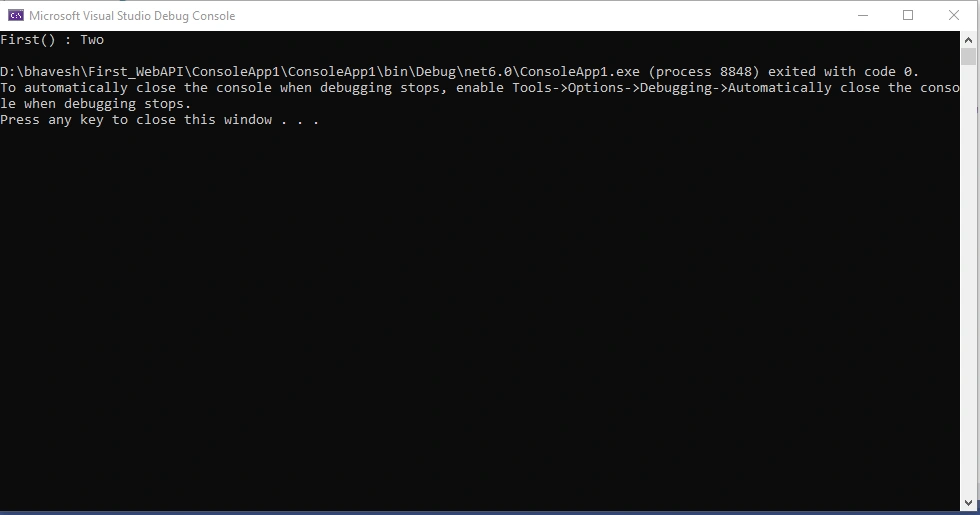
        Console.WriteLine("First() : {0}", strList.FirstOrDefault(x => x.Contains('T')));
    }
}
OUTPUT
Single()
Returns the only element from a collection, or the only element that satisfies a condition. If Single() found no elements or more than one element in the collection then throws InvalidOperationException.
Example 1
class Program {
    static void Main() {
        IList < int > intList = new List < int > () {
            7,
            10,
            21,
            30,
            45,
            50,
            87
        };
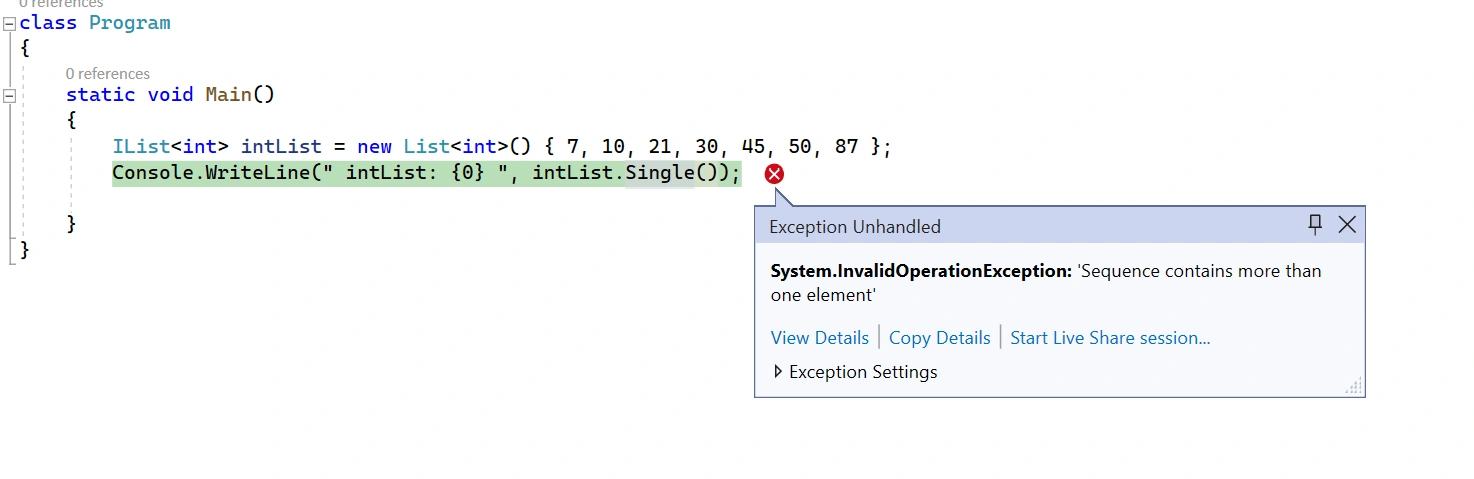
        Console.WriteLine(" intList: {0} ", intList.Single());
    }
}
OUTPUT
System.InvalidOperationException: 'Sequence contains more than one element'
Example 2
class Program {
    static void Main() {
        IList < string > strList = new List < string > () {
            null,
            "Two",
            "Three",
            "Four",
            "Five"
        };
        Console.WriteLine("strList: {0}", strList.Single());
    }
}
OUTPUT
System.InvalidOperationException: 'Sequence contains more than one element'
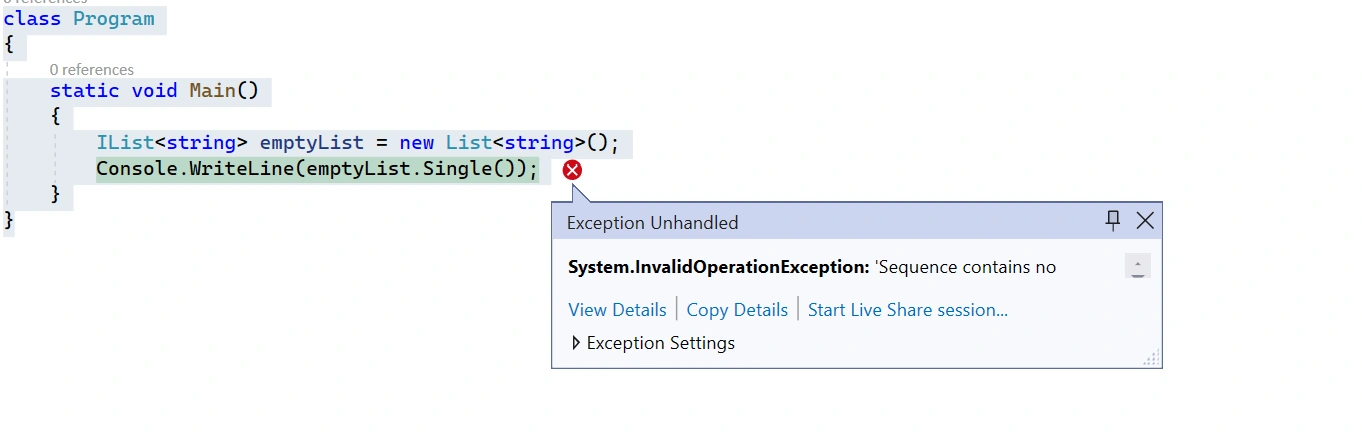
Example 3
class Program {
    static void Main() {
        IList < string > emptyList = new List < string > ();
        Console.WriteLine(emptyList.Single());
    }
}
OUTPUT
System.InvalidOperationException: 'Sequence contains no elements
Example 4
class Program {
    static void Main() {
        IList < string > strList = new List < string > () {
            "Two",
            "Three",
            "Four",
            "Five"
        };
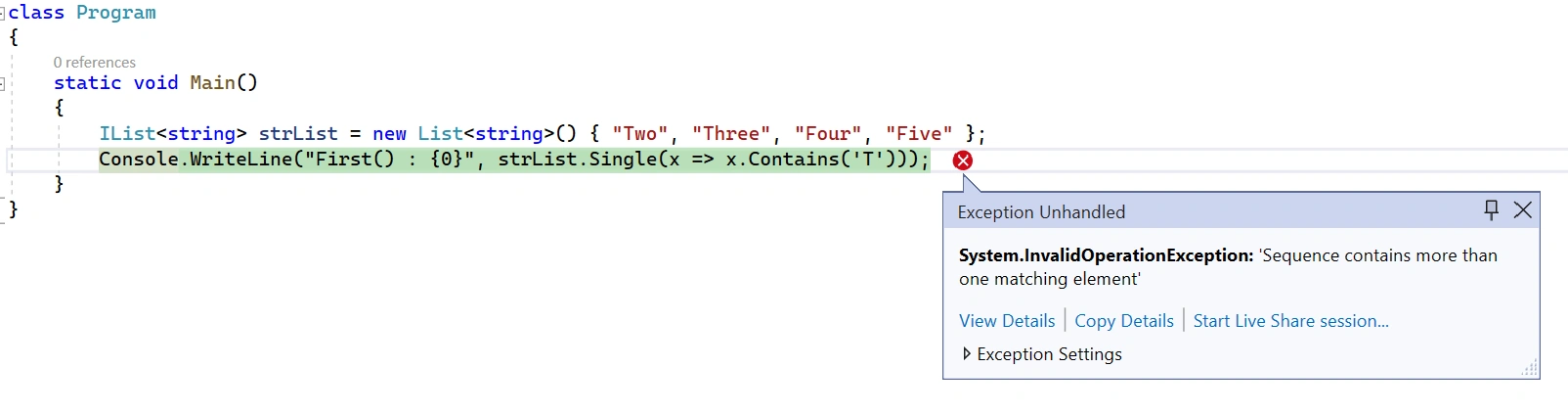
        Console.WriteLine("First() : {0}", strList.Single(x => x.Contains('T')));
    }
}
OUTPUT
System.InvalidOperationException: 'Sequence contains more than one matching element'
SingleOrDefault()
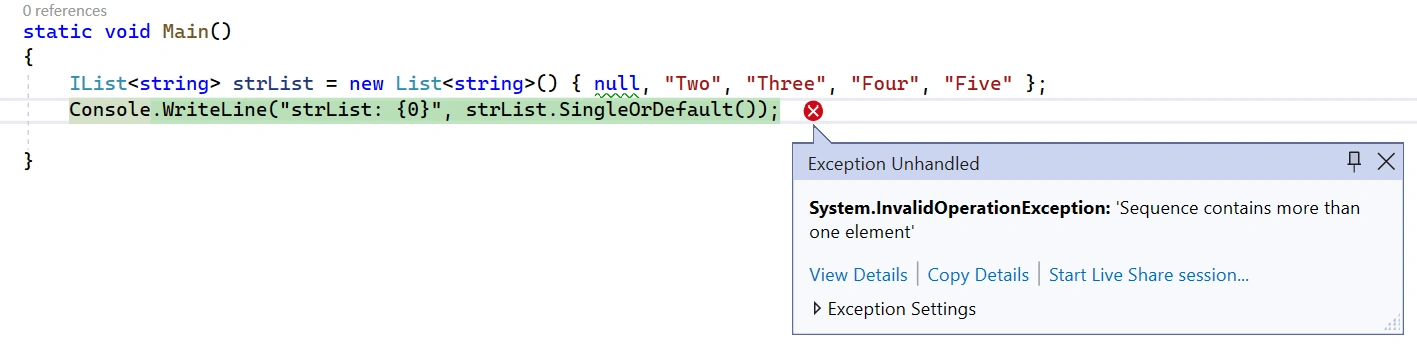
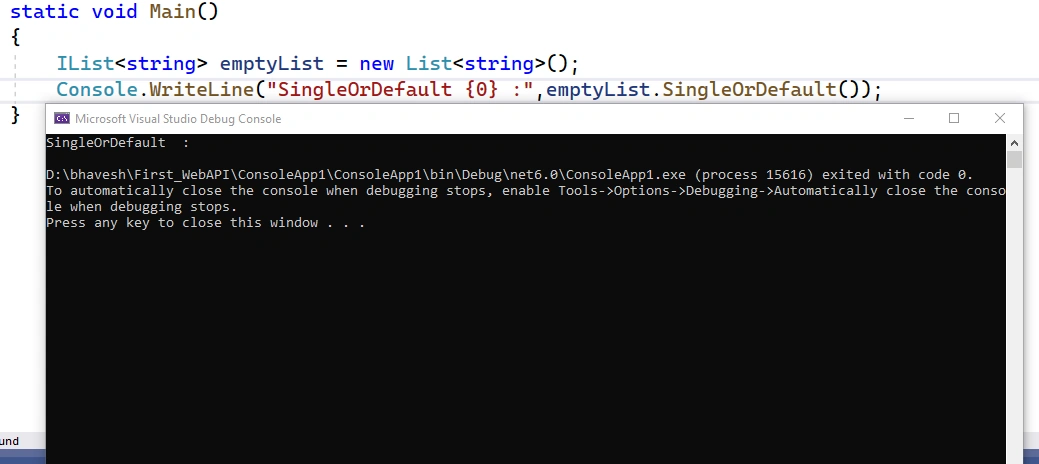
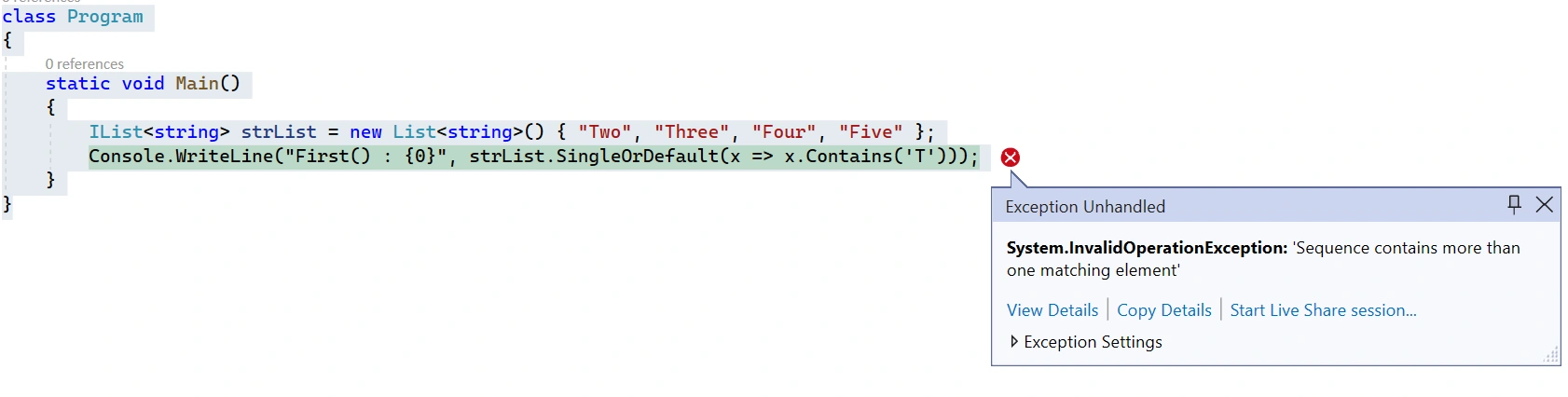
The same as Single, except that it returns a default value of a specified generic type, instead of throwing an exception if no element is found for the specified condition. However, it will throw InvalidOperationException if it found more than one element for the specified condition in the collection.
Example 1
class Program {
    static void Main() {
        IList < int > intList = new List < int > () {
            7,
            10,
            21,
            30,
            45,
            50,
            87
        };
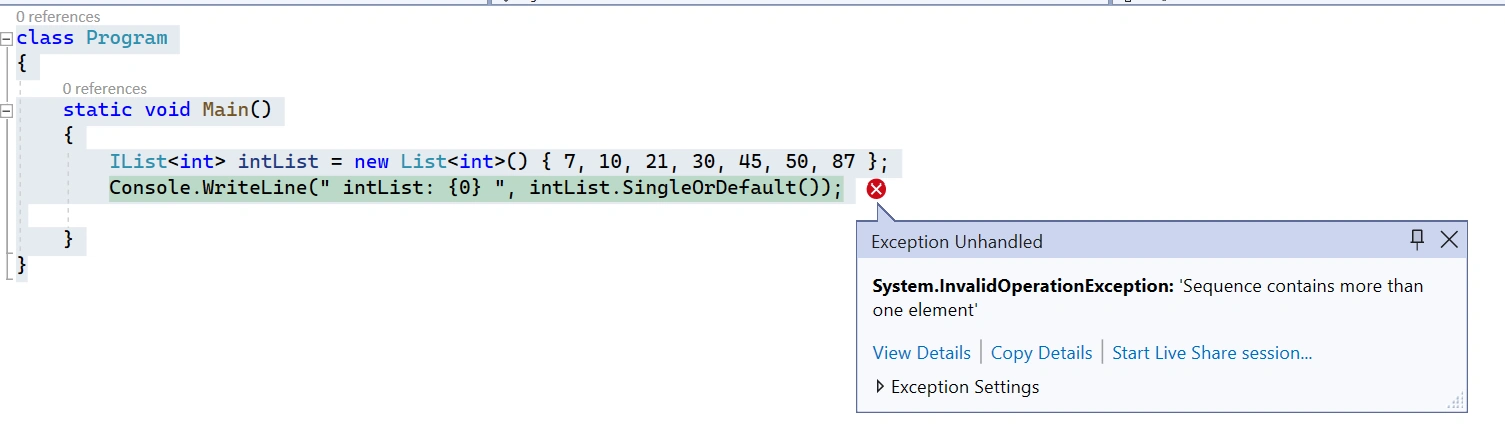
        Console.WriteLine(" intList: {0} ", intList.SingleOrDefault());
    }
}
OUTPUT
System.InvalidOperationException: 'Sequence contains more than one element'
Example 2
class Program {
    static void Main() {
        IList < string > strList = new List < string > () {
            null,
            "Two",
            "Three",
            "Four",
            "Five"
        };
        Console.WriteLine("strList: {0}", strList.SingleOrDefault());
    }
}
OUTPUT
Example 3
class Program {
    static void Main() {
        IList < string > emptyList = new List < string > ();
        Console.WriteLine(emptyList.SingleOrDefault());
    }
}
OUTPUT
Example 4
class Program {
    static void Main() {
        IList < string > strList = new List < string > () {
            "Two",
            "Three",
            "Four",
            "Five"
        };
        Console.WriteLine("First() : {0}", strList.SingleOrDefault(x => x.Contains('T')));
    }
}
OUTPUT
System.InvalidOperationException: 'Sequence contains more than one matching element'
Conclusion
We learned the Linq functions Single(), SingleOrDefault(), First(), and FirstOrDefault() with different examples.
Enjoy Coding !!!!
Thank you for reading my article. Please leave your comments in the comment box below.
Join the conversation! Your thoughts help the community grow.