

Introduction
Updating your computer is an important part of maintaining its general health, and well-being and protecting the device from bugs or viruses. Windows 10 updates often contain fixes for critical problems, and installing them can keep your computer/laptop running smoothly.
Microsoft has made updates mandatory for Windows 10 users to regularly update their computers. The company has set Windows 10 to automatically receive the new updates by default. In Windows 10, quality updates always download and install automatically as soon as they are ready for your device. While this approach makes sure that every computer/laptop has the latest security patches, operating system updates, performance, and stability improvements.
Automatic updates in any Windows version are good for quickly fixing up the loopholes. If someone has malicious intent they can find a loophole through which they can exploit Windows Operating Systems. When this happens, Microsoft sends an update immediately to fix it before too much damage is done. By using automatic updates, Microsoft can effectively deliver security patches to users who might not even know the issue existed. It is also good for users who don't have a good command of technology. By allowing the computer to update itself, the user does not face any serious problems. This means that users who are not so well-versed in Windows can get the updates needed to keep their computers safe, secure, and updated.
Automatic Updates in Windows 10 is a new way that the operating system handles updates. Automatic updates are installed automatically when Microsoft Windows decides to do it. But automatic updates are extremely frustrating for Windows 10 users as they are often forced to restart their computer/laptop at an inopportune time.
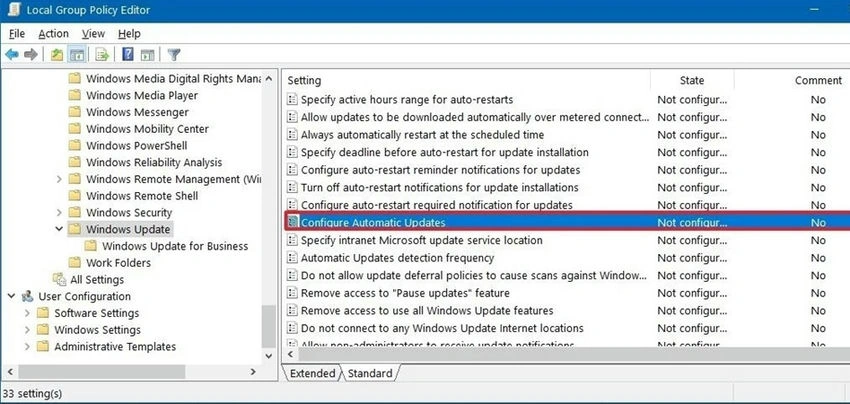
This tutorial will show you various methods on, how to disable the Automatic Updates in Windows 10.
Method 1. Disable the Windows update services
Follow the below instructions to proceed.
Step 1. From the Start menu, open the Run dialog box or you can Press the "Window + R" key to open the RUN window.
Step 2. Then, type "services .msc" and press the enter button to open the "Services Window".
Step 3. Find and select the "Windows Update" option from the "Services" list, then select the "Stop" option to stop the service.
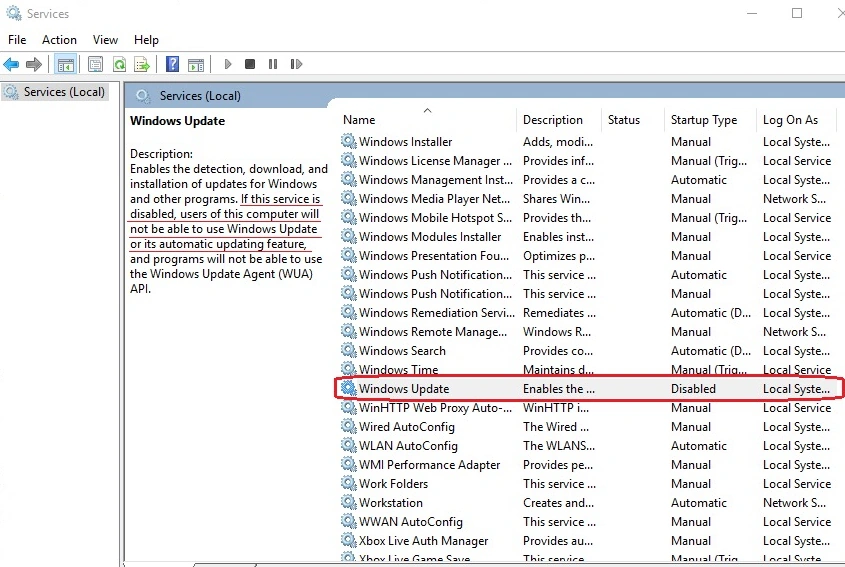
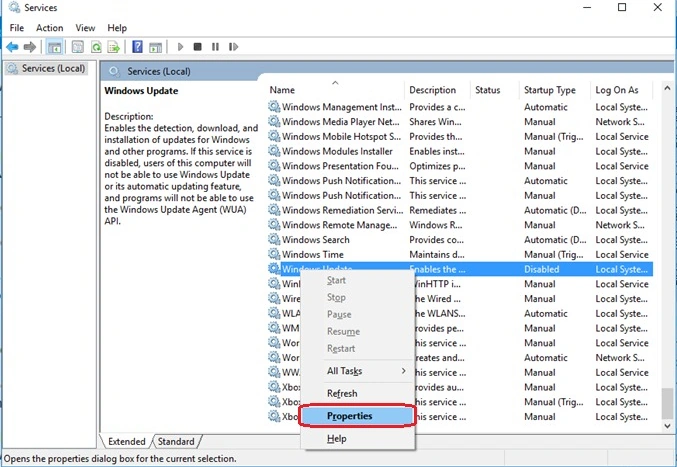
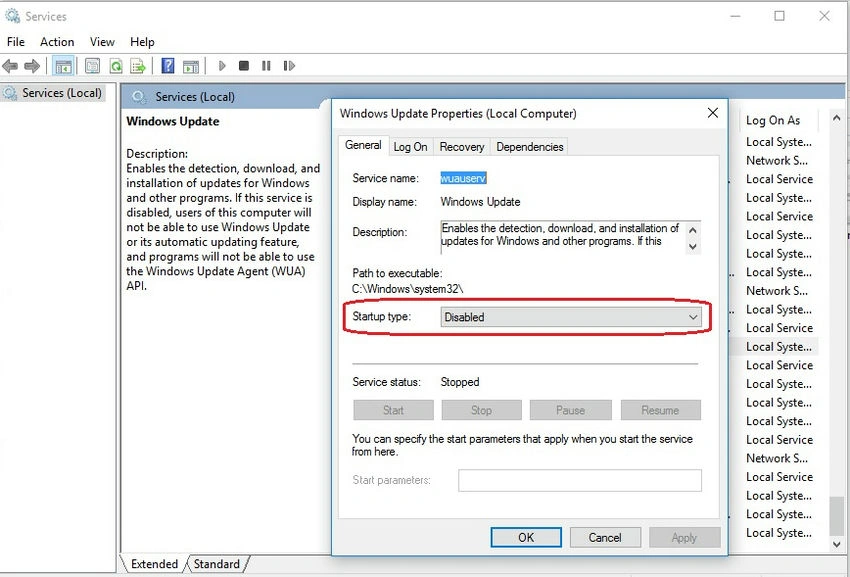
Step 4. Once the Windows Update Service has stopped, right-click on Windows Update Service and select "Properties".
Onkar SharmaPosted Nov 5, 2019, 9:17 AM
You can also open the "Services Window" through Command Prompt by typing services.msc