

Introduction
Before reading this article, I highly recommend reading the following previous parts of the series.
Internet of Things (IoT) - An Introduction
Topics covered
- IoT Basic Building Blocks
- IoT Working
- IoT Architecture Layers
Now that we understand what the Internet of Things (IoT) is, let’s understand some more things about this technology.
If you are still wondering what the IoT is then read this, you will have a clear understanding of the IoT.
Let’s start!
BUILDING BLOCKS of IoT
Four things form the basic building blocks of the IoT system –sensors, processors, gateways, and applications. Each of these nodes has to have its own characteristics in order to form a useful IoT system.
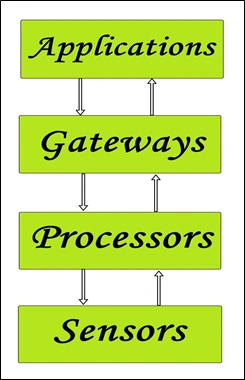
Figure 1. Simplified block diagram of the basic building blocks of the IoT
Sensors
- These form the front end of the IoT devices. These are the so-called “Things” of the system. Their main purpose is to collect data from its surroundings (sensors) or give out data to their surroundings (actuators).
- These have to be uniquely identifiable devices with a unique IP address so that they can be easily identifiable over a large network.
- These have to be active in nature which means that they should be able to collect real-time data. These can either work on their own (autonomous in nature) or can be made to work by the user depending on their needs (user-controlled).
- Examples of sensors are gas sensor, water quality sensor, moisture sensor, etc.
Processors
- Processors are the brain of the IoT system. Their main function is to process the data captured by the sensors and process them so as to extract valuable data from the enormous amount of raw data collected. In a word, we can say that it gives intelligence to the data.
- Processors mostly work on a real-time basis and can be easily controlled by applications. These are also responsible for securing the data – that is performing encryption and decryption of data.
- Embedded hardware devices, microcontrollers, etc are the ones that process the data because they have processors attached to it.
Gateways
- Gateways are responsible for routing the processed data and sending it to proper locations for its (data) proper utilization.
- In other words, we can say that the gateway helps in to and fro communication of the data. It provides network connectivity to the data. Network connectivity is essential for any IoT system to communicate.
- LAN, WAN, PAN, etc are examples of network gateways.
Applications
- Applications form another end of an IoT system. Applications are essential for the proper utilization of all the data collected.
- These cloud-based applications are responsible for rendering effective meaning to the data collected. Applications are controlled by users and are a delivery point of particular services.
- Examples of applications are home automation apps, security systems, industrial control hubs, etc.
In Figure 2, the extreme right block forms the application end of the IoT system.
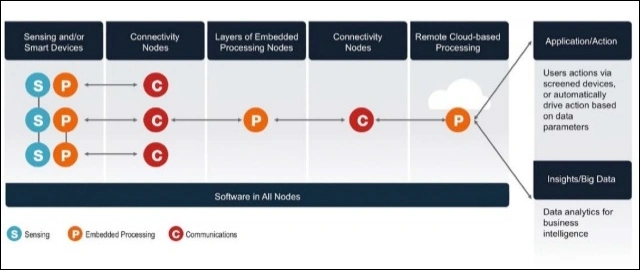
Figure 2. Basic building blocks of IoT
In a nutshell, from the figure we can determine that the information gathered by the sensing node (end node) is processed first then via connectivity, it reaches the embedded processing nodes which can be any embedded hardware devices, and are processed there as well. It then passes through the connectivity nodes again and reaches the remote cloud-based processing that can be any software and is sent to the application node for the proper applied usage of the data collected and also for data analysis via big data.
HOW IoT WORKS?
How the IoT works is quite simple.
First, it acquires information with respect to basic resources (names, addresses, and so on) and related attributes of objects by means of automatic identification and perception technologies such as RFID, wireless sensors, and satellite positioning, in other words, the sensors, RFID tags, and all other uniquely identifiable objects or "things" acquire real-time information (data) with the virtue of a central hub like smartphones.
Second, by virtue of many kinds of communications technologies, it integrates object-related information into the information network and realizes the intelligent indexing and integration of the information related to masses of objects by resorting to fundamental resource services (similar to the resolution, addressing, and discovery of the internet).
Finally, utilizing intelligent computing technologies such as cloud computing, fuzzy recognition, data mining, and semantic analysis, it analyzes and processes the information related to masses of objects so as to eventually realize intelligent decisions and control in the physical world.
Let’s have a look at the following diagram.
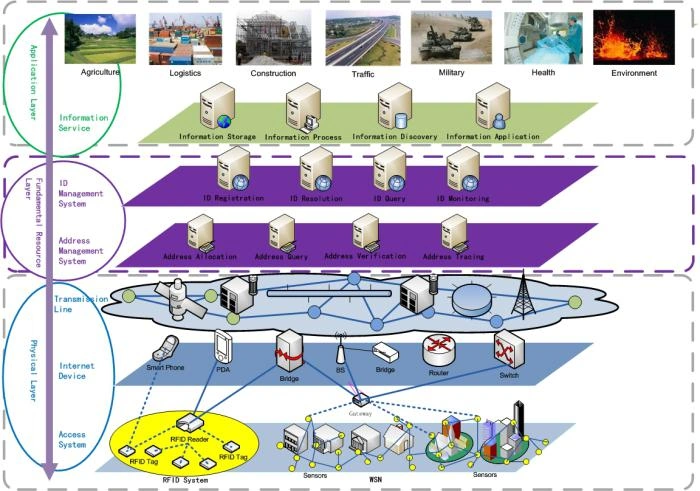
Figure 3. Layers of the IoT
In the Physical layer, all the data collected by the access system (uniquely identifiable "things") collect data and go to the internet devices (like smartphones). Then via transmission lines (like fiber-optic cable), it goes to the management layer where all the data is managed separately (stream analytics and data analytics) from the raw data. Then all the managed information is released to the application layer for proper utilization of the data collected.
IoT ARCHITECTURE LAYERS?
There are four major layers.
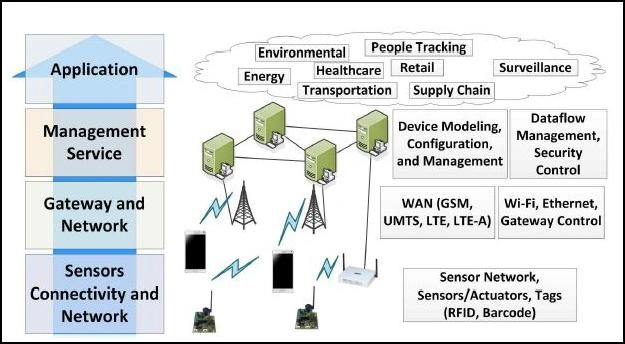
Figure 4. IoT architecture layers
At the very bottom of IoT architecture, we start with the Sensors and Connectivity network which collects information. Then we have the Gateway and Network Layer. Above which we have the Management Service layer and then at the end, we have the application layer where the data collected are processed according to the needs of various applications.
Let’s discuss the features of each of these architectural layers separately.
Sensor, Connectivity, and Network Layer
- This layer consists of RFID tags, and sensors (which are an essential part of an IoT system and are responsible for collecting raw data). These form the essential “things” of an IoT system.
- Sensors and RFID tags are wireless devices and form the Wireless Sensor Networks (WSN).
- Sensors are active in nature which means that real-time information is to be collected and processed.
- This layer also has network connectivity (like WAN, PAN, etc.) which is responsible for communicating the raw data to the next layer which is the Gateway and Network Layer.
- The devices which are comprised of WSN have finite storage capacity, restricted communication bandwidth, and have small processing speeds.
- We have different sensors for different applications – temperature sensors for collecting temperature data, water quality for examining water quality, moisture sensors for measuring the moisture content of the atmosphere or soil, etc.
As per the figure below, at the bottom of this layer, we have the tags which are the RFID tags or barcode reader, above which we have the sensors/actuators and then the communication networks.
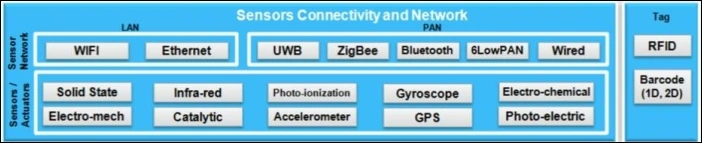
Figure 5. Sensor, Connectivity, and Network Layer
Gateway and Network layer
- Gateways are responsible for routing the data coming from the Sensor, Connectivity, and Network layer and pass it to the next layer which is the Management Service Layer.
- This layer requires having a large storage capacity for storing the enormous amount of data collected by the sensors, RFID tags, etc. Also, this layer needs to have a consistently trusted performance in terms of public, private and hybrid networks.
- Different IoT device works on different kinds of network protocols. All these protocols are required to be assimilated into a single layer. This layer is responsible for integrating various network protocols.
From the figure below, at the bottom, we have the gateway which is comprised of the embedded OS, Signal Processors, and Modulators, Micro-Controllers, etc. Above the gateway we have the Gateway Networks which are LAN(Local Area Network), WAN(Wide Area Network), etc.

Figure 6. Gateway and Network Layer
Management Service layer
- This layer is used for managing IoT services. The management Service layer is responsible for Securing Analysis of IoT devices, Analysis of Information (Stream Analytics, Data Analytics), and Device Management.
- Data management is required to extract the necessary information from the enormous amount of raw data collected by the sensor devices to yield a valuable result of all the data collected. This action is performed in this layer.
- Also, a certain situation requires an immediate response to the situation. This layer helps in doing that by abstracting data, extracting information, and managing the data flow.
- This layer is also responsible for data mining, text mining, service analytics, etc.
From the figure below, we can see that the management service layer has an Operational Support Service (OSS) which includes Device Modeling, Device Configuration and Management, and many more. Also, we have the Billing Support System (BSS) which supports billing and reporting.
Also, from the figure, we can see that there are IoT/M2M Application Services which include Analytics Platform; Data – which is the most important part; Security which includes Access Controls, Encryption, Identity Access Management, etc.; and then we have the Business Rule Management (BRM) and Business Process Management (BPM).

Figure 7. Management Service Layer
Application layer
- The application layer forms the topmost layer of IoT architecture which is responsible for effective utilization of the data collected.
- Various IoT applications include Home Automation, E-health, E-Government, etc.
- From the figure below, we can see that there are two types of applications which are Horizontal Market which includes Fleet Management, Supply Chain, etc. and on the Sector-wise application of IoT we have energy, healthcare, transportation, etc.

Figure 8. Application Layer
Smart environment application domains
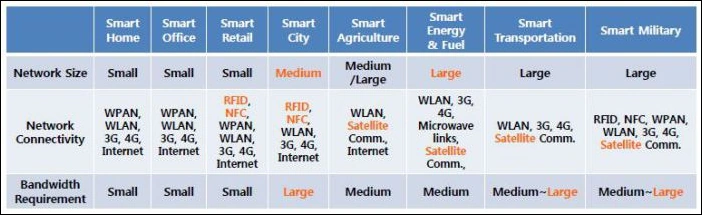
Figure 9. Smart Environment Application Domains
where
- WLAN stands for Wireless Local Area Network which includes Wi-Fi, WAVE, IEEE 802.11 a/b/g/p/n/ac/ad, and so on
- WPAN stands for Wireless Personal Area Network which includes Bluetooth, ZigBee, 6LoWPAN, IEEE 802.15.4, UWB, and so on.
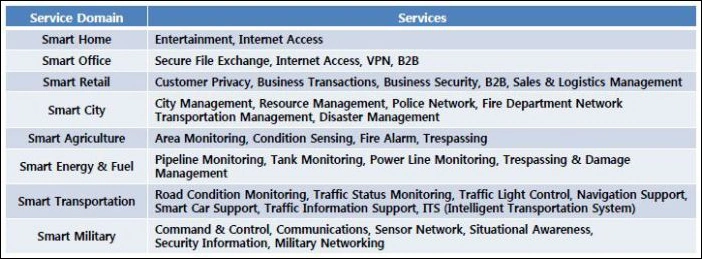
Figure 10. Smart Environment Application Domains: Service Domain and their Services classified.
That is all for this article. I hope you enjoyed reading.
References
- http://internetofthings.electronicsforu.com/2014/12/building-blocks-iot-getting-started/
- https://www.coursera.org/learn/iot-augmented-reality-technologies/lecture/8ZlnC/iot-architecture
- http://www1.cnnic.cn/ScientificResearch/LeadingEdge/wlw1/
- Internet Search.
P.S: This article has been previously published on my blog at https://opentechdiary.wordpress.com.
Gurwinkle SidanaPosted Apr 6, 2018, 2:57 PM
I mean sensors at access layer connected to switches called processors then gateways called routers then data stored in cloud.After that remotely managed
Gurwinkle SidanaPosted Apr 6, 2018, 2:54 PM
Where sensors are deployed.Are they deployed on access layer and then switches and then routers which are called gateways then medium and applications and then storage eg in cloud then center of remotely manage.Do you mean that
Delpin Susai RajPosted Aug 29, 2016, 2:30 AM
Good
Humayun Kabir MamunPosted Oct 2, 2015, 12:54 AM
Nice...
Karthikeyan KPosted Aug 22, 2015, 9:39 PM
Again awesome one...Thanks for good share
RakeshPosted Aug 22, 2015, 1:31 PM
Well Explain
Sumit JoshiPosted Aug 22, 2015, 10:19 AM
thanks for sharing
Sukanya MandalPosted Aug 22, 2015, 9:11 AM
Thanks a lot for your for appreciation and warm welcome! Keep me motivated with your valuable feedback so that I can come up with some more innovative articles on such young technologies :)
Mahesh ChandPosted Aug 22, 2015, 8:59 AM
Thank you Sukanya. Your writing style is definitely refreshing and welcome to C# Corner. Please do let me know if anything else we (C# Corner) can do. Thanks!
Avirup BasuPosted Aug 22, 2015, 8:48 AM
Good one. Working on IoT is really amazing. Your articles are excellent and awesome.
Santhakumar MunuswamyPosted Aug 22, 2015, 6:29 AM
Good Article. Thanks for sharing
Sukanya MandalPosted Aug 22, 2015, 4:20 AM
Thanks a lot, everyone, for appreciating and keeping me motivated !!
Vaikesh K PPosted Aug 22, 2015, 2:47 AM
Nice work
Chervine BhiwooPosted Aug 22, 2015, 1:50 AM
Good one!
Rajeesh MenothPosted Aug 22, 2015, 1:42 AM
Good Work...
Gowtham KPosted Aug 22, 2015, 1:00 AM
Good one
Nilesh JadavPosted Aug 22, 2015, 12:02 AM
Nice information
Gopi ChandPosted Aug 21, 2015, 11:37 PM
Excellent work
Karthikeyan KPosted Aug 21, 2015, 11:01 PM
Good one...Thanks for share