

Introduction
Modern applications rely heavily on secure authentication and authorization. Whether you're building mobile apps, web platforms, or APIs — understanding OAuth 2.0 and JWT is no longer optional. Yet, many developers confuse these two concepts.
This article clears the confusion in simple terms — with practical relevance for developers in India and the global tech ecosystem.
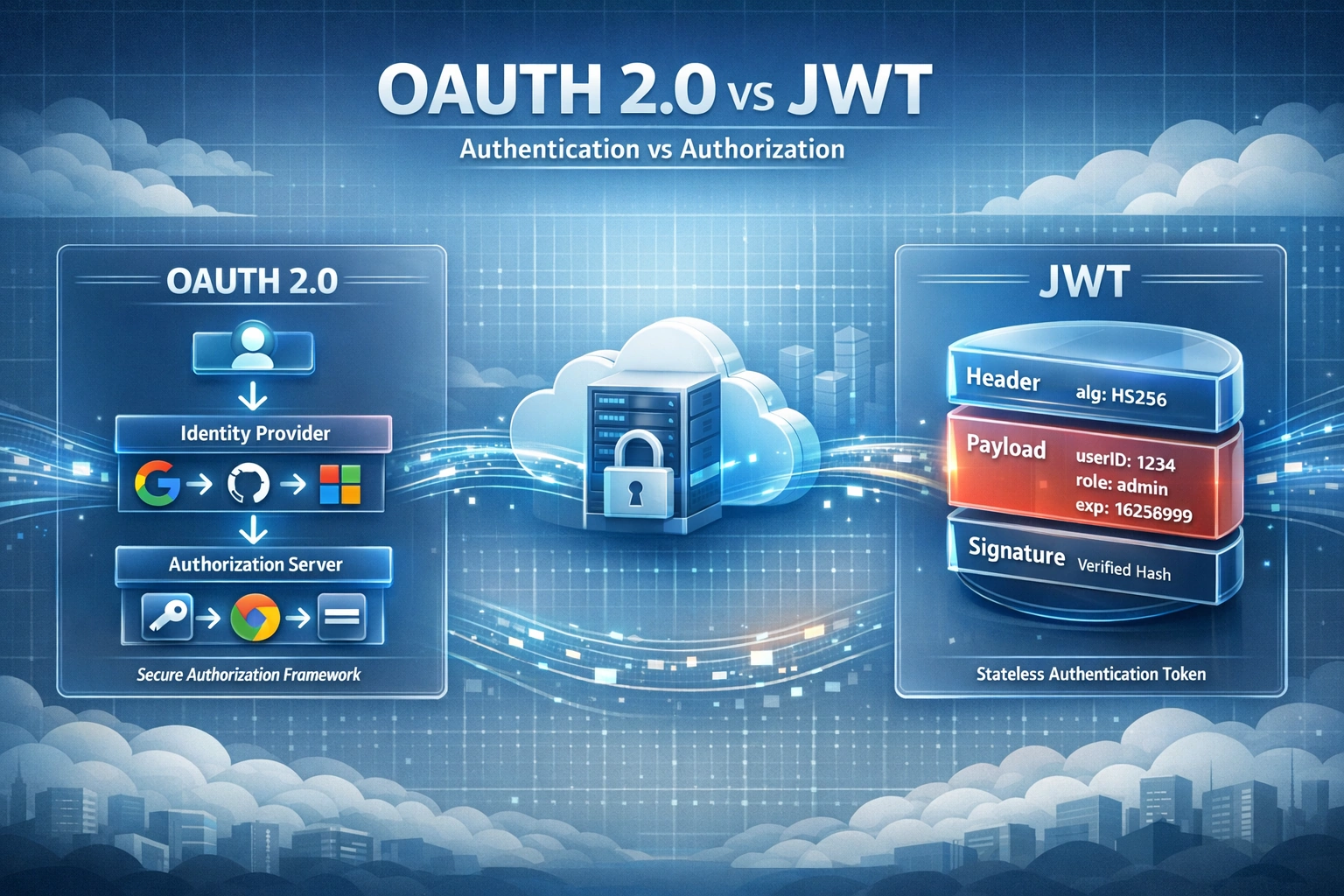
Why OAuth 2.0 and JWT Matter Today
Every modern app needs:
Secure user login
Safe access to APIs
Protection of user data
Scalable authentication
From social logins like Login with Google to enterprise Single Sign-On — OAuth 2.0 and JWT power most authentication systems running today.
If you're preparing for backend interviews or building production-grade applications, this knowledge is essential.
What is JWT (JSON Web Token)?
JWT is a token format used for stateless authentication.
When a user logs in:
The server generates a JWT
The token contains encoded user data
The client stores the token
The token is sent with every API request
A JWT typically includes:
User ID
Roles or permissions
Expiry timestamp
Digital signature
Because JWT is self-contained, the server does not need to store session data — making it ideal for scalable APIs.
In simple terms:
JWT = A self-contained authentication token
What is OAuth 2.0?
OAuth 2.0 is an authorization framework.
It allows one application to access another application's resources without sharing passwords.
Common examples:
Login with Google
Login with GitHub
Login with Microsoft
OAuth 2.0 flow:
User authenticates with an identity provider
Authorization server issues an access token
Application uses the token to access user data
In simple terms:
OAuth 2.0 = A secure system that issues access tokens
Join the conversation! Your thoughts help the community grow.