

Background of Blockchain Development on Stratis Platform
A blockchain offers different protocol networks so the development of blockchain and its transactions do not interfere with live transactions. These networks are used to develop, test, and deploy your smart contracts and other transactions. A typical blockchain implements three common types of networks – private net, testnet, and mainnet.
Private Net
A Private Net or privatenet or private network is a network that is not connected to public networks, testnet, and mainnet.
A private net is used for development and other limited purposes only and runs on a user’s machine or on a local network. This creates a simulation of blockchain where multiple local nodes can interact and see transactions stored on the blockchain.
A blockchain can have many private networks. Each individual developer or a group of developers can create their own private network or networks.
Testnet
A testnet is a testing network protocol that developers used to deploy their transactions or smart contracts to be tested by the public. Many protocol enthusiasts and developers participate in testing on testnets. You can think of testnets as staging servers in traditional software development infrastructure.
Once the project is tested on a testnet, then it is moved to the mainnet. Most testnets use a proof-of-authority consensus mechanism. That means only a smaller and selected number of nodes are chosen to validate transactions.
On the Stratis blockchain, all master nodes that use a proof-of-authority (PoA) consensus mechanism can participate in testnet validation and approval process.
Mainnet
Mainnet is the primary public network that is where all true transactions and smart contracts are stored on a blockchain. The Mainnet is run by several nodes that manage a write-only distributed ledger. On Mainnet, there is a fee for executing transactions and smart contracts. On Stratis blockchain that runs on a proof-of-stake (PoS) consensus mechanism for transaction validation, all nodes that participate in staking are involved in the validation process. If you are new to blockchain, you can start from here: what is Blockchain.
What is Cirrus Core Private Net Wallet?
Cirrus Core Private Net wallet runs with an instance of the Stratis Full Node; ‘Stratis.CirrusMinerD’ project in devmode=miner. It provides a graphical user interface for developers to get familiar with cirrus wallet and provides simplicity for development.
This wallet is designed to launch the node for a local development environment to deploy, call the contract, and ease of use for developers to build the solutions without external interference. This wallet is a private instance of the Cirrus Wallet.
In this article we will learn the following things:
- Installing Cirrus Core Private Net Wallet
- Getting Familiar with the Wallet
- Creating a new Wallet
- Perform Transaction using Cirrus Core private Net wallet
Downloading and Installing Cirrus Core Private Net Wallet
You can download the Cirrus Core Wallet from the Cirrus repository which is available for all major operating systems. Download it according to your System and install it. Installation is just a simple click. You can download the wallet from the official Stratis.
Double-click on the installation file.

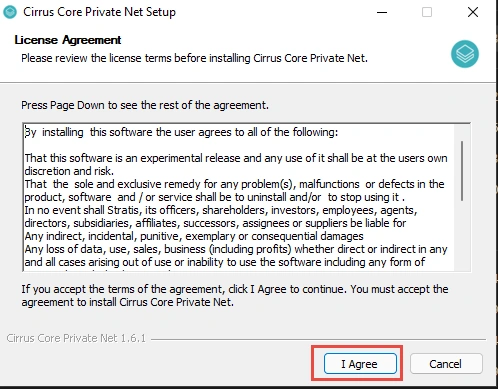
Click on the License agreement as shown below.
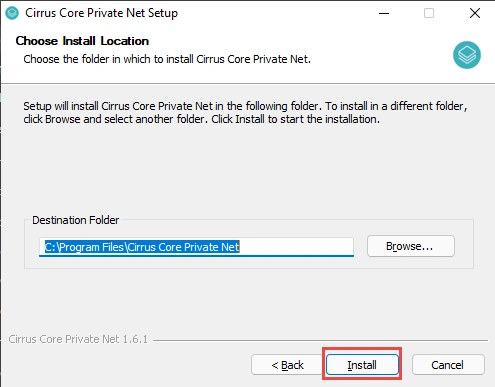
Then Click on Install.
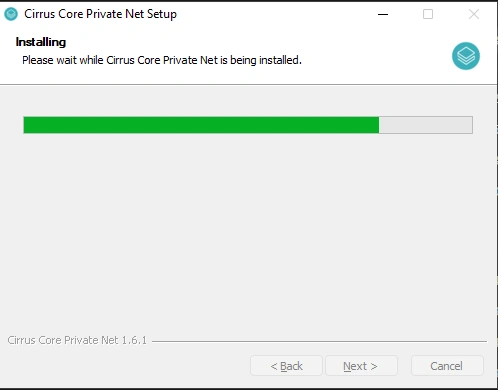
Installation may take a few minutes.
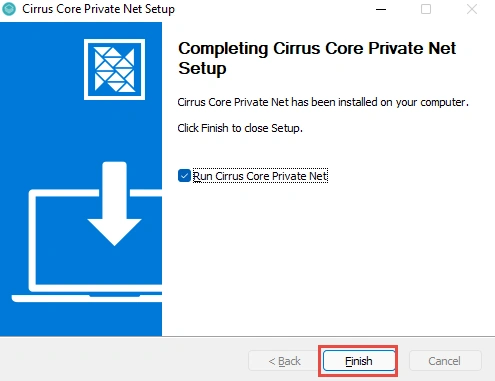
Once installation is completed you can open the wallet.
Get Familiar with Cirrus Core Private Net Wallet
Open the wallet from the shortcut created on the desktop.
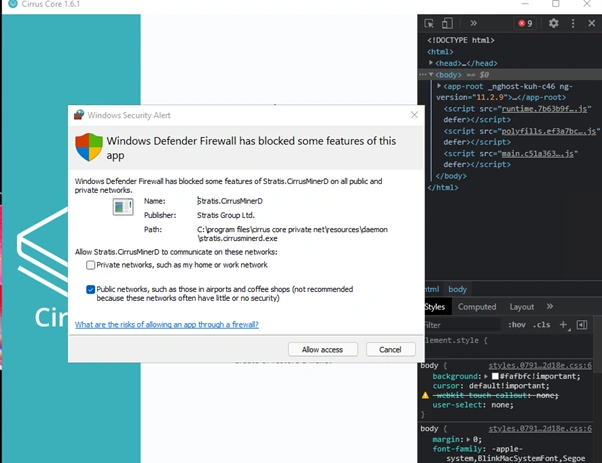
Click on allow access if you get the below message: Firewall has blocked some features.
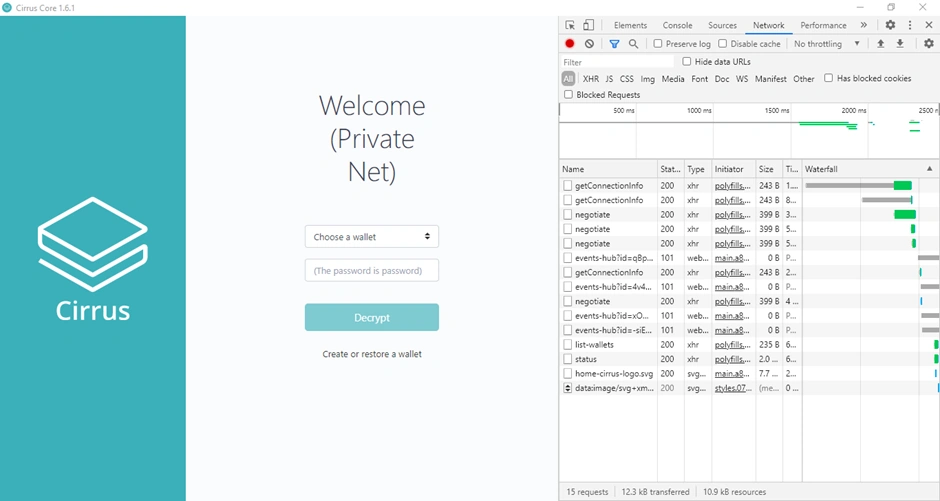
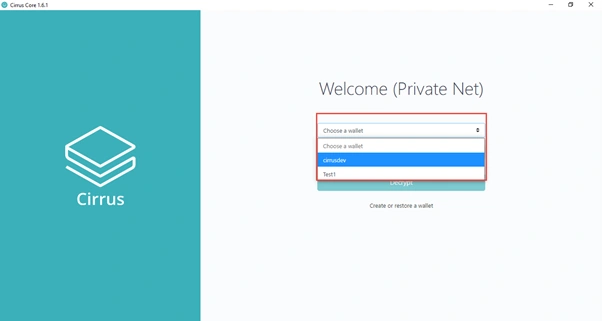
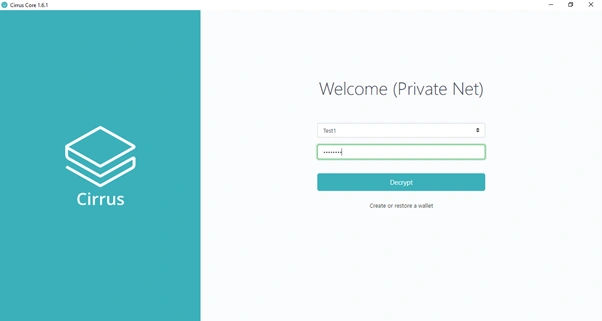
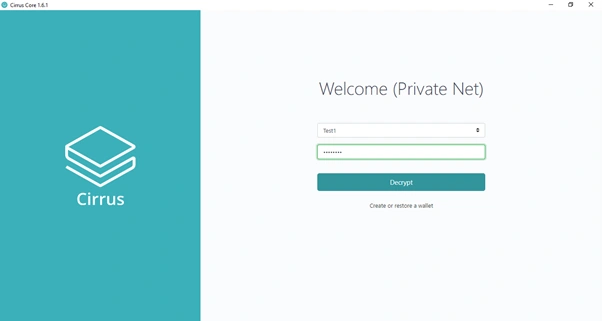
Then, Wallet will ask you for the wallet name and password. Select the wallet name: cirrusdev and provide the password:password and click on Decrypt as illustrated in the picture below.
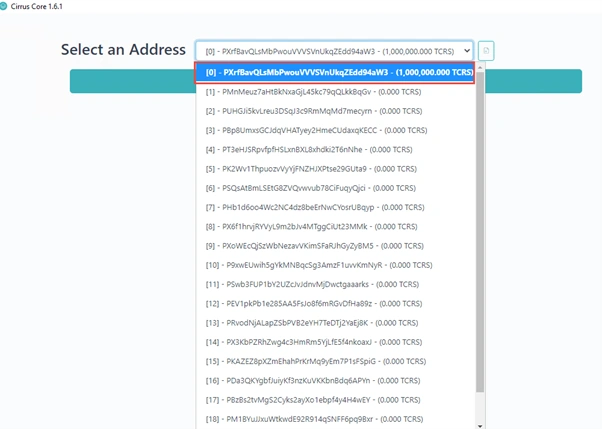
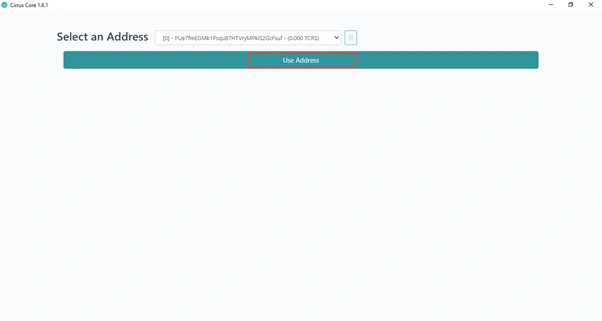
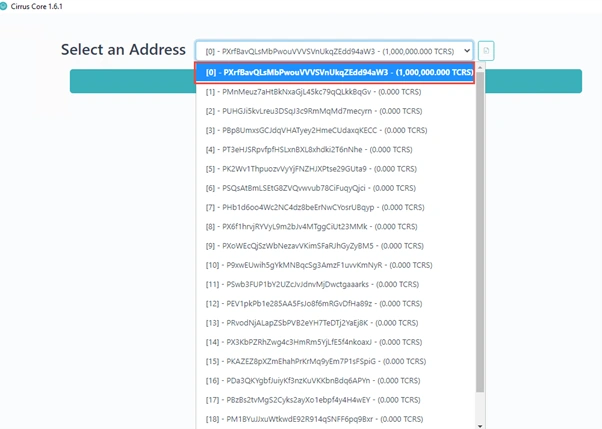
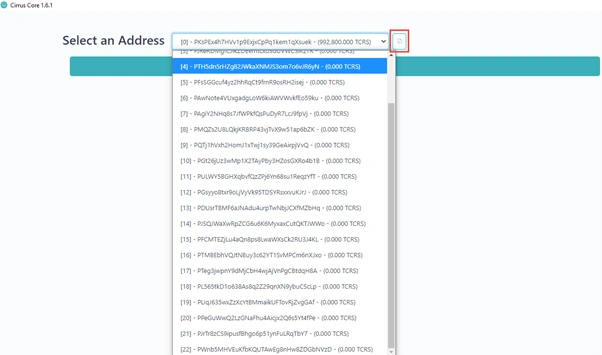
Once you decrypt the wallet, you will see an address list containing 20 addresses. Select the first address, i.e. Address[0], and click Use Address.
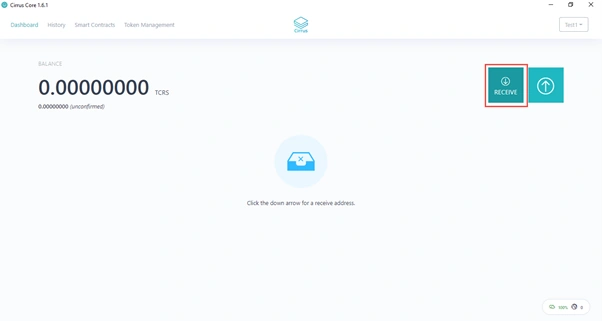
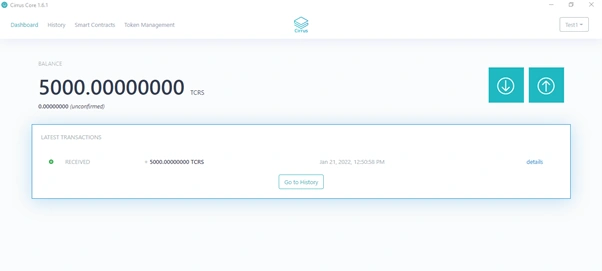
Then, it will be loaded with a dashboard reflecting the balance of 100000000 TCRS. TCRS is a test CRS token (coins) that you can use for development and testing. Cirrus Core wallet’s token is known as TCR. This wallet runs on a Cirrus chain that is called a side chain and is used to deploy and interact with the contract. The side chain is the supporting chain for the main chain. It runs parallel to the main chain.
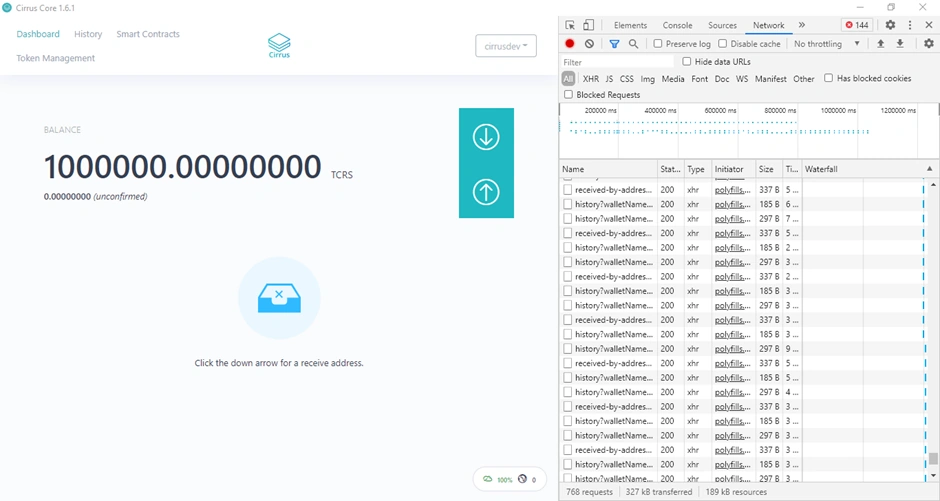
In addition to the GUI interface, you might have noticed DevTools on the right-hand side. DevTools provides you insights into what calls are being made to the respective API endpoint when using the Cirrus Core Wallet. Simply, you can inspect and check the API call through it.
Creating New Wallet
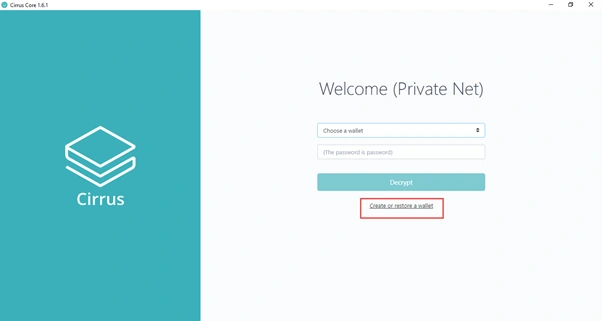
Open Wallet from the desktop shortcut and click on Create or restore option.
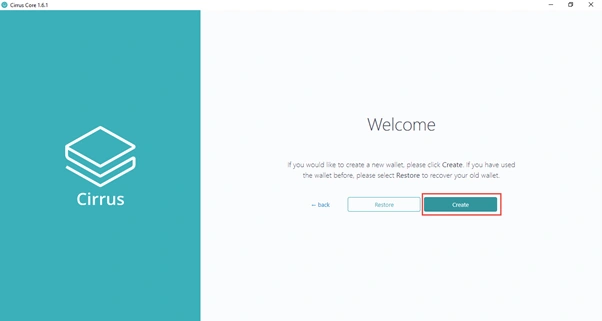
You will get an option to Restore or Create as depicted below. Here we are going to Create a new wallet so click on Create Button as depicted below.
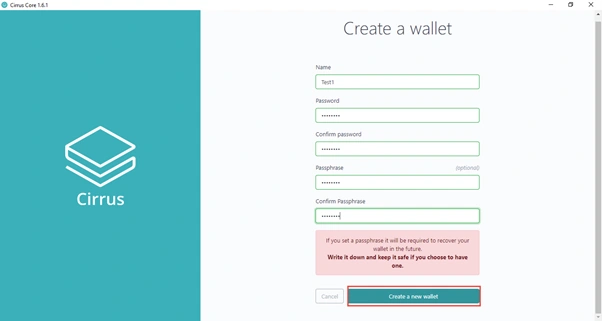
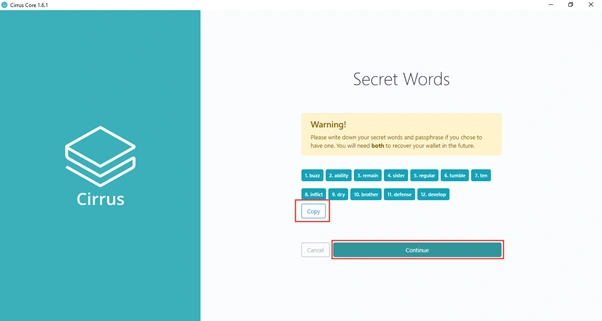
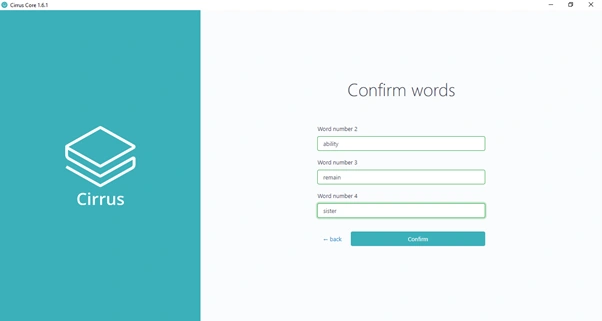
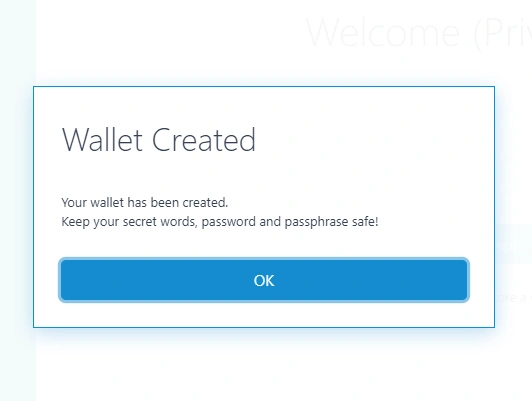
Then provide the Name, Password, and password Phrase and click on Create a new wallet as depicted below.

Join the conversation! Your thoughts help the community grow.