

Raspberry Pi is a great thing
- It is a real computer. It can interface with electronics, talk to the Web, and has full HDMI support.
- However, it runs on Linux, which I have a love-hate relationship with.
- I love the idea of Linux, except when I start messing around with the command line, downloading packages, and installing things.
Parts Of Lists
- Raspberry Pi
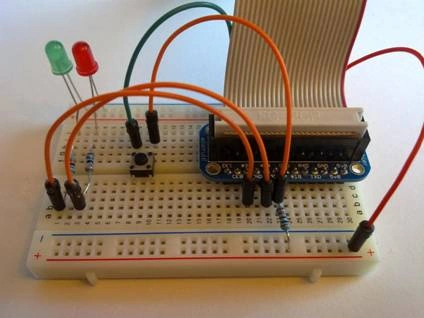
- Cobbler breakout board with cable
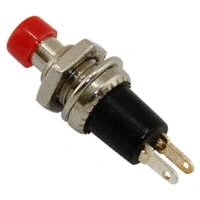
- Push Button Switch
- Resistor
- Standard LED
Parts Of Explanation
Push Button Switch
- Push Button Switch consists of a simple electric switch mechanism, which controls some aspect of a machine or a process. Buttons are typically made out of hard material such as plastic or metal. The surface is usually shaped to accommodate the human finger or hand, so the electronic switch can be easily depressed or pushed. Also, most Push Button Switches are known as biased switches. A biased switch can be also considered, what we call a "momentary switch", where the user will push-for "on" or push-for "off" type. This is also known as a push-to-make (SPST Momentary) or push-to break (SPST Momentary) mechanism.
- Switches with the "push-to-make" (normally-open or NO) mechanism are a type of push-button electrical switch, which operates by the switch making contact with the electronic system when the button is pressed and breaks the current process when the button is released. An example of this is a keyboard button.
- A "push-to-break" (or normally-closed or NC) electronic switch, on the other hand, breaks contact when the button is pressed and makes contact when it is released.
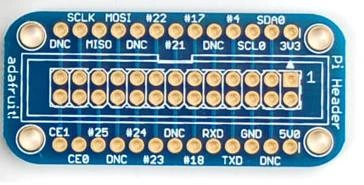
Cobbler breakout board
- Pi Cobbler mini kit comes with a 26 pin ribbon cable, a custom PCB, ribbon cable socket and header pins. A little soldering is required to put it together but its really easy, even a beginner can do it in 15 minutes! Once soldered together, the cable plugs between the Pi computer and the Cobbler breakout.
- The Cobbler can plug into any solderless breadboard (or even a prototyping board like the PermaProto). The Cobbler PCB has all the pins labeled nicely, so you can go forth and build circuits without keeping a pin-out printout at your desk. We think this will make it more fun to expand Pi and build custom circuitry with it.
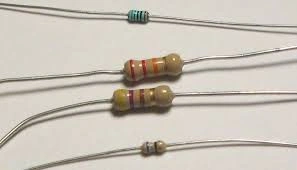
Resistor
- A resistor is a passive two-terminal electrical component, which implements the electrical resistance as a circuit element. In electronic circuits, the resistors are used to reduce current flow, adjust signal levels, to divide voltages, bias active elements, and terminate transmission lines among other uses.
- High-power resistors can dissipate many watts of electrical power as heat may be used as part of motor controls, in power distribution systems, or as test loads for generators. Fixed resistors have resistances that only change slightly with the temperature, time, or an operating voltage.
- Variable resistors can be used to adjust the circuit elements (such as volume control or a lamp dimmer) or as the sensing devices for heat, light, humidity, force, or chemical activity.
- Resistors are common elements of the electrical networks and electronic circuits and are ubiquitous in the electronic equipment. Practical resistors as discrete components can be composed of various compounds and forms. Resistors are also implemented within the integrated circuits.
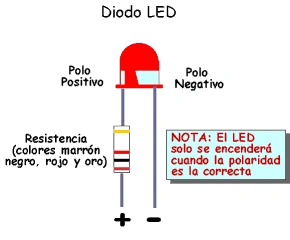
Standard LED
RajaPosted Nov 17, 2016, 4:53 AM
Good One Thanks For sharing...
Anu VPosted Nov 17, 2016, 1:48 AM
Very nice article. Thanks for sharing.
Vignesh ManiPosted Nov 16, 2016, 3:55 PM
Nice one. Thank you for share..