

Introduction
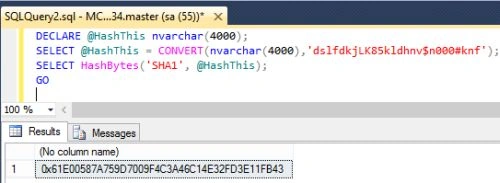
In this article, I describe the Transact-SQL security functions CURRENT_USER, HAS_DBACCESS, HAS_PERMS_BY_NAME, and HASHBYTES. The functions are given below return information that is useful for managing security.
SQL CURRENT_USER Function
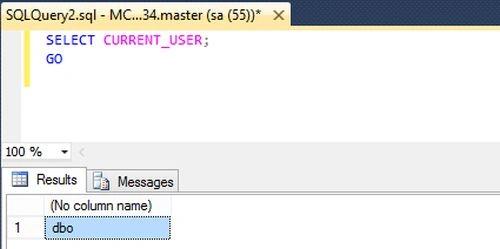
This SQL security function returns the current user's name and is equivalent to USER_NAME() or, in other words, returns the sysname.
Syntax
CURRENT_USER
Example
An example image of the function is.
SQL HAS_DBACCESS Function
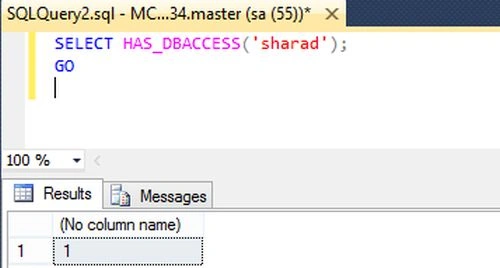
This SQL security function returns information about whether the user has access to the specified database.
Syntax
HAS_DBACCESS('DataBase_Name')
Argument of the HAS_DBACCESS function
The argument of the function is.
| Parameter | Description |
| DataBase_Name | It specifies the name of the database the user wants to access the information. |
Example
An example image of the function is.
SQL HAS_PERMS_BY_NAME Function
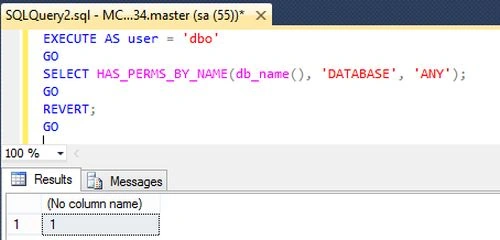
This SQL security function evaluates the effective permission of the current user on a securable and returns an integer value 1 or 0 or null; value 1 represents true, value 0 represents false, and null represents invalid function arguments.
Syntax
HAS_PERMS_BY_NAME ( securable , securable_class , permission [ , sub-securable ] [ , sub-securable_class ] )
Arguments of the HAS_PERMS_BY_NAME function
The arguments of the function are.
Lokesh VijPosted Jul 1, 2013, 3:44 AM
Nice article Sharad. Just a word of caution while using HASHBITES - As this is a hash compression function, it is susceptible to collision. This means two different set of inputs can yield a same hash value. (Thought of warning the users who would like to use this function)