

Introduction
A crypto wallet isn't a physical wallet, but it is a secure app or device to store, manage, and transact with cryptocurrencies like Bitcoin, and Ethereum. These keys, like passwords, are granted to access to your crypto on the blockchain (in a digital ledger), they hold the private keys necessary to access and manage one's digital assets on the blockchain. They safeguard our digital assets from hackers and enable us to carry out transactions.
Cryptocurrencies cannot actually be used the same way as ordinary money without a cryptocurrency wallet. Thus, a decent wallet serves as a safe haven for your digital currency. Anyone working with cryptocurrencies needs to have these tools.
In this article, we will look at this topic: Its Types, Purpose, safety, and security.

Purpose of crypto wallets
Anybody working in the cryptocurrency area needs a crypto wallet. Their primary purpose is to store, manage, and transact with digital assets securely. Here are the key purposes of crypto wallets.
- Secure Storage of Private Keys: A crypto wallet securely stores the private keys that are essential for accessing and managing cryptocurrencies. Without these keys, users cannot access their funds or authorize transactions.
- Transaction facilities: Crypto wallets enable users can send and receive cryptocurrencies. They generate and manage public addresses that can be shared with others for receiving funds. When sending funds, the wallet uses the private key to sign transactions, ensuring they are authorized and legitimate.
- Balance and Transaction History: Crypto wallets provide users with the ability to check their cryptocurrency balances and review their transaction history. This functionality is crucial for tracking funds and verifying the success of transactions.
- Access to Decentralized Applications (dApps): Some wallets, particularly those that support Ethereum and other smart contract platforms, allow users to interact with decentralized applications (dApps). This expands the functionality of wallets beyond just storing and transferring assets, enabling activities such as staking, lending, and participating in decentralized finance (DeFi) protocols.
- Security and Convenience: Crypto wallets offer various security features, including encryption, multi-factor authentication, and biometric verification, to protect users' assets from unauthorized access. Depending on the type (hot or cold), wallets balance security and convenience, catering to different user needs.
- Backup and Recovery: Wallets provide mechanisms for backing up and recovering access to cryptocurrencies, typically through seed phrases. This ensures that users can regain access to their funds even if their device is lost or damaged.
Types of Crypto Wallets
Crypto wallets are commonly categorized into two major types and also their own subcategories and specific use cases.
- Hot Wallets
- Cold Wallets
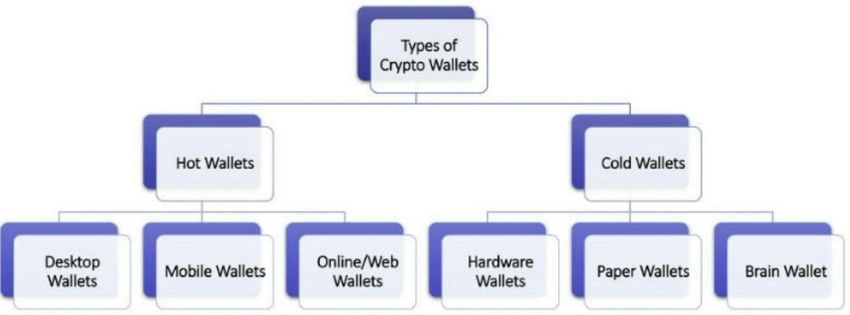
Hot wallets
Hot wallets are connected to the internet and are designed for frequent transactions, they are generally more convenient but less secure compared to cold wallets. They work well for daily transactions and are easy to access. One can use these wallets on their computer, phone, or online.
The wallets are online, they are more vulnerable to cyberattacks. Using strong passwords and taking into account extra security measures like two-factor authentication are essential.
Types of Hot Wallets
Different types of hot wallets include.
- Desktop Wallets: Desktop wallets are software applications installed on a personal computer or laptop, providing a secure and convenient way to manage our cryptocurrencies. They store private keys locally on the user's device, providing a higher level of security compared to web wallets, which store keys on remote servers and enable us to send and receive multiple cryptocurrencies.
- Mobile Wallets: Mobile wallets are smartphone-designed applications that provide a convenient way to manage our cryptocurrencies. They provide a user-friendly interface and are typically available for both Android and iOS smartphones. These wallets provide a balance of convenience and security, mobile wallets are suitable for individuals who frequently engage in transactions and need access to their funds anytime, anywhere.
- Online Wallets (Web Wallets): Online wallets, also known as web wallets, are accessed through a web browser, allowing users to manage their cryptocurrencies without any need for software installation. They provide accessibility from any device with an internet connection, making them a convenient choice for many users, and also lower security compared to other wallet types.
Cold wallets
Cold wallets are offline and designed for long-term storage, providing enhanced security against online threats. and Cold wallets are not as convenient for everyday transactions. Because they're typically physical objects or records, they're not as accessible. This makes them less suitable for quick transactions as compared to hot wallets
Since they're offline and not vulnerable to online hacking, they're quite safe. But you must exercise extra caution to ensure that the wallet or paperwork is not misplaced or broken.
Types of Cold Wallets
Different types of cold wallets include.
- Hardware Wallets: Hardware wallets are physical devices designed specifically for storing cryptocurrencies in a safe and secure manner. They look like USB drives and are equipped with specialized security features. These wallets generate and store private keys offline, ensuring they are never exposed to potential online threats
- Paper Wallets: A paper wallet is a physical documentation that contains the private and public keys of a cryptocurrency wallet. It's considered one of the most secure forms of cold storage, as it's entirely offline and not susceptible to online threats. However, it's crucial to keep the physical document in a safe and secure location, Keep the paper in a secure location, ideally in a waterproof and fireproof container.
- Brain Wallets: A brain wallet is a type of wallet where the private key is derived from a passphrase or a sequence of words that the user chooses and remembers. This means funds associated with a brain wallet are only as secure as the strength and secrecy of the passphrase.
Difference between Hot wallets and Cold wallets
| Feature | Hot Wallets | Cold Wallets |
| Connectivity | Always connected to the internet | Never connected to the internet |
| Convenience | High (easy access and frequent transactions) | Low (designed for long-term storage) |
| Security | Lower (susceptible to online attacks) | Higher (protected from online threats) |
| Usage | Daily transactions, trading | Long-term storage, holding large amounts |
| Examples | MetaMask, Trust Wallet, Exodus | Ledger Nano S, Trezor, Paper Wallet |
However, they are considered only important key points to differentiate between Hot wallets and Cold wallets.
What are the safety and security of Crypto wallets?
The safety and security of crypto wallets are critical for protecting digital assets from hackers.
1. Safety
Safety refers to measures that prevent the loss of access to funds. This includes.
- Backup Options: Using seed phrases or recovery keys to restore access if the wallet is lost or damaged.
- User Practices: Encouraging safe behaviors like keeping private keys and seed phrases secure and avoiding phishing scams.
2. Security
Security involves protecting against unauthorized access and attacks. There are Key aspects include.
- Encryption: Encrypting private keys to prevent unauthorized access even if the wallet is compromised.
- Authentication: Implementing multi-factor authentication (MFA), biometric verification, and PIN codes to safeguard the wallet.
- Cold Storage: Using offline storage (cold wallets) for long-term security, minimizing exposure to online threats.
- Regular Updates: Keeping wallet software up-to-date to defend against new vulnerabilities.
Safety ensures that users do not lose their access to cryptocurrencies, while security protects against hacking and fraud, ensuring that only authorized individuals can access and manage the assets.
Conclusion
In this article, we will cover the crypto wallet types and their purposes, safety & security. wallets are the core of security and accessibility in the world of cryptocurrency. By balancing safety through robust backup mechanisms and security through encryption and authentication, they safeguard users' cryptocurrencies from theft and loss. Whether opting for the convenience of hot wallets or the enhanced protection of cold wallets, understanding their features and maintaining best practices is crucial for effective asset management.
Join the conversation! Your thoughts help the community grow.