

When I started my career, SQL Server 2000 was my daily companion. Since then, Microsoft has continuously surprised us with every new release. Each version brought something better, something faster, and something smarter.
Now comes SQL Server 2025, branded as an Enterprise AI‑Ready Database—and honestly, it really lives up to the name.
If you’re wondering whether you should install or upgrade to SQL Server 2025, you’re not alone. It’s a valid question. While I personally believe in adopting the latest and greatest technologies, upgrading a database platform is never just about excitement—it’s about value, performance, and long‑term benefits.
So let’s walk through some key highlights of SQL Server 2025 that can help you decide.
AI Comes to the Core of SQL Server
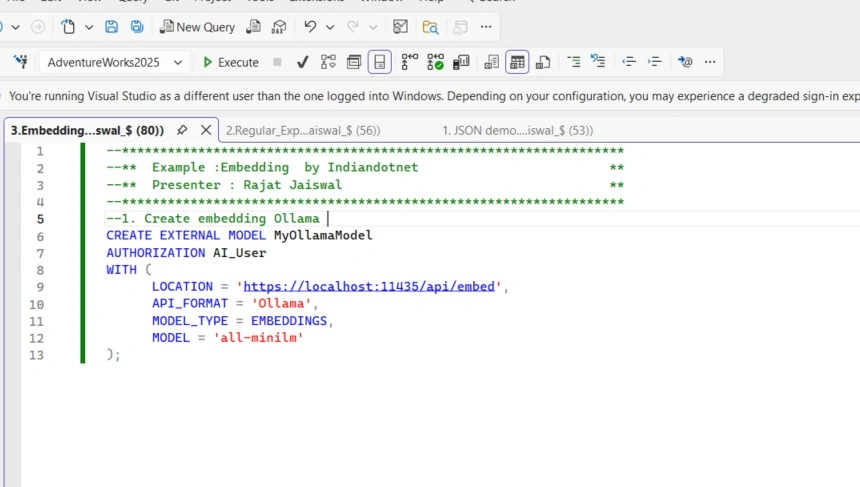
Microsoft is clearly serious about AI this time. SQL Server 2025 introduces native support for vector data, making AI workloads far more practical inside the database.
A new Vector data type allows you to store vector embeddings in an optimized binary format (while still being accessible as JSON arrays).
New vector functions help store, search, and manipulate these vectors.
You can create vector indexes using DiskANN (Approximate Nearest Neighbors) for fast and accurate similarity searches.
Integration with AI models such as OpenAI and Ollama is supported.
This makes tasks like semantic search and multilingual comparisons much easier. For example, searching for records related to the word “Umbrella” can now return meaningful results even when similar or related terms are used.
Native JSON Data Type (A Big Win!)
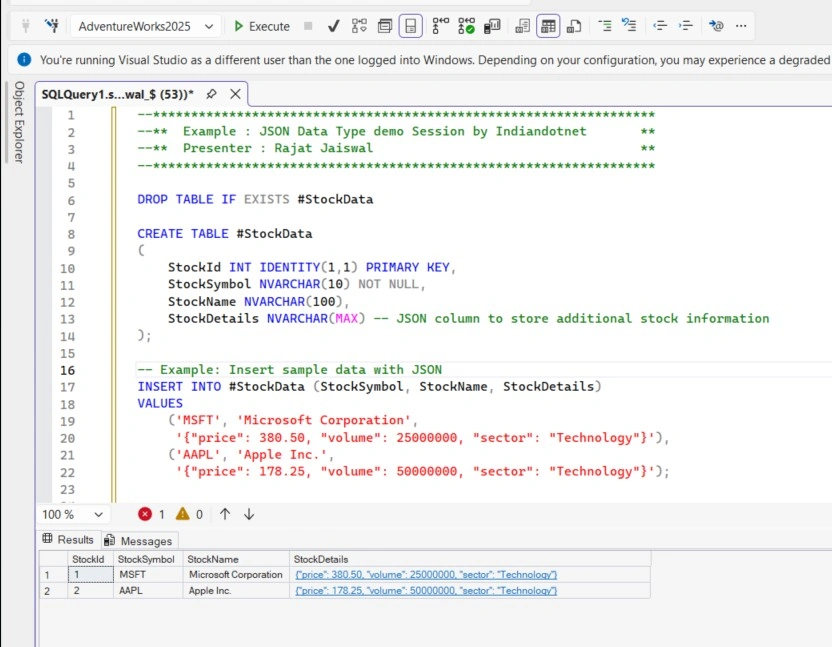
Until now, JSON data in SQL Server was stored as plain text using NVARCHAR(MAX). That worked—but it wasn’t ideal.
With SQL Server 2025, we finally get a native JSON data type.
JSON documents are stored in a binary, pre‑parsed format
Better performance for reads and queries
Support for very large JSON documents (up to ~2 GB)
For applications heavily dependent on JSON, this is a game changer.
Built‑in Regular Expression Support
Good news for developers and DBAs alike—no more CLR workarounds!
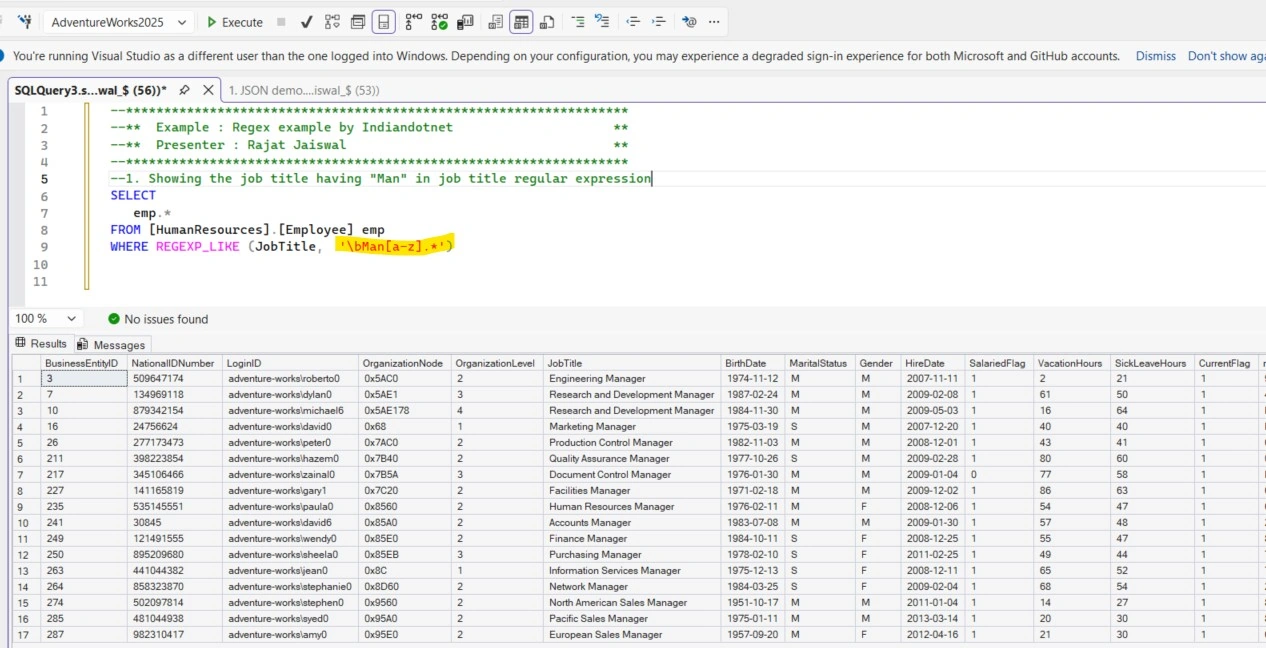
SQL Server 2025 introduces native regular expression support, which means:
You can use regex directly in queries
Regex can also be applied in CHECK constraints
This makes data validation and pattern matching far simpler and cleaner.
New PRODUCT() Aggregate Function
Just like SUM() and AVG(), SQL Server 2025 introduces the PRODUCT() aggregate function.
It’s a small addition, but very useful in scenarios involving calculations over multiple rows.
Smarter Query Processing
Performance has always been a focus, and SQL Server 2025 continues that tradition with enhancements to Intelligent Query Processing (IQP).
Some notable improvements include:
Cardinality estimation feedback for expressions
Optional parameter plan optimization
These enhancements help queries adapt better over time and improve overall execution efficiency.
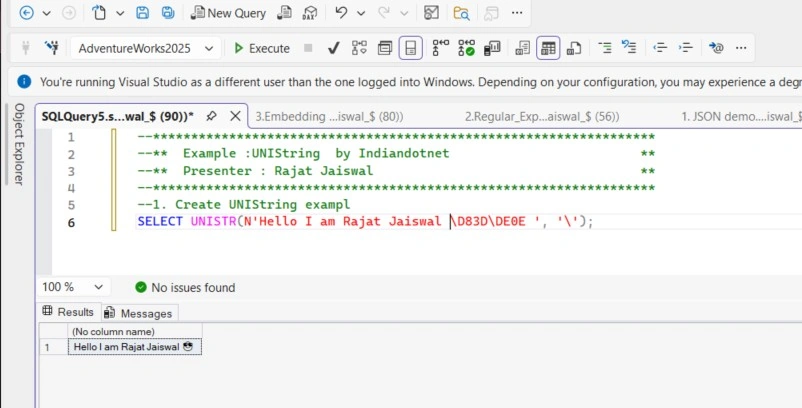
UNISTRING Support
SQL Server now supports Unicode string literals using UNISTRING, making it easier to handle and encode special characters correctly—especially useful in global and multilingual applications.
String Concatenation with ||
Finally! SQL Server 2025 introduces the pipe operator (||) for string concatenation, aligning SQL Server more closely with standard SQL syntax and improving readability.
Real‑Time Data and Event Streaming
QL Server 2025 provides native support for real‑time data and event streaming using Azure Event Hubs, making it easier to build modern, event‑driven architectures directly from SQL Server.
Final Thoughts
SQL Server 2025 is more than just another version—it’s a clear step toward making SQL Server AI‑ready, developer‑friendly, and performance‑focused.
Upgrading always depends on your workload, environment, and business needs. But with features like native AI support, JSON data types, regex, and performance enhancements, SQL Server 2025 offers strong reasons to seriously consider the move.
In my next post, I’ll talk about the latest SQL Server Management Studio (SSMS 22) and what’s new there. Stay tuned!
Join the conversation! Your thoughts help the community grow.