

Artificial intelligence is no longer a distant concept—it's an everyday reality for students, teachers, and business leaders alike. Recognizing this shift, Microsoft has announced two major initiatives: Microsoft Elevate and the AI Economy Institute. These programs are designed to ensure that as AI transforms the global landscape, people remain at the center of progress, equipped with the skills, knowledge, and opportunities needed to thrive.
Introducing Microsoft Elevate: A Unified Approach to Social Impact
Microsoft Elevate consolidates the company’s philanthropic and social impact efforts, bringing together technology support, donations, and sales for educational institutions and nonprofits. Building on the legacy of Microsoft Philanthropies and the Tech for Social Impact team, Elevate marks a new chapter in corporate responsibility.
- $4 Billion Commitment: Over the next five years, Microsoft will donate more than $4 billion in cash, AI, and cloud technology to K-12 schools, community and technical colleges, and nonprofits worldwide.
- Expanded Reach: Elevate will continue to reinvest profits into nonprofit programs, ensuring that technology benefits those who need it most.
Bridging the Skills Gap: Microsoft Elevate Academy
With digital transformation accelerating, the need for new skills is urgent:
| Statistic | Insight |
|---|---|
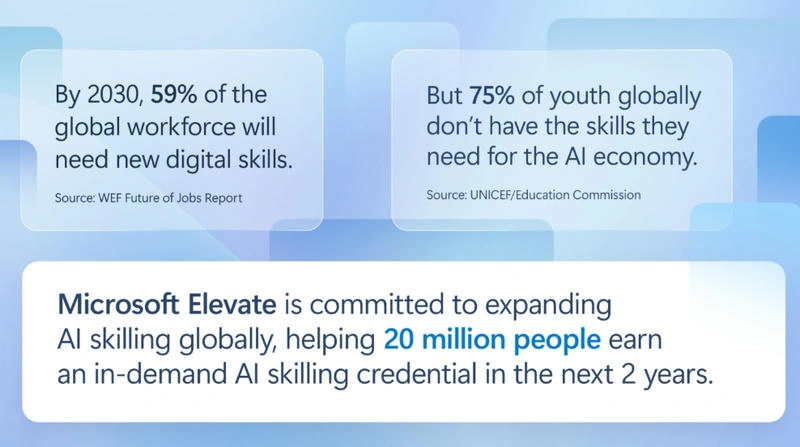
| By 2030, 59% of the global workforce will require new digital skills. | WEF Future of Jobs Report |
| 75% of youth globally lack the skills needed for the AI economy. | UNICEF/Education Commission |
| Microsoft Elevate aims to help 20 million people earn an in-demand AI credential in 2 years. | Microsoft |
The Microsoft Elevate Academy will spearhead global skilling efforts, offering training from foundational AI literacy to advanced technical expertise. In partnership with LinkedIn and GitHub, the Academy plans to help 20 million people earn AI credentials within two years, making AI education accessible at scale.
Building a Global Skilling Infrastructure Through Partnerships
Microsoft Elevate is forging partnerships with governments, educational institutions, and nonprofits worldwide. Notable initiatives include:
Collaboration with North Rhine-Westphalia, Germany: Advancing AI education and training at the state level.
“Hour of AI” with Code.org: Introducing innovative programs to spark interest in AI among young learners.
Partnerships with Labor Organizations: Working with groups like the American Federation of Teachers to deliver AI training to educators and union members.
These collaborations are designed to create a robust infrastructure for AI skilling, ensuring communities everywhere are prepared for the future of work.
Reflecting on the Role of AI: Elevating Humanity, Not Replacing It
As the tech industry races toward breakthroughs in artificial intelligence, Microsoft urges a pause for reflection: Are we building machines to replace people, or to help them flourish? The company’s stance is clear—AI should be developed to elevate humanity, not outsmart it.
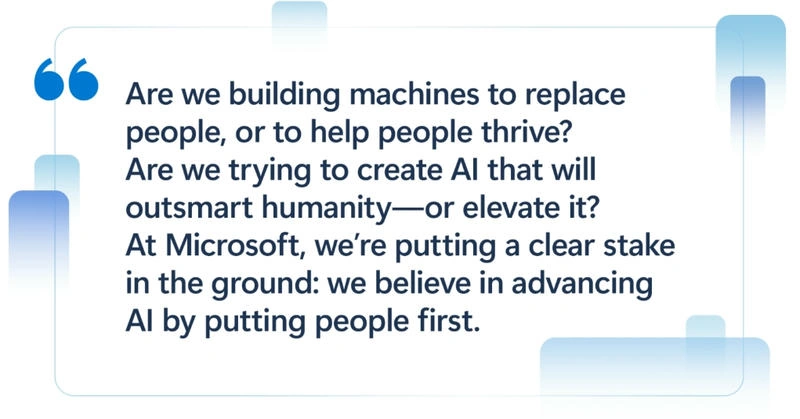
Are we building machines to replace people, or to help people thrive? Are we trying to create AI that will outsmart humanity, or elevate it? At Microsoft, we're putting a clear stake in the ground: we believe in advancing AI by putting people first.
Redefining the Future of Work
Work is more than a paycheck—it’s about purpose, growth, and dignity. Microsoft’s initiatives are rooted in the belief that technology should empower people to shape the future of work, not simply react to it.
- Human-Centric Approach: While AI can process data and automate tasks, only humans can exercise judgment, offer empathy, and care deeply.
- Ongoing Dialogue: The company advocates for thoughtful conversations in homes, schools, and workplaces about the responsible use of AI.
Deepening Partnerships for Lifelong Learning
Success in the AI era requires input from a diverse array of stakeholders:
- Labor Unions: Collaborations with organizations like the AFL-CIO and the American Federation of Teachers are bringing AI training to union members, apprenticeship instructors, and educators.
- Policy Advocacy: Microsoft is working with policymakers to promote lifelong learning, workforce readiness, and equitable access to AI education.
Launching the AI Economy Institute: A New Corporate Think Tank
To address the complex societal questions posed by AI, Microsoft has established the AI Economy Institute. This think tank, housed within the AI for Good Lab, bridges technological innovation with societal impact.
- Global Research: The Institute sponsors research on how AI is reshaping work, education, and productivity, with projects spanning academic innovation, policy gaps in African higher education, and the value of AI credentials in the labor market.
- Open Collaboration: With rapid publication cycles and a commitment to sharing insights, the Institute informs both Microsoft’s strategy and public policy worldwide.
Advancing AI for Good: A Broader Commitment
Microsoft’s efforts extend beyond Elevate and the Institute:
- AI for Good Lab: Driving applied research to address societal challenges.
- Responsible AI Partnerships: Collaborating with universities, nonprofits, labor organizations, and faith-based groups such as the Vatican’s Rome Call for AI Ethics.
- Engagement with International Agencies: Working alongside key United Nations agencies to promote ethical AI development.
Building on a Legacy of Empowerment
With a 50-year history of democratizing technology, Microsoft understands what it takes for people and innovation to flourish together. The company’s commitment to open platforms and accessibility has empowered generations of developers and users.
Now, with Microsoft Elevate, the focus is on building not just the next generation of AI, but the next generation of opportunity, ensuring that technology serves everyone and that the humanity of work is not lost, but elevated.
Join the conversation! Your thoughts help the community grow.