

Introduction
Tokens are fundamental building blocks in the Solana ecosystem, serving as the primary medium of value exchange and a vital component of decentralized applications (dApps). Tokens on Solana can represent a variety of assets, from digital currencies to real-world assets and complex financial instruments.
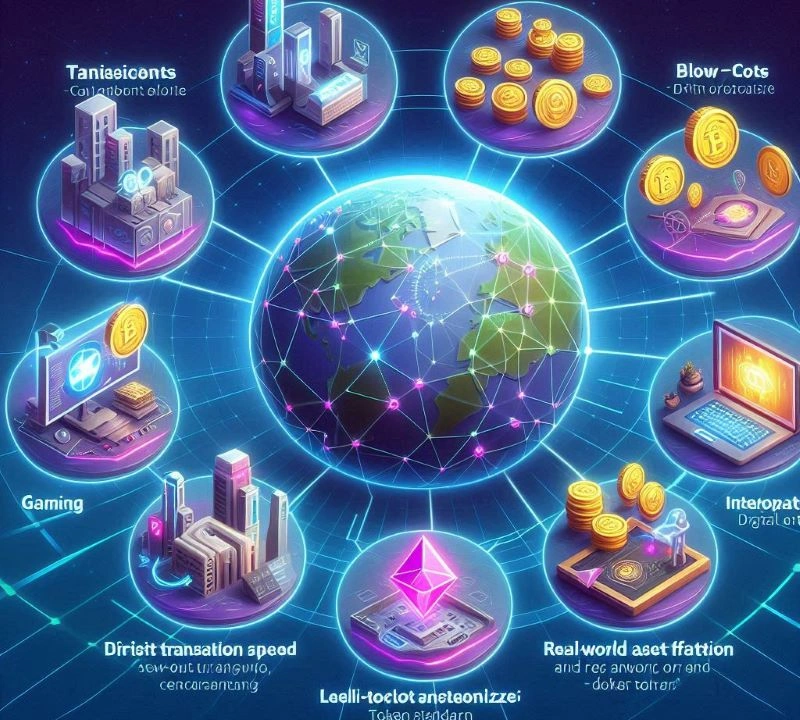
In blockchain technology, tokens are digital assets representing value, ownership, or access rights within a particular blockchain ecosystem. These tokens can be fungible, meaning they are identical and interchangeable with one another, like cryptocurrencies, or non-fungible, meaning they are unique and distinct, like digital collectibles or NFTs (non-fungible tokens).
How Tokens Function Within the Solana Ecosystem?
Tokens in the Solana ecosystem are essential instruments for various purposes, ranging from value transfer to accessing specific services within decentralized applications (dApps). Here’s an overview of how they operate.
1. Creation and Management
- Tokens on Solana are often created using the Solana Program Library (SPL), which provides standardized token contracts known as SPL Tokens. These contracts define the rules and functionalities of the tokens, including minting, burning, transferring, and managing token supply.
- Developers use SPL to create new project tokens, ensuring compatibility and interoperability across different applications within the Solana ecosystem.
2. Value Transfer
- One of the primary functions of tokens in Solana is to facilitate the transfer of value between users and applications. This includes transferring tokens representing cryptocurrencies, such as SOL (Solana’s native token) or any other SPL Token.
- The efficiency of Solana’s network allows for fast and low-cost transactions, making it feasible for a wide range of financial applications.
3. Utility in dApps
- Tokens serve various utility purposes within decentralized applications. For instance, they can be used to pay for services, access premium features, or participate in governance decisions within a dApp.
- Many DeFi (Decentralized Finance) applications on Solana utilize tokens for lending, borrowing, staking, and yield farming, where users can earn rewards by providing liquidity or participating in specific protocols.
4. Incentivization
- Tokens are often used to incentivize user behavior and participation within the Solana ecosystem. For example, users might earn tokens as rewards for staking SOL to secure the network or for providing liquidity to a decentralized exchange.
- These incentives help to drive engagement and growth within the network, encouraging users to contribute to its security and functionality.
5. Asset Representation
- Tokens on Solana can represent ownership of various digital and real-world assets. This includes digital collectibles (NFTs), real estate, commodities, and other tangible or intangible assets.
- By tokenizing these assets, Solana enables fractional ownership, increased liquidity, and broader access to investment opportunities.
Token Standards in Solana
Token standards are essential protocols that define the rules and functionalities for creating and managing tokens within a blockchain ecosystem. In Solana, token standards ensure interoperability, security, and efficiency for tokens created and used within its network. These standards facilitate the development of decentralized applications (dApps) and services that rely on tokenized assets.
SPL (Solana Program Library) Token Standard
The Solana Program Library (SPL) is a collection of on-chain programs that Solana developers can use to build and interact with decentralized applications. One of the most prominent components of SPL is the SPL Token standard, which defines how tokens should be created, transferred, and managed within the Solana ecosystem. Here are the key features and functionalities of SPL tokens.
SPL Tokens are created using the 'spl-token' program, which provides a straightforward way to mint new tokens. Developers can specify the total supply, decimals (for fractional tokens), and initial distribution of tokens.
The creation process ensures that the tokens adhere to a standardized format, enabling compatibility across various dApps and wallets within the Solana network.
2. Token Management
The SPL token standard includes functions for minting new tokens, burning existing tokens, and freezing or thawing accounts. This gives developers control over the token lifecycle and helps manage the token economy.
Token accounts in SPL are represented by the 'spl-token' program, which maintains a ledger of all token balances and transactions.
3. Security Features
SPL Tokens include robust security features such as multi-signature (multisig) support, which requires multiple private keys to authorize transactions. This enhances security for high-value tokens and important operations.
The standard also supports various access control mechanisms, allowing token issuers to implement custom rules for token transfers and usage.
4. Interoperability
The SPL token standard ensures that tokens can be seamlessly integrated with other Solana-based services and applications. This includes decentralized exchanges (DEXs), wallets, and other financial protocols.
By adhering to a common standard, SPL tokens can easily be listed and traded on multiple platforms without requiring custom integration work.
Comparison with Other Blockchain Token Standards (e.g., ERC-20 on Ethereum)
| Comparison Criteria | SPL Tokens | ERC-20 Tokens |
| Flexibility and Functionality |
Core functionalities include token creation, transfer, and balance management. Benefit from Solana's high throughput and low transaction costs. Rapidly gaining adoption within the Solana ecosystem. |
Core functionalities include token creation, transfer, and balance management. Widely used in the Ethereum ecosystem with a broad range of existing dApps and tools. |
| Transaction Speed and Costs |
Leverage Solana's high transaction speed and low fees for fast and cost-effective transactions. Particularly suitable for applications requiring high scalability. |
Ethereum often faces congestion and high gas fees, especially during peak network usage. |
| Development and Ecosystem |
Integrated development environment with tools like Solana CLI and Anchor framework for building and deploying SPL tokens. Simplifies the process of development within the Solana ecosystem. |
Supported by a vast array of development tools and resources in the Ethereum ecosystem. The abundance of documentation, tutorials, and community support. |
| Interoperability and Adoption |
Designed for interoperability within the Solana ecosystem. Quickly integrated into a growing number of Solana-based projects and services. |
Extensive adoption and interoperability within the Ethereum ecosystem. Compatible with numerous wallets, exchanges, and DeFi protocols. |
Types of Tokens in Solana
Fungible Tokens
Fungible tokens are interchangeable and indistinguishable from one another. Each token has the same value and can be divided into smaller units. These tokens are primarily used for value transfer and can be easily traded or exchanged.
Examples and Use Cases
- Cryptocurrencies: Solana's native token, SOL, is a fungible token used for transaction fees, staking, and governance within the Solana network.
- Stablecoins: USDC and USDT issued on Solana are fungible tokens used for trading and as a store of value with minimal price volatility.
- Utility Tokens: Fungible tokens can also represent utility within a specific platform or ecosystem, such as access to services or products.
Non-Fungible Tokens (NFTs)
Non-fungible tokens (NFTs) are unique and cannot be exchanged on a one-to-one basis with other tokens. Each NFT has distinct properties and cannot be divided into smaller units. NFTs are commonly used to represent ownership of digital or physical assets.
Examples and Use Cases
- Digital Art: Artists create and sell unique digital artworks as NFTs, ensuring authenticity and ownership.
- Collectibles: Digital collectibles like trading cards, in-game items, and virtual real estate are popular NFT use cases.
- Certification: NFTs can be used to certify ownership or authenticity of physical assets like real estate, rare items, and more.
Utility Tokens
Utility tokens are designed to provide access to a specific product or service within a blockchain-based platform. They are not primarily used as a medium of exchange but rather as a functional tool within an ecosystem.
Examples and Use Cases
- Access Tokens: Tokens that grant access to a platform's features, such as storage space, computing power, or specific functionalities.
- In-Platform Currency: Utility tokens used within decentralized applications (dApps) for transactions, paying for services, or gaining benefits.
Governance Tokens
Governance tokens enable holders to participate in the decision-making processes of a decentralized organization or platform. They often grant voting rights on proposals, upgrades, and changes to the protocol or ecosystem.
Examples and Use Cases
- Decentralized Autonomous Organizations (DAOs): Governance tokens are used in DAOs to vote on governance proposals and influence the direction of the organization.
- Protocol Governance: Tokens that allow users to vote on changes to the protocol, such as adjustments to fees, features, or policies.
Security Tokens
Security tokens represent ownership in an asset, such as equity in a company, real estate, or other financial instruments. They are subject to securities regulations and provide investors with rights such as profit sharing, dividends, or voting power.
Examples and Use Cases
- Equity Tokens: Represent shares in a company, giving holders ownership rights and potential dividends.
- Asset-Backed Tokens: Tokens backed by physical assets like real estate, commodities, or other tangible properties.
- Revenue Sharing Tokens: Tokens that entitle holders to a share of the profits or revenue generated by a project or company.
Use Cases and Applications of Tokens in Solana
Applications of Fungible Tokens
DeFi (Decentralized Finance)
- Stablecoins: Fungible tokens on Solana are often used as stablecoins, which are pegged to fiat currencies like USD. For example, USDC and USDT are popular stablecoins used in various DeFi applications on Solana.
- Lending and Borrowing: Platforms like Solend and Larix allow users to lend and borrow assets. Fungible tokens serve as collateral for loans and as the assets being lent or borrowed.
- Decentralized Exchanges (DEXs): DEXs like Serum and Raydium utilize fungible tokens for trading. Users can swap between different tokens, providing liquidity and earning fees in the process.
- Yield Farming: Yield farming protocols incentivize users to provide liquidity by rewarding them with fungible tokens. These tokens often represent a share of the profits generated by the protocol.
Gaming
- In-Game Currency: Fungible tokens can be used as in-game currencies, enabling players to purchase items, upgrades, and other digital assets. Games like Star Atlas leverage fungible tokens for their in-game economy.
- Reward Systems: Players can earn fungible tokens as rewards for achieving milestones or completing tasks, which can then be traded or used within the game's ecosystem.
Applications of NFTs
Digital Art
- Art Marketplaces: Platforms like Solanart and DigitalEyes allow artists to mint, showcase, and sell their digital artworks as NFTs. Collectors can purchase unique pieces, ensuring ownership and authenticity through the blockchain.
- Royalties: Smart contracts on Solana enable artists to receive royalties from secondary sales, ensuring they benefit from the increasing value of their work.
Collectibles
- Virtual Collectibles: NFTs represent unique virtual items, such as trading cards, virtual pets, and memorabilia. Projects like SolPunks and Thugbirdz offer unique digital collectibles that users can trade or showcase.
- Limited Editions: Brands and celebrities release limited edition NFTs, creating a digital scarcity that drives value and demand among fans and collectors.
Emerging Trends and Innovative Projects on Solana Tokens
Metaverse
- Virtual Real Estate: Projects like Portals and Solice are building virtual worlds where users can own, develop, and trade virtual real estate using NFTs and fungible tokens.
- Interoperable Assets: In the metaverse, assets like avatars, accessories, and virtual goods can be tokenized and transferred across different platforms, providing a seamless user experience.
Social Tokens
- Creator Economy: Social tokens empower creators and influencers to tokenize their brands. Fans can purchase these tokens to access exclusive content, participate in decision-making, and receive rewards. Platforms like Rally are exploring this model on Solana.
Tokenized Real-World Assets
- Real Estate: Companies are beginning to tokenize physical real estate, allowing fractional ownership and easier trading of property shares. This opens up real estate investment to a broader audience.
- Commodities and Securities: Tokenizing commodities like gold or securities enables easier trading and ownership transfer, with improved transparency and reduced barriers to entry.
Decentralized Identity
- Self-Sovereign Identity: Using tokens, users can maintain control over their digital identities. Projects like Civic are developing solutions that leverage blockchain technology for secure, decentralized identity management.
Conclusion
Tokens are the backbone of Solana's ecosystem, enabling value exchange and powering decentralized applications. With efficient network infrastructure and robust token standards, Solana is primed for ongoing innovation and growth across various sectors like DeFi, gaming, and digital art.
Join the conversation! Your thoughts help the community grow.