
The internet is evolving again. For years, digital platforms followed a simple rule: Users create value, platforms own the value.
Social networks, content platforms, gaming communities, and online services all grew through user participation — but ownership and revenue stayed centralized.
Now, a new model is emerging:
Community-Owned Platforms.
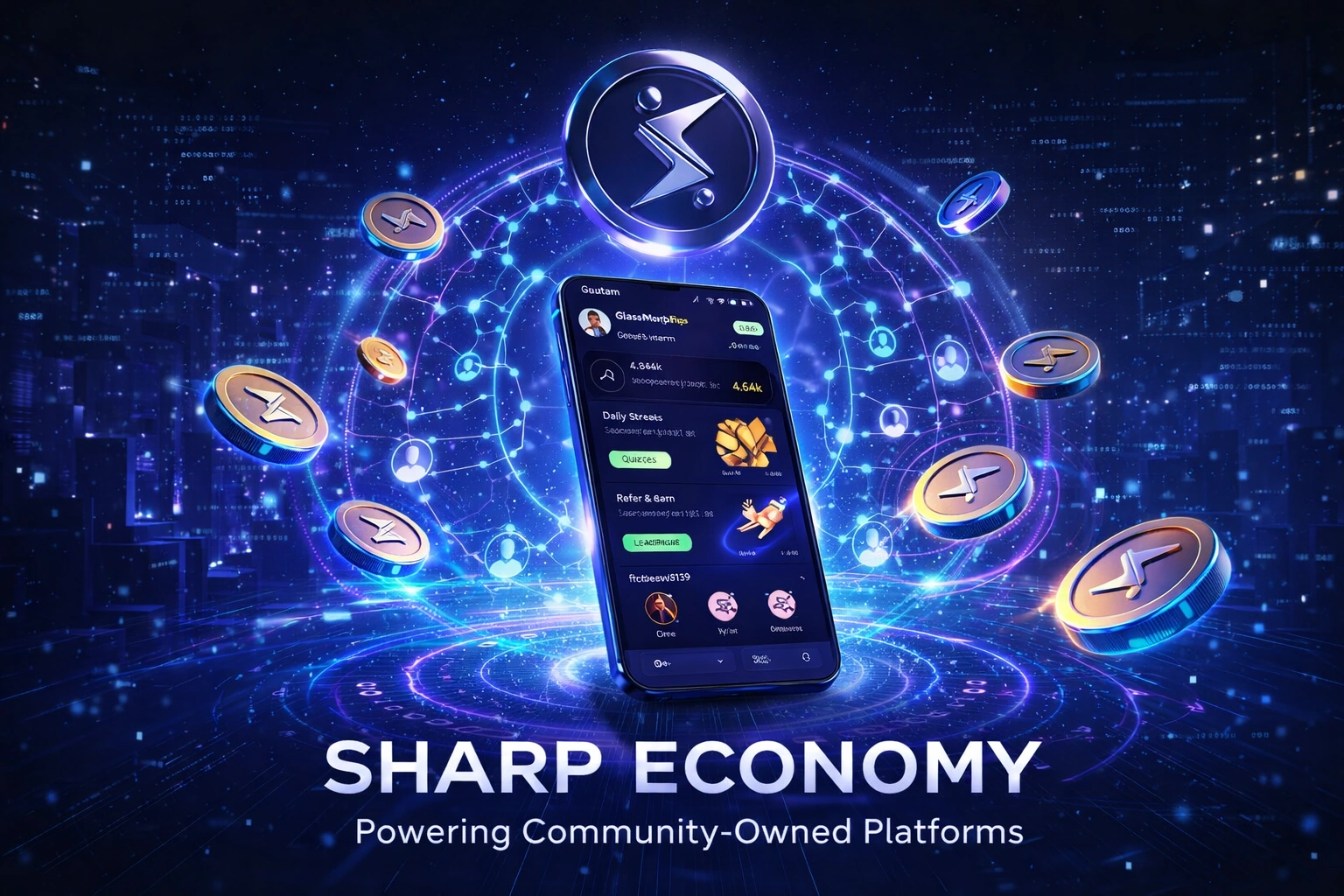
This shift is powered by token-based digital economies, and one practical framework leading this model is Sharp Economy, driven by Sharp Token.
For developers and tech learners — especially the CSharpCorner community — this represents an important architectural change in how future platforms will be built.
The Problem With Traditional Platforms
Current digital platforms operate like this:
Users create content and engagement
Communities drive platform growth
Platform owners control monetization
Users receive little or no ownership
This creates an imbalance:
Value is created collectively
Value is owned centrally
As digital communities grow more powerful, this model is becoming outdated.
The Rise of Community-Owned Platforms
Community-Owned Platforms introduce a new structure:
Users are participants, not just consumers
Participants receive incentives for contributions
Communities collectively own the platform economy
This model encourages:
Higher engagement
Stronger loyalty
Fairer value distribution
To make this work, platforms need:
A reward system
A value exchange mechanism
A self-sustaining internal economy
This is where Sharp Economy enters.
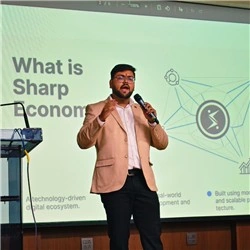
What Is Sharp Economy?
Sharp Economy is a framework designed to help digital communities build their own internal economies.
It provides a structure where:
Contributions become measurable value
Engagement becomes rewarded activity
Community growth becomes economically sustainable
Instead of relying on ads or centralized monetization, platforms can:
Reward participation
Encourage collaboration
Reinforce long-term community building
Sharp Economy is not a concept experiment — it is an applied economic model for next-generation platforms.
The Role of Sharp Token
At the center of Sharp Economy is Sharp Token.
Sharp Token functions as:
A medium of value exchange
A reward mechanism
A participation incentive
A utility token inside platform ecosystems
Typical flow:
Users contribute content or activity
Sharp Tokens are earned as rewards
Tokens are used inside the platform
The community economy grows sustainably
This makes Sharp Token:
A utility token, not a speculative asset
A practical tool for digital engagement
A foundation for community-driven ecosystems
Why This Matters for Developers
For software developers, this model introduces new design patterns:
Token-based incentive systems
Digital wallet integration
Smart contract-driven logic
Community governance models
On-chain or hybrid economy architectures
Future applications — especially Web3-enabled platforms — will increasingly:
Integrate internal tokens
Reward user activity
Enable ownership participation
Understanding frameworks like Sharp Economy helps developers:
Design next-generation platforms
Build scalable incentive systems
Participate in emerging Web3 ecosystems
For the CSharpCorner developer community, this is a relevant evolution in platform architecture.
India and the Global Shift Toward Tokenized Platforms
India is rapidly adopting:
Startup-driven digital platforms
Creator economy systems
Web3-based community applications
At the same time, global tech companies are:
Experimenting with token incentives
Introducing digital ownership models
Building community-first ecosystems
Developers who understand token-based platform design gain:
Access to emerging Web3 roles
Opportunities in global remote teams
Early advantage in next-gen product development
Final Thoughts
The future of the internet is moving toward:
Users → Participants → Owners
To support this shift, platforms need:
A fair reward structure
A sustainable value exchange system
A community-first economic model
Sharp Economy provides that framework.
Sharp Token provides the value engine.
For developers, understanding these systems today means being ready to build the platforms of tomorrow.
Join the conversation! Your thoughts help the community grow.