

Cloud computing is Web-based computing that allows businesses and individuals to consume computing resources such as virtual machines, databases, processing, memory, services, storage, or even number of calls or events and pay-as-you-go. The pay-as-you-go model charges for the resources as much as you use. Unlike traditional computing, if you do not use any resources, you do not pay. It is similar to having a water connection or an electricity line. You have a meter and the meter keeps track of your monthly usage and you pay for that usage at a given rate.
A cloud service provider is a company that provides all the above services on their data centers where thousands of computers, servers, databases, and other resources are available. A cloud operating system is designed and manages these services with the help of other products.
Cloud computing is a culmination of numerous attempts at large-scale computing with seamless access to virtually limitless resources.
Here are some key advantages of cloud computing:
- Cloud computing allows businesses to cut their operational and fix monthly costs of hardware, resources, employees, and software licenses. All hardware, database servers, web servers, software, products, and services are hosted in the cloud and added to the account as needed.
- Cloud computing offers 24/7 uptime (99.99% uptime). Cloud servers and data centers are managed by the cloud service provider and you do not need to have any employees manage that.
- Cloud computing is scalable and reliable. There is no limit to the number of users or resources. Cloud increases processing and resources as needed. If you do not need resources, you can always scale down.
- Cloud computing provides maintainability and automatic updates of new software, OS, databases, and third-party software. It reduces IT labor cost for a business.
- Cloud service providers have data centers in various locations around the globe that makes it faster and reliable.
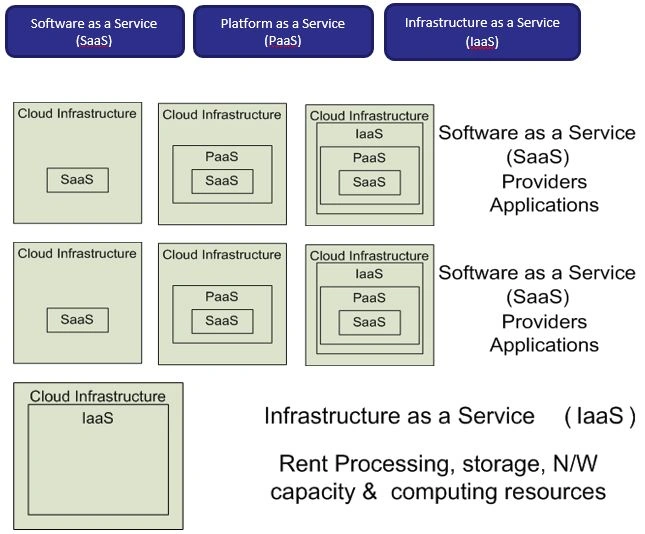
Cloud computing offers not in Infrastructure-as-a-service (IAAS) but also offers Platform-as-a-service (PAAS) and Software-as-a-service (SAAS).
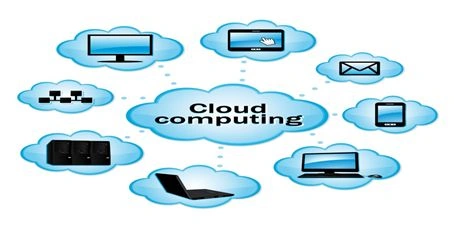
In today's cloud computing model, you get everything-as-a-service (EAAS). That means you can have a database as a service, data as a service, storage as a service, email as a service, or even a function as a service.
Amazon AWS and Microsoft Azure are the two biggest cloud service, providers. Google, IBM, Oracle, and Alibaba are few other popular growing cloud service providers.
Cloud Service Models
Three key models of cloud computing are Software as a service, Platform as a service, and Infrastructure as a service. That means you can host a software product in the cloud. You can host a platform in the cloud. You can also host the entire IT infra in the cloud. Yes, you can literally move your entire IT operations in the cloud. All you need is a device connected to the Internet.
Windows Azure

- Enterprise-level on-demand capacity builder
- Fabric of cycles and storage available on request for a cost
- You need to use Azure API to work with the infrastructure offered by Microsoft
- Significant features: web role, worker role, blob storage, table and drive-storage
Learn more about Microsoft Azure here: Introduction to Microsoft Azure
Amazon EC2
- Amazon Elastic Compute Cloud (Amazon EC2) is a web service that provides resizable compute capacity in the cloud.
- EC2 provided an API for instantiating computing instances with any of the operating systems supported.
- It can facilitate computations through Amazon Machine Images (AMIs) for various other models.
- Signature features: S3, Cloud Management Console, MapReduce Cloud, Amazon Machine Image (AMI)
- It is designed to make web-scale computing easier for developers.
- Excellent distribution, load balancing, cloud monitoring tools
Learn more about Amazon AWS here: Introduction to AWS
Google App Engine

- This is more a web interface for a development environment that offers a one-stop facility to design, develop and deploy Java and Python-based applications in Java, Go, and Python
- Google offers the same reliability, availability, and scalability at par with Google's own applications
- Interface is software programming based
- Comprehensive programming platform irrespective of the size (small or large)
- Signature features: templates and appspot, excellent monitoring and management console
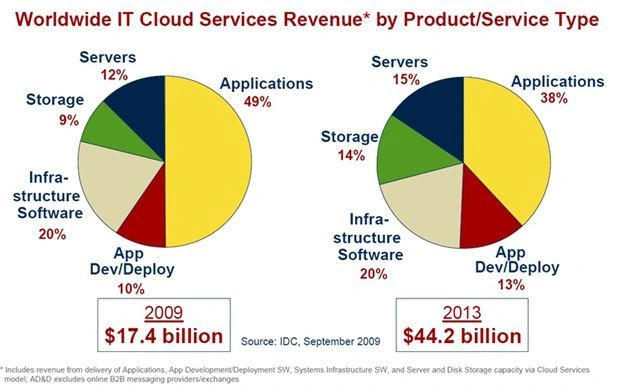
2018 Cloud Revenue
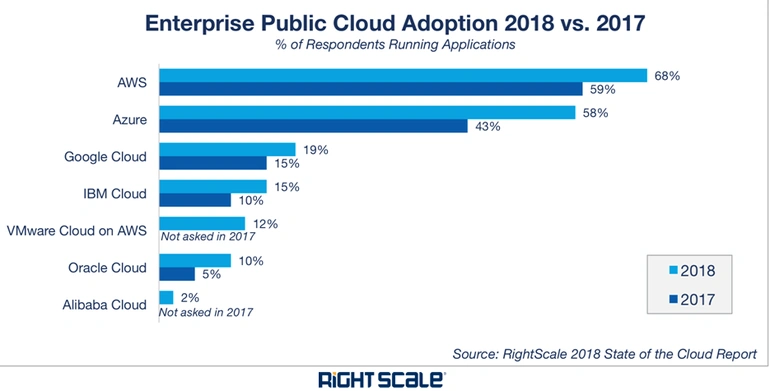
According to RightScale, Amazon AWS brings the most revenue, followed by Microsoft Azure. Other popular cloud service providers are Google, IBM, VMware, Oracle, and Alibaba.
Commercial Cloud Offerings
Cloud Distribution Examined
Summary
This was an introduction to cloud computing. To learn more about cloud computing and related questions, read Top 50 Cloud Computing Questions and Answers.
Code With AliPosted Oct 7, 2021, 10:31 AM
Great article Hussain Ahmed. Long time no see.
Avinash PhadkePosted Nov 29, 2016, 12:15 AM
Please keep on posting such article since I am beginner for Cloud Computing...
Avinash PhadkePosted Nov 29, 2016, 12:14 AM
Really helpful and easy to understand article, Hussain...
Hussain AhmedPosted Feb 24, 2015, 7:57 AM
Thanx Abhijita
Abhijit KakadePosted Feb 24, 2015, 7:03 AM
Good article Hussain Ahmed... Keep it up
Abhishek JaiswalPosted Feb 19, 2015, 11:50 AM
Clean info. :)
Vithal WadjePosted Feb 19, 2015, 11:12 AM
nice
Dinesh BeniwalPosted Feb 19, 2015, 6:22 AM
Thanks for sharing Hussain Ahmed
Hussain AhmedPosted Feb 19, 2015, 5:27 AM
Thanks Sumit
Guest UserPosted Aug 29, 2014, 9:52 AM
liked reading your article
Mahesh ChandPosted Aug 29, 2014, 8:41 AM
Good Info Hussain. I noticed in your profile, you have phone number and email listed. You probably should remove that for scam and spam reasons :) Cheers