

Introduction
If you are fascinated with cryptocurrency, I’m sure you’ve heard of NEO blockchain. NEO blockchain, previously known as AntShares, is also known as the "Ethereum of China". This article is a basic introduction of NEO blockchain.
NEO was originally launched as AntShares in 2014 by Da Hongfei and Erik Zhang and later rebranded as NEO in 2017. NEO is written in C# programming language and is available under MIT license on GitHub.
NEO supports several programming languages to write code on NEO blockchain including C#, JavaScript, Kotlin, Python, Java, and GO.
It is an open source project that focuses on building a smart digital economy. Three major components of NEO blockchain are digital assets, digital identity, and smart contracts.
If you’re new to Blockchain, I highly recommend reading Introduction to Blockchain.
Digital Assets
Digital Assets are programmable assets that exist in the form of electronic data. With blockchain technology, the digitization of assets can be decentralized, trustful, traceable, highly transparent, and free of intermediaries. On the NEO blockchain, users are able to register, trade, and circulate multiple types of assets.
Digital Identity
Digital identity refers to the identity information of individuals, organizations, and other entities that exist in electronic form. The more mature digital identity system is based on the PKI (Public Key Infrastructure) X.509 standard.
Smart Contract
NEO blockchain smart contract, also known as a NeoContract, is a code module that contains a contract between two parties, stored and saved in code on NEO blockchain, and automatically executes when it is required. NEO smart contracts can be written in several popular programming languages including C#, Java, Python, and GO.
NEO Cryptocurrency
NEO is also a cryptocurrency. NEO is the symbol of NEO blockchain. NEO has a limited supply of 100 million tokens. 50 million tokens were sold to early investors and 50 million tokens remain locked into a smart contract. Each year, 15 million NEO tokens are unlocked that can be used by NEO to the development and growth of the product. NEO uses a delegated Byzantine Fault Tolerance (dBFT) consensus mechanism and can support up to 10,000 transactions per second.
NEO cryptocurrency is one of the top 10 digital currencies in the world, according to CMC. The current market cap of NEO is $503 million. In January 2018, NEO market cap had reached over $10 billion.
NEO also has another token, GAS. Blockchain users pay in GAS as a fee to deploy and execute smart contracts on the blockchain and the GAS is rewarded to the blockchain nodes. GAS is automatically generated at a rate of 8 GAS per block created on the blockchain. The rate is reduced by 1 token at every 2 million blocks milestone.
NEO Products and Tools
NEO provides desktop, web, mobile, console, and hardware interfaces to work with NEO blockchain. Desktop GUI and a CLI interface, and desktop wallets let NEO users run NEO applications on a Windows desktop. Websites and Web wallets let users access NEO blockchain and assets via their web browsers. Mobile apps let users connect and access their assets via iOS and Android apps. NEO also supports hardware to download and run NEO blockchain.
NEO-GUI
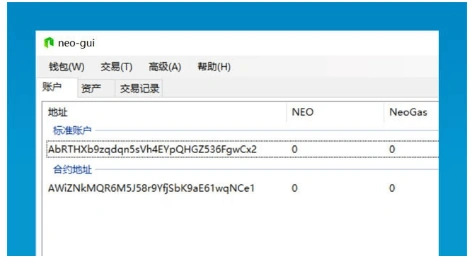
NEO GUI is a client application with a user interface. NEO-GUI is a complete blockchain including full data sync and offline modes. NEO GUI is developed in .NET Framework 4.7.1 and requires the same or later version of .NET Framework to run the blockchain.
NEO-CLI
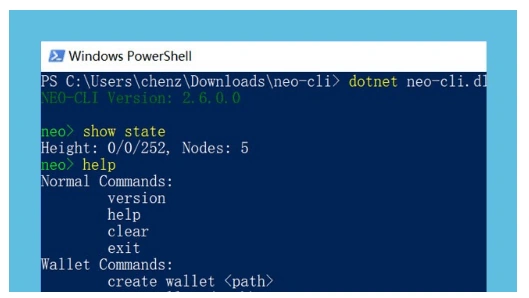
NEO-CLI application is the command line interface for NEO blockchain. It allows developers to run and execute NEO blockchain via command line interface. The application downloads and syncs complete blockchain data. It also provides API support and consensus function.
NEO Wallets
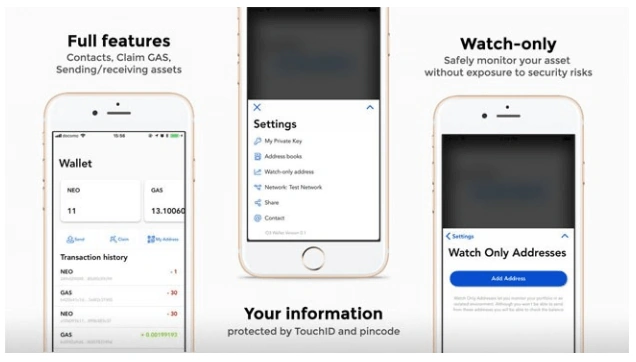
NEO tools also include several wallets. Cryptocurrency wallets allow the users to connect with NEO blockchain, download their data, and also transfer NEO cryptocurrency between users. Popular NEO wallets are O3, Neon Wallet, Sea Wallet, InWe Wallet, and Aphelion Wallet.
NEO Hardware
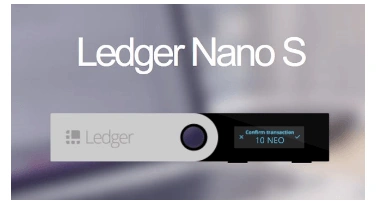
NEO blockchain is supported by several hardware devices including Ledger Blue which is a large touch-screen tablet that connects via a WiFi or a Bluetooth, that lets you store private keys used to transfer an asset from one account to other.
Ledger Nano S is a pen drive device that allows you to transfer and store private keys on the device in an offline mode. The device is connected to a computer via a USB port.
Spatium is an unhackable wallet developed by CaspianTechnologies. The device is used for distributed signature of transactions. Spatium hardware wallet compatible with biometric recognition and implements a flexible "authorization tree" method.
NEODUN is developed by NEL supports importing private key and managing multiple private keys. It has an OLED screen and buttons and supports USB and Bluetooth.
Summary
This article was an introduction to NEO blockchain. In my next article, I will discuss what NEO blockchain smart contracts are and how to build and deploy a simple smart contract on NEO blockchain.
Sarathlal SaseendranPosted Jan 18, 2019, 3:35 AM
Nice article Manish. We are expecting more articles on Blockchain from you.
Blocked AccountPosted Jan 18, 2019, 2:50 AM
The two native tokens of the NEO platform serve different purposes: NEO tokens represent the ownership of the NEO blockchain. They are used to create blocks and manage the network, and when you hold NEO in your wallet, you'll be rewarded with GAS tokens. The NEO token acts as the investment token of the NEO blockchain. The GAS token acts as the fuel for the NEO blockchain. Unlike the NEO token, GAS is divisible. GAS is distributed by holding NEO in your wallet.
Divyang DesaiPosted Jan 17, 2019, 10:15 PM
Also, unlike Ethereum; NEO has two different currencies, NEO and GAS. As stated in the article, GAS is used to pay the execution fees. But why GAS was introduced? Can't they use NEO for execution cost?
Divyang DesaiPosted Jan 17, 2019, 10:06 PM
Manish, could you please explain neo-gui with offline mode? How does it work in an offline mode?