

Scope
The following article demonstrates use of Microsoft Azure DocumentDB in an ASP.NET MVC Application.Introduction
Azure DocumentDB is a NoSQL storage service which stores JSON documents natively and provides indexing capabilities along with other interesting features.
The following are some of the key terms used in this article:
Collection
A collection is a named logical container for documents.
A database may contain zero or more named collections and each collection consists of zero or more JSON documents.
Being schema-free, the documents in a collection do not need to share the same structure or fields.
Since collections are application resources, they can be authorized using either the master key or resource keys.
DocumentClient
The DocumentClient provides a client-side logical representation of the Azure DocumentDB service. This client is used to configure and execute requests against the service.
Creating a DocumentDB Account
Please refer to this article to create and setup a DocumentDB Account on Microsoft Azure.
Getting Started
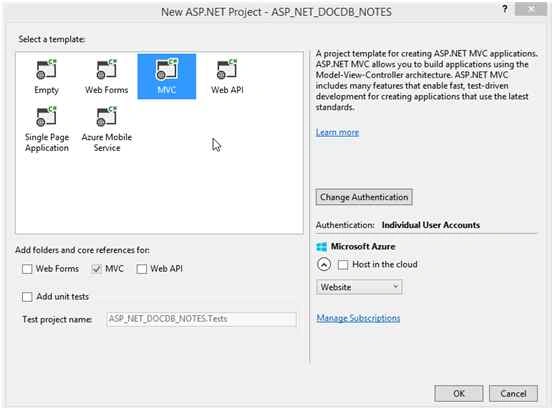
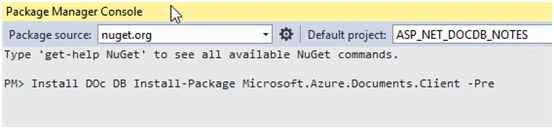
To get started, create a new ASP.NET MVC project in Visual Studio and add the DocumentDB NuGet package by going to Tools NuGet Package Manager > package Manager Console and key in the following:
Install-Package Microsoft.Azure.Documents.Client -Pre
The Web.Config File
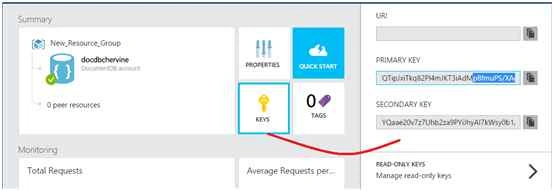
Retrieve the endpoint(URI) and the authKey (Primary/Secondary key) from your DocumentDb Account and add them in the Web Config file.
The keys database and collection represents the name of the database and collections that shall be used in your applications respectively.
- <add key="endpoint" value="xxx" />
- <add key="authKey" value="xxx" />
- <add key="database" value="NotesCb" />
- <add key="collection" value="NotesCOllectionCb" /> sCOllectionCb"
This is where all the codes that shall be used to communicate with Azure DocumentDB shall be found.
- Retrieve the DatabaseId and CollectionId from the Web.Config file
- /// <summary>
- /// Retrieve the Database ID to use from the Web Config
- /// </summary>
- private static string databaseId;
- private static String DatabaseId
- {
- get
- {
- if (string.IsNullOrEmpty(databaseId))
- {
- databaseId = ConfigurationManager.AppSettings["database"];
- }
- return databaseId;
- }
- }
- /// <summary>
- /// Retrieves the Collection to use from Web Config
- /// </summary>
- private static string collectionId;
- private static String CollectionId
- {
- get
- {
- if (string.IsNullOrEmpty(collectionId))
- {
- collectionId = ConfigurationManager.AppSettings["collection"];
- }
- return collectionId;
- }
- }
- Retrieve the DocumentClient
The document Client provides a client-side logical representation of the Azure DocumentDB service.
This client is used to configure and execute requests against the service.- private static DocumentClient client;
- private static DocumentClient Client
- {
- get
- {
- if (client == null)
- {
- string endpoint = ConfigurationManager.AppSettings["endpoint"];
- string authKey = ConfigurationManager.AppSettings["authKey"];
- Uri endpointUri = new Uri(endpoint);
- client = new DocumentClient(endpointUri, authKey);
- }
- return client;
- }
- }
- Get the database that shall be used
If no database is found, the method ReadOrCreateDatabase() is called, to verify if the database exist and creates if it does not exist.- private static Database database;
- private static Database Database
- {
- get
- {
- if (database == null)
- {
- database = ReadOrCreateDatabase();
- }
- return database;
- }
- }
- private static Database ReadOrCreateDatabase()
- {
- var db = Client.CreateDatabaseQuery()
- .Where(d => d.Id == DatabaseId)
- .AsEnumerable()
- .FirstOrDefault();
- if (db == null)
- {
- db = Client.CreateDatabaseAsync(new Database { Id = DatabaseId }).Result;
- }
- return db;
- }
- Get the DoucmentCollection which will be used
A collection is a named logical container for documents.
A database may contain zero or more named collections and each collection consists of zero or more JSON documents.
If the required collection is not found, the method ReadOrCreateCollection is called that creates it.- private static DocumentCollection collection;
- private static DocumentCollection Collection
- {
- get
- {
- if (collection == null)
- {
- collection = ReadOrCreateCollection(Database.SelfLink);
- }
- return collection;
- }
- }
- private static DocumentCollection ReadOrCreateCollection(string databaseLink)
- {
- var col = Client.CreateDocumentCollectionQuery(databaseLink)
- .Where(c => c.Id == CollectionId)
- .AsEnumerable()
- .FirstOrDefault();
- if (col == null)
- {
- col = Client.CreateDocumentCollectionAsync(databaseLink, new DocumentCollection { Id = CollectionId }).Result;
- }
- return col;
- }
Define the Model
Add the Controller
- public class Note
- {
- [JsonProperty(PropertyName = "id")]
- public string Id { get; set; }
- public string Title { get; set; }
- public string Description { get; set; }
- }
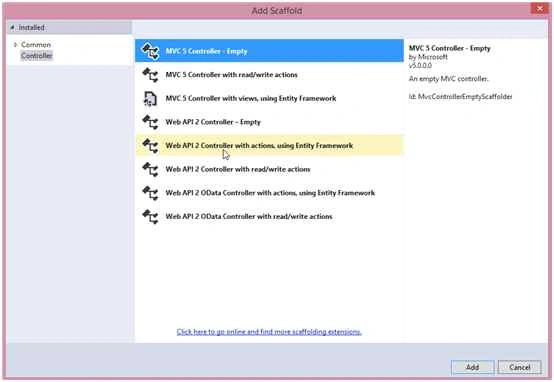
- Right-Click on Controller, then Add and click Controller.
- Select MVC5 Controller - Empty.
- Call it the NoteController.

a. Create
- Right-Click on Views, Note, then Add View.
- Set the parameters as in the following image and click Add.
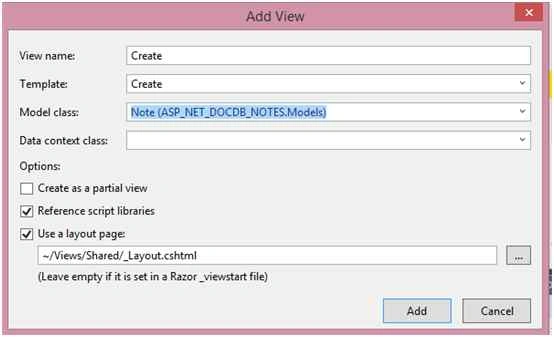
b. Edit
- Right-Click on Views, Note and Add View.
- Set the parameters as in the following image and click Add.
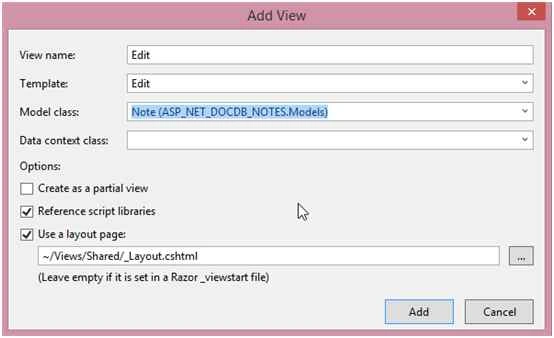
c. Index
- Right click on Views, Note, then Add View.
- Set the parameters as in the following image and click Add.
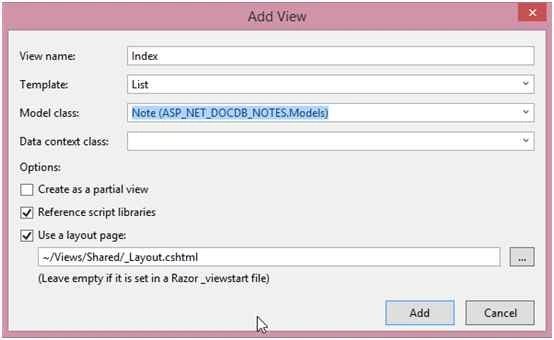
d. Details
- Right click on Views, Note and then Add View.
- Set the parameters as in the following image and click Add.
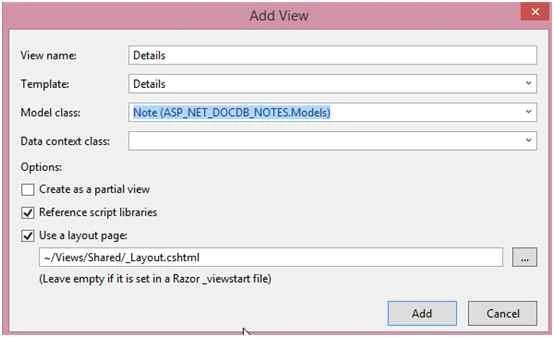
This allows the user to add a new note and save it in the Document Database.
In the note controller, add the following code to redirect the user to the create page on the Create Action.
- public ActionResult Create()
- {
- return View();
- }
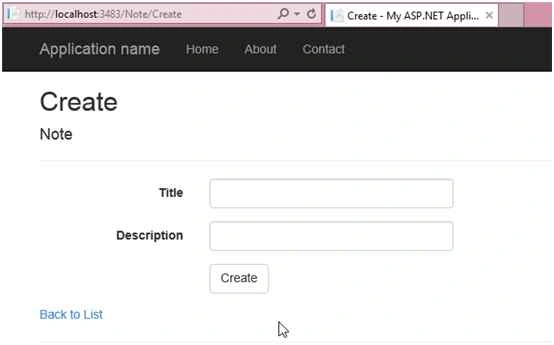
The next step is to implement the method that shall be triggered when the save button is clicked.
- [HttpPost]
- [ValidateAntiForgeryToken]
- public async Task<ActionResult> Create([Bind(Include = "Id,Title,Description")] Note note)
- {
- if (ModelState.IsValid)
- {
- await DocumentDBRepository.CreateItemAsync(note);
- //return RedirectToAction("Index");
- return RedirectToAction("Create");
- }
- return View(note);
- }
The method CreateItemAsync needs to be added to the DocumentRespository which performs the insert.
- //Create
- public static async Task<Document> CreateItemAsync(Note note)
- {
- return await Client.CreateDocumentAsync(Collection.SelfLink, note);
- }
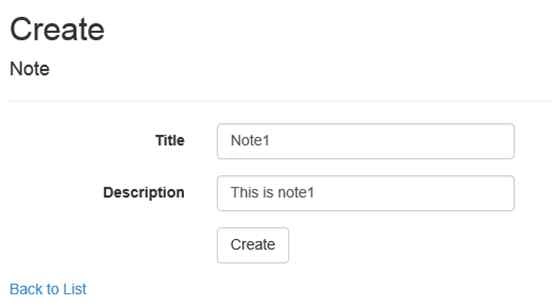
When clicking on Save, the following should happen.
a. Create the Database
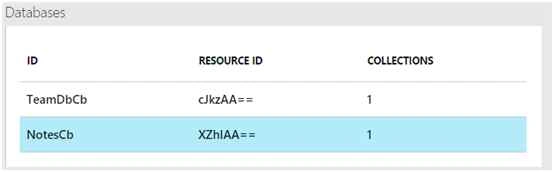
b. Create the Collection

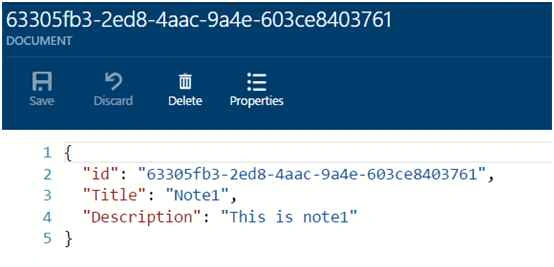
c. Create the Document
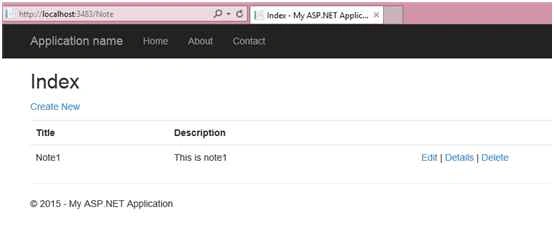
Implement the Index Page
In the Note Controller, replace the contents of the Index method with the following:
- public ActionResult Edit(string id)
- {
- if (id == null)
- {
- return new HttpStatusCodeResult(HttpStatusCode.BadRequest);
- }
- Note note = (Note)DocumentDBRepository.GetNote(id);
- if (note == null)
- {
- return HttpNotFound();
- }
- return View(note);
- }
Implement the Edit Page
a. In the controller, implement the following method which fetch the selected note to edit and returns it to the page to display.
- public ActionResult Edit(string id)
- {
- if (id == null)
- {
- return new HttpStatusCodeResult(HttpStatusCode.BadRequest);
- }
- Note note = (Note)DocumentDBRepository.GetNote(id);
- if (note == null)
- {
- return HttpNotFound();
- }
- return View(note);
- }
- public static Note GetNote(string id)
- {
- return Client.CreateDocumentQuery<Note>(Collection.DocumentsLink)
- .Where(d => d.Id == id)
- .AsEnumerable()
- .FirstOrDefault();
- }
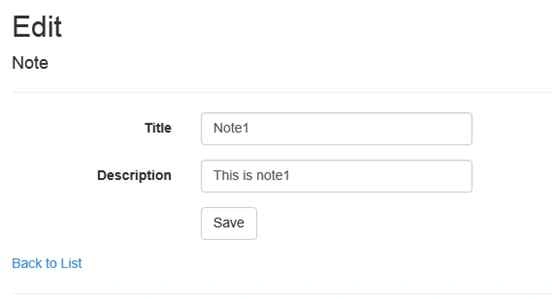
c. In the controller, implement the edit method that shall be triggered when clicking on the save button.
- [HttpPost]
- [ValidateAntiForgeryToken]
- public async Task<ActionResult> Edit([Bind(Include = "Id,Title,Description")] Note note)
- {
- if (ModelState.IsValid)
- {
- await DocumentDBRepository.UpdateNoteAsync(note);
- return RedirectToAction("Index");
- }
- return View(note);
- }
- public static async Task<Document> UpdateNoteAsync(Note note)
- {
- Document doc = Client.CreateDocumentQuery(Collection.DocumentsLink)
- .Where(d => d.Id == note.Id)
- .AsEnumerable()
- .FirstOrDefault();
- return await Client.ReplaceDocumentAsync(doc.SelfLink, note);
- }
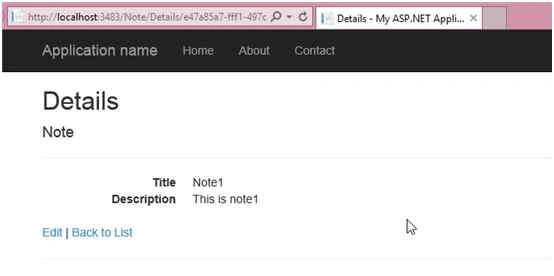
In the Controller, add the following method. It calls the GetNote method implemented for the Edit part and returns the required document.
- public ActionResult Details(string id)
- {
- if (id == null)
- {
- return new HttpStatusCodeResult(HttpStatusCode.BadRequest);
- }
- Note note = (Note)DocumentDBRepository.GetNote(id);
- if (note == null)
- {
- return HttpNotFound();
- }
- return View(note);
- }
Implement the Delete Method
Add the method Delete in the controller. It calls the Method DeleteNote in the Controller and returns the user to the Index page.
- public async Task<ActionResult> Delete([Bind(Include = "Id")] Note note)
- {
- if (ModelState.IsValid)
- {
- await DocumentDBRepository.DeleteNote(note);
- return RedirectToAction("Index");
- }
- return View(note);
- }
Sr KarthigaPosted Mar 29, 2016, 8:55 AM
good one
Sr KarthigaPosted Mar 29, 2016, 8:55 AM
nice explanation
Karthikeyan KPosted Sep 20, 2015, 1:35 AM
Good one sir...Thanks for sharing us
Santhakumar MunuswamyPosted Sep 17, 2015, 10:28 AM
Thanks for nice article:)
Sibeesh VenuPosted Sep 17, 2015, 6:26 AM
Nice Share
Ankit BansalPosted Sep 17, 2015, 4:34 AM
thanks for share..
Pankaj Kumar ChoudharyPosted Sep 16, 2015, 10:18 PM
Nice Explain Sir.......
Mohammed IbrahimPosted Sep 16, 2015, 2:28 PM
nice
RakeshPosted Sep 16, 2015, 11:09 AM
Good explain sir
Ratnesh SinghPosted Sep 16, 2015, 8:13 AM
nice..........
Sibeesh VenuPosted Sep 16, 2015, 4:07 AM
Nice Share
Rajeesh MenothPosted Sep 16, 2015, 1:11 AM
Good One..
Harshad PansuriyaPosted Sep 16, 2015, 12:02 AM
Nice one
Karthikeyan KPosted Sep 15, 2015, 11:16 PM
Good one sir...Thanks for sharing