


Introduction
Azure's cloud infrastructure is vast and versatile, offering a wide range of services, and navigating this sea of functionality can be overwhelming.
That’s why Azure Resource Providers enter the picture; they actually bridge the gap between users and specific services.
If you are interested in this subject, let’s dive into the world of Azure Resource Providers and understand how they, along with their resource types, power the Azure experience.
What are Azure Resource Providers?
Azure Resource Providers are equipped with tools and specialize in a specific service.
Just like a construction team manages a building, a Key Vault resource provider handles everything related to secure secrets or secret storage.
Moreover, each provider has a unique namespace, for example Microsoft.KeyVault, which offers a set of REST API operations to create, manage, and delete resources within its domain.
Furthermore, think of resources as individual blocks, such as VMs, storage accounts, databases, key vaults, and more. Each resource belongs to a specific resource type defined by the provider.
A good example would be Microsoft.KeyVault/vaults, which identifies a key vault resource within the Key Vault provider.
This naming convention provides clarity and simplifies resource management.
What are the Benefits of a Resource Provider?
There could be plenty of benefits, but let’s list three of them.
Organized Management
Azure Resource Providers categorize resources, making it easier to navigate and manage complex solutions.
Imagine searching for servers instead of sifting through individual services like Azure App Service or VMs.
Standardized Operations
Each provider offers a consistent set of REST APIs for managing its resources, facilitating automation and scripting across different services.
Scalability and Security
Providers ensure that services are scalable and secure, adhering to Azure’s rigorous security standards.
Explore Azure Resource Providers
There are plenty of Azure Resource Providers, but let’s list three of the most popular.
Microsoft.Compute
This is the power behind virtual machines, container instances, and other compute resources. This provider lets you spin up VMs in various configurations, scale resources as needed, and manage containers for agile deployments.
Microsoft.Storage
This is your one-stop shop for all storage needs. This provider offers blob storage, file shares, managed disks, and other solutions for secure, scalable data storage. With options like Azure Files for shared file access and Azure Blob Storage for unstructured data, it caters to diverse workloads.
Microsoft.Network
The architect of your cloud network. This provider lets you configure virtual networks, subnets, load balancers, and network security groups to connect your Azure resources and manage network traffic securely.
Now that we have listed three popular providers, the world of Azure Resource Providers extends far beyond these examples.
You can also explore AI and machine learning (Microsoft.MachineLearning), analytics (Microsoft.Insights), and databases such as (Microsoft.Sql).
A vast array of providers awaits exploration.
Choosing the right provider for your needs is key to building a secure, efficient, and cost-effective Azure solution.
Resource Providers in Azure Portal
You might be wondering where you can see the list of Resource Providers in the Azure portal.
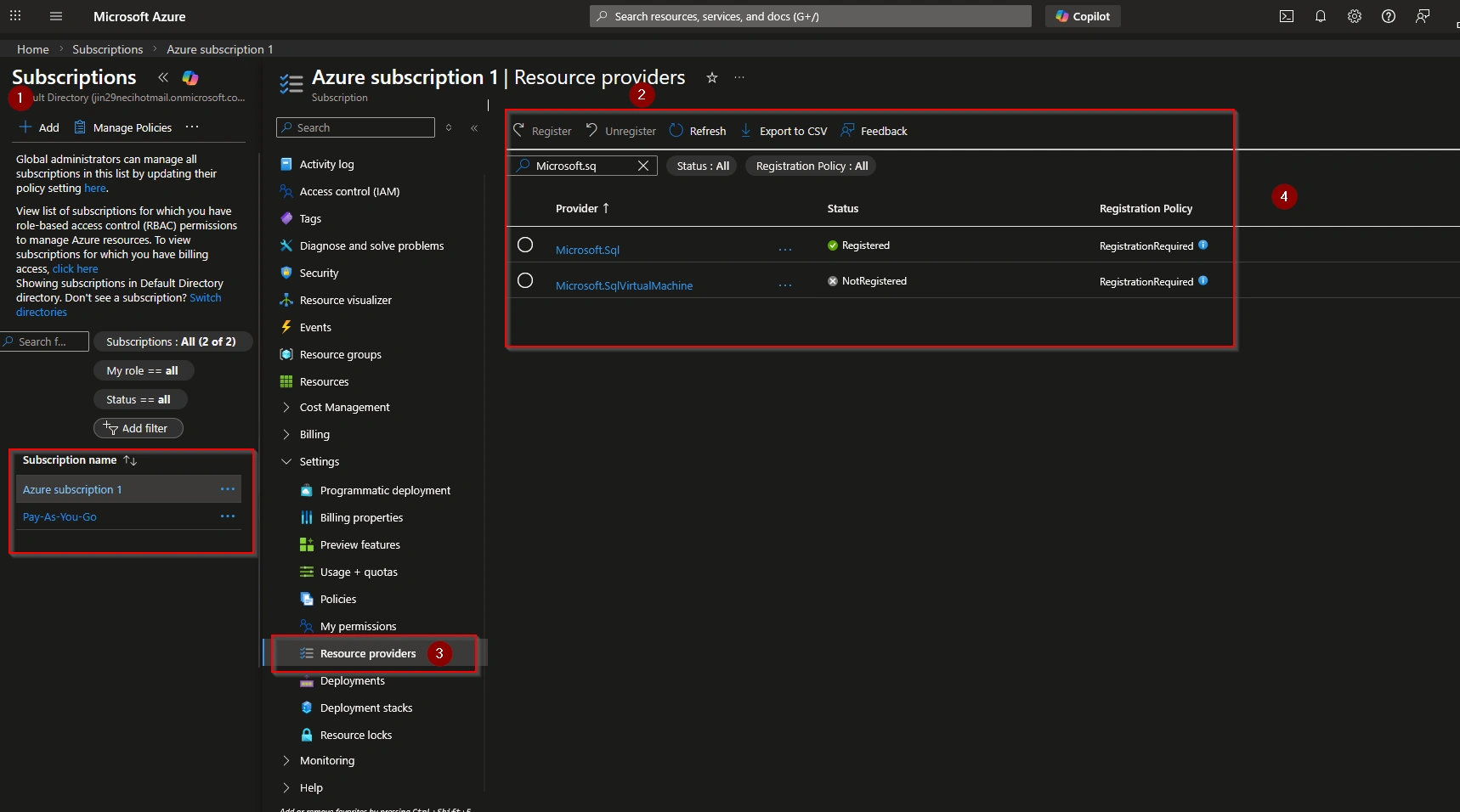
If you go to your Subscription and then select Resource providers, you will be able to see the list of these providers.
Note: Not all providers are registered. You may see their status as NotRegistered. If they are registered, you will see the status as Registered with a green check icon on the left.
Please see the sample screenshot below.
So, what are you waiting for?
Check the list and enable the providers you think you’ll need today or in the future.
Summary
In this article, we discussed that Azure Resource Providers bridge users to specific services, providing a structured way to manage cloud resources.
We also provided an overview of Azure Resource Providers, their benefits, and some popular providers.
Exploring these providers equips you to architect solutions with precision and leverage the full potential of the Azure platform.
I hope this serves as a valuable resource for your Azure journey.
Stay tuned for more, and until next time, happy programming!
Join the conversation! Your thoughts help the community grow.