

What really differentiates Sitecore from others not just the usability and scalability, but the easy integration of services like SharePoint, CRM, Google Analytics, etc. that can boost productivity and add value to your business. Moreover, these tools are easy to integrate and used in combination with the Sitecore in-built interface.
With the use of Sitecore, one can build an impressive repertoire of applications for businesses to improve web traffic and user web experience. Sitecore also provides a great way to track marketing and sales campaigns. Thanks to real-time statistics from users, you can discover better ways to convert traffic into more leads and sales. As a business, if you are not improving your web presence to retain users, you are missing opportunities.
Some of the features are listed below,
- Improved search
- Content faceting
- Flexible search results interface
- Quick action
- Unlimited content scaling
- Repurpose Content for Different Devices
- Easily Integrate with Third Party Tools
- Intuitive and User-Friendly Design
- Fast Integration with Microsoft Technology
- Web 2.0 and Social Media Integration
As this framework is developed on the Microsoft .NET platform, it is easy to use, develop and maintain. Since the journey of Sitecore dates back to 2007, it is a stable, mature framework available with rich features.
CMS is fully customizable and extendable, and practically anything can be overridden or extended. Developers are also export customized functionality from Sitecore into a package which can then be imported to another project if needed.
From a developer perspective, Sitecore is a dream framework containing 1,300 classes and 5,000 methods that form a rich, extensive developer framework.
Databases
- Core Database
This database is used by Sitecore itself for system settings, managing configuration, overriding standard functionality, managing membership and adding a button to the toolbar in the editor. - Master Database
This database is used to save all the settings, content authoring, and list creations. The master database can have workflow enabled and customized, so sections of the site can be locked down to certain roles or made to go through an approver or translator before they go live. In this mode, admins can also preview the content.
- Web Database
The web database contains live content for web applications. It is different from the master database which only stores the latest version of all items. When a content editor publishes some content, it copies from the master database to the web database. In a live environment, only the web and core database gets hosted in the SQL server instance. This means that the CMS is unavailable from the public website, making the application more secure.
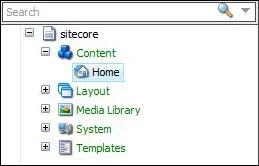
In Sitecore, all content is stored in a content tree. For layouts, editors use the content and media items. Layouts contain templates, settings, and API. There are some common tree items listed below,
- Content
- Media Library
- Layout
- System
- Templates
Sitecore API
Sitecore community
Using Sitecore, you can update rich, dynamic content very easily while developers can build extensive, flexible, quick and scalable solutions to fulfill your business needs.
Agasti BhamburePosted Jul 17, 2019, 6:33 AM
Hi Sir, This article is very helpful. Thanks
pravin belurkarPosted Jul 3, 2019, 11:58 AM
Hi Dinesh, hope you know me? Can you please reply me back?
Mahesh ChandPosted May 3, 2019, 10:46 AM
Thanks Dinesh. Sitecore is definitely used by many enterprises. Does Sitecore support .NET Core? and latest versions of C# etc.