

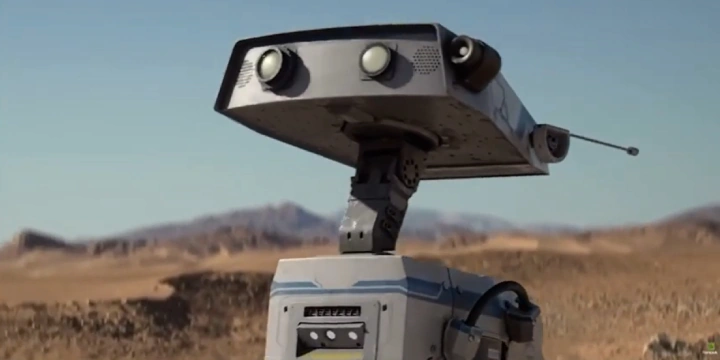
Physics is fundamental to robotic simulation, providing the basis for accurate virtual representations of robot behavior and interactions. By leveraging physics-based simulations, researchers and engineers can train, develop, test, and validate robotic control algorithms in a safe and cost-effective manner. Newton addresses the challenges posed by the “sim-to-real” gap, offering a unified and scalable solution for modeling real-world physics.
Key Features of Newton
- Open Source: Newton is designed as an open-source platform, allowing the robotics community to freely use, distribute, and contribute to its development. This collaborative approach empowers roboticists to advance research and innovation.
- NVIDIA Accelerated: Built on NVIDIA Warp, a CUDA-X acceleration library, Newton enables developers to create GPU-accelerated simulations efficiently. This framework harnesses the parallel processing capabilities of NVIDIA GPUs for high-performance physics-based simulations.
- Powered by MuJoCo-Warp: Newton is compatible with MuJoCo (Multi-Joint Dynamics with Contact), a widely used physics engine in robotics research. The introduction of MuJoCo-Warp, also developed by Google DeepMind, significantly enhances performance—offering over 70x acceleration for humanoid simulations and up to 100x speedup for in-hand manipulation tasks.
Differentiable Physics and Extensibility
Newton introduced different physics capabilities that allow gradients to propagate through simulations. This feature opens new avenues for robotic learning by enabling optimization of system parameters through back-propagation. Additionally, Newton's extensibility allows for rich multiphysics simulations where robots can interact with various objects like food items and cloth using custom solvers and numerical methods.
Built on OpenUSD
Newton utilizes the OpenUSD framework, which provides a flexible data model and composition engine. This framework aggregates essential data for describing robots and their environments while allowing custom solvers to specialize in targeted capabilities.
Collaboration with Disney Research
In a groundbreaking announcement at GTC 2025, Nvidia CEO Jensen Huang revealed the company's collaboration with Disney Research and Google DeepMind to create Newton, an innovative physics engine designed to simulate robotic movements in real-world environments.
If you want to learn more about the Collaboration of Nvidia with Disney Research, please read this detailed news: Nvidia and DeepMind Collaborate to Enhance Disney's Robot Innovations
Newton represents a significant advancement in robotics simulation technology, providing an open-source platform that enhances the capabilities of robots through accurate physics modeling. With its powerful features and collaborative development approach, Newton is set to transform the future of robotics research and application.
Join the conversation! Your thoughts help the community grow.