
Why Tokenomics Drives Price More Than Anything Else 🚀
Every major price movement in crypto eventually comes back to tokenomics. Marketing may create hype, influencers can bring temporary attention, and announcements might spark short term rallies, but the long term direction of a token’s price is governed by its economic design.
Tokenomics defines how supply enters or leaves the market, how demand is created, how liquidity behaves, and how holders are incentivized to stay or exit. If the tokenomics are strong, price naturally gains stability and upward pressure. If the tokenomics are weak, the price struggles no matter how much noise the project generates.
What is Crypto Tokenomics
Tokenomics is the economic design of a crypto token. It defines how a token works, how it gains value, how supply is managed, how demand is created, and how the entire ecosystem around the token functions.
In simpler terms, tokenomics is the blueprint that decides whether a token becomes valuable, stable, and useful or collapses under poor design.
Here is what tokenomics typically includes:
Creation and Supply Model
How many tokens exist, how they are created, and how they enter circulation over time.
Distribution and Allocation
How the supply is split between teams, investors, community, rewards, ecosystem growth, treasury, and partners.
Vesting and Unlock Schedules
Rules controlling when different groups can access or sell their tokens.
Utility and Purpose
What the token is used for paying fees, rewards, governance, staking, access, discounts, platform actions, or powering an internal economy.
Demand Mechanisms
How the ecosystem encourages people to buy, hold, or use the token.
Emission Rates and Rewards
How new tokens are issued for staking, mining, or user incentives.
Burns and Deflation
Mechanisms that remove tokens from circulation to create scarcity.
Liquidity Strategy
How much liquidity is provided, where it lives, and how markets remain stable.
Treasury and Market Maker Support
How the project stabilizes price, funds long term development, and protects from volatility.
The Foundation Of All Price Movement Supply And Demand
Crypto prices move according to supply and demand. Tokenomics controls both sides of that equation. When circulating supply increases faster than buying interest, the price weakens. When the available supply tightens while user adoption or utility grows, the price strengthens.
Every economic lever in a token ecosystem either increases circulating supply, reduces it, pushes demand upward, or suppresses it. Once you understand these mechanics, you can often predict a token’s price trajectory months in advance.
Circulating Supply Why This Number Matters More Than Total Supply
Most new investors fixate on max supply or total supply, but the real price driver is circulating supply the amount of tokens available for trading right now. If circulating supply expands rapidly due to team unlocks, investor allocations, emissions, staking rewards, or ecosystem distributions, the price usually declines unless new demand enters at a faster rate. When circulating supply contracts because of token burns, long term staking, vesting delays, or lockups, price naturally gains strength as scarcity increases. Circulating supply is the heartbeat of tokenomics.
FDV Why Fully Diluted Valuation Predicts Market Crashes
Fully Diluted Valuation, or FDV, tells investors what the token would be worth if every token were unlocked today. High FDV combined with a low circulating supply is a known warning sign because it creates artificial early pumps followed by painful crashes.
The token appears cheap, pumps easily because of low float, and then collapses when massive future unlocks add overwhelming sell pressure. Strong tokenomics keep FDV realistic and unlock flows gradual so the market can absorb new supply without losing confidence.
Vesting And Unlock Schedules How Time Controls Market Stability
Vesting is one of the most underestimated drivers of price. Tokens allocated to teams, advisors, partners, and early investors eventually unlock, and these supply injections often define whether a token stabilizes or sinks.
Sudden unlocks overwhelm markets because liquidity cannot absorb the sell pressure. Well designed vesting schedules stretch over years, release gradually, and align with real ecosystem growth. Poorly designed ones frontload supply, enrich insiders early, and damage the community’s trust.
Liquidity The Invisible Mechanism That Sets The Real Price
Liquidity determines how easily a token’s price can move. Low liquidity creates fragile markets where small buy orders pump the price and small sells crash it. That instability quickly scares away serious investors.
High liquidity stabilizes price, supports institutional participation, and reduces volatility. Liquidity depth, pair selection, lock duration, and the presence of a professional market maker all influence whether a token can maintain long term price reliability. Liquidity is not optional; it must be engineered.
Burns And Supply Reduction Why Some Burns Matter And Some Don’t
Burning tokens permanently removes them from circulation. This sounds inherently bullish, but only burns linked to real usage have meaningful impact. When burns come from platform revenue, transaction fees, or consumption within the ecosystem, they create natural and repeatable scarcity.
Burns that are manual, random, or purely marketing driven offer little pricing power because they lack sustained economic force. True burn mechanics amplify demand driven activity instead of trying to distract investors.
Real World Example Sharp Economy Tokenomics In Action
Let's take an example of a real token economics.
Sharp Economy (https://sharpeconomy.org/) was built intentionally to avoid the common tokenomics failures seen across the crypto industry. Instead of relying on hype based pumps, its structure emphasizes long term sustainability through controlled supply distribution, slow unlocks, practical utility, and balanced incentives. Circulating supply is intentionally limited in the early years to prevent sudden dilution.
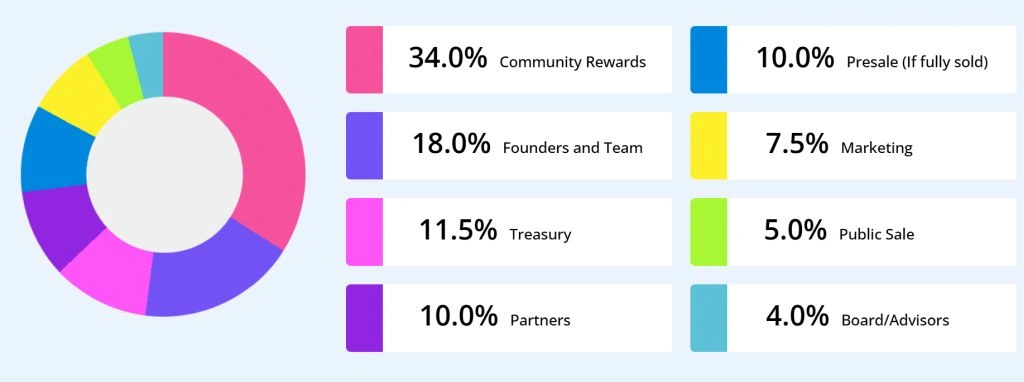
Team tokens follow long, multi year performance based vesting schedules that align with ecosystem maturity and adoption milestones. Liquidity is strengthened through a multi chain strategy, transparent treasury management, and partnerships designed to stabilize price rather than manipulate it.
Utility based demand flows from its Learn to Earn, Contribute to Earn, and Spend to Grow mechanics, ensuring people use the token repeatedly rather than hold it solely for speculation. Sharp’s tokenomics are built around participation, revenue generation, and sustainable growth so the price is supported by activity rather than hype.
How To Design A Good Sustainable Token Economy
Sustainable tokenomics begins with aligning incentives among users, builders, investors, and the ecosystem itself. The token must have real world or platform specific utility that requires consistent usage. Without natural demand, the token depends entirely on new buyers, which always collapses. The rate of token issuance should be carefully controlled so circulating supply expands slowly and predictably. Vesting should protect the market from insider dumps and should reward long term contribution rather than early access. Liquidity should be deep enough for healthy price discovery and ideally supported by a responsible market maker. Burns, buybacks, and staking rewards should come from real economic activity instead of artificial inflation.
A well designed token economy feels balanced. New supply enters in alignment with ecosystem growth, not ahead of it. Utility creates buy pressure that offsets natural sell cycles. Treasury reserves protect liquidity and support development. Team incentives stretch over many years so builders remain committed. The economy should function like a well tuned machine where no part puts excessive strain on another. Sustainability is achieved when the ecosystem can grow without destabilizing the token’s price.
Summary
Tokenomics is the most influential force behind crypto price movements because it dictates how supply and demand evolve over time. Strong tokenomics lead to stability, investor confidence, and long term price appreciation. Weak tokenomics guarantee volatility, crashes, and eventual abandonment. By studying circulating supply, FDV, liquidity, unlock calendars, and utility driven demand, investors can assess the true strength of any token.
For deeper exploration, here are related articles on C# Corner that expand on different areas of tokenomics:
Related C# Corner Articles
What Is Liquidity In The Crypto World: https://www.c-sharpcorner.com/article/what-is-liquidity-in-the-crypto-world
Why Do Crypto Projects Fail: https://www.c-sharpcorner.com/article/why-do-crypto-projects-fail
Why Most Crypto Tokens And Coins Fail: https://www.c-sharpcorner.com/article/why-most-crypto-tokens-and-coins-fail
Step By Step Breakdown How Tokenomics Influences Price: https://www.c-sharpcorner.com/article/how-does-tokenomics-affect-the-price-of-a-crypto-token
If your business is launching a token, building a Web3 platform, or designing an internal token economy, it is critical to work with someone who understands both engineering and economics. Mahesh Chand is an experienced advisor in crypto tokenomics, token launches, liquidity strategy, and ecosystem architecture. Companies and founders can hire Mahesh for tokenomics consulting directly at the C# Corner Contact Us page:
Contact Mahesh Chand here: https://www.c-sharpcorner.com/consulting/
Join the conversation! Your thoughts help the community grow.